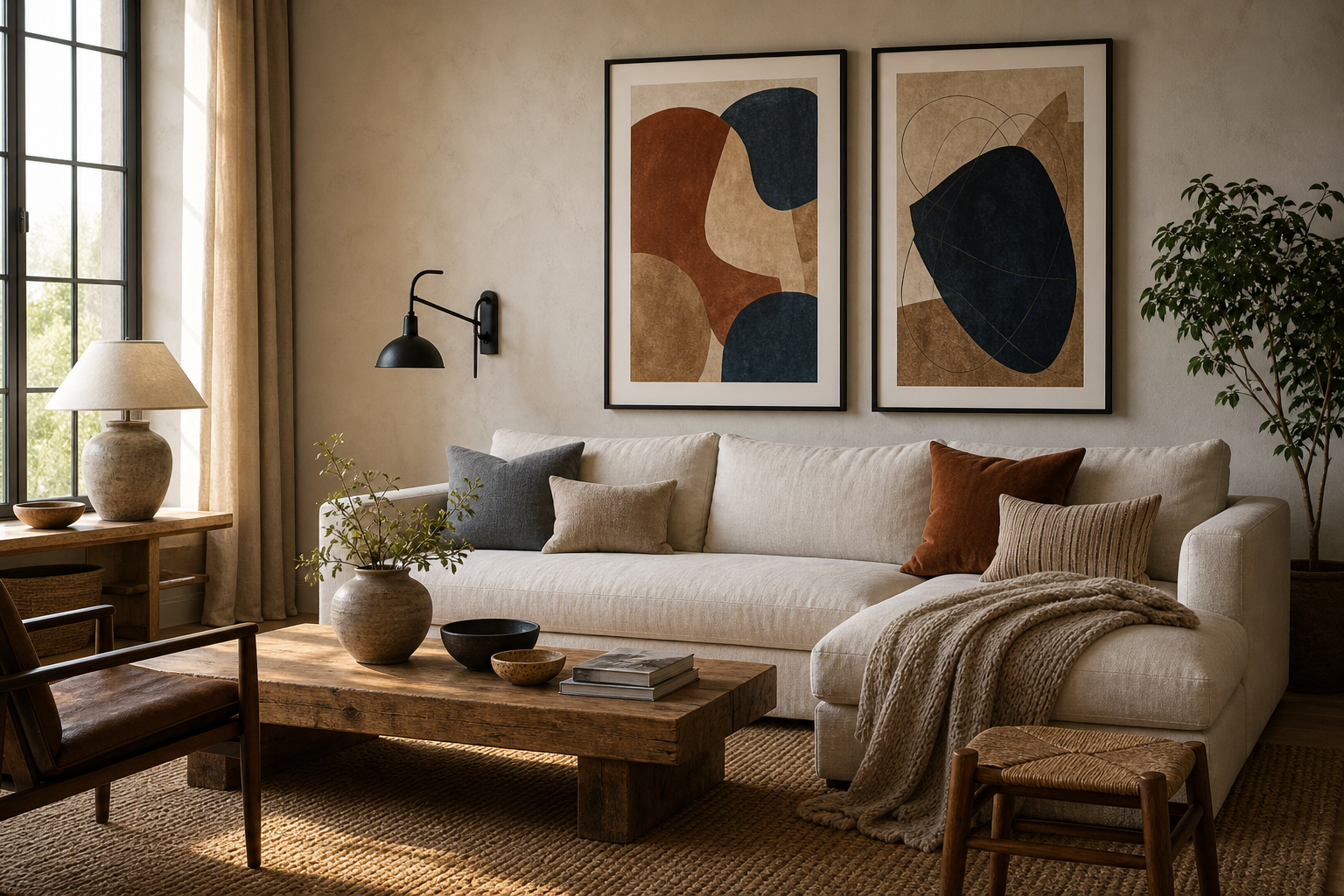
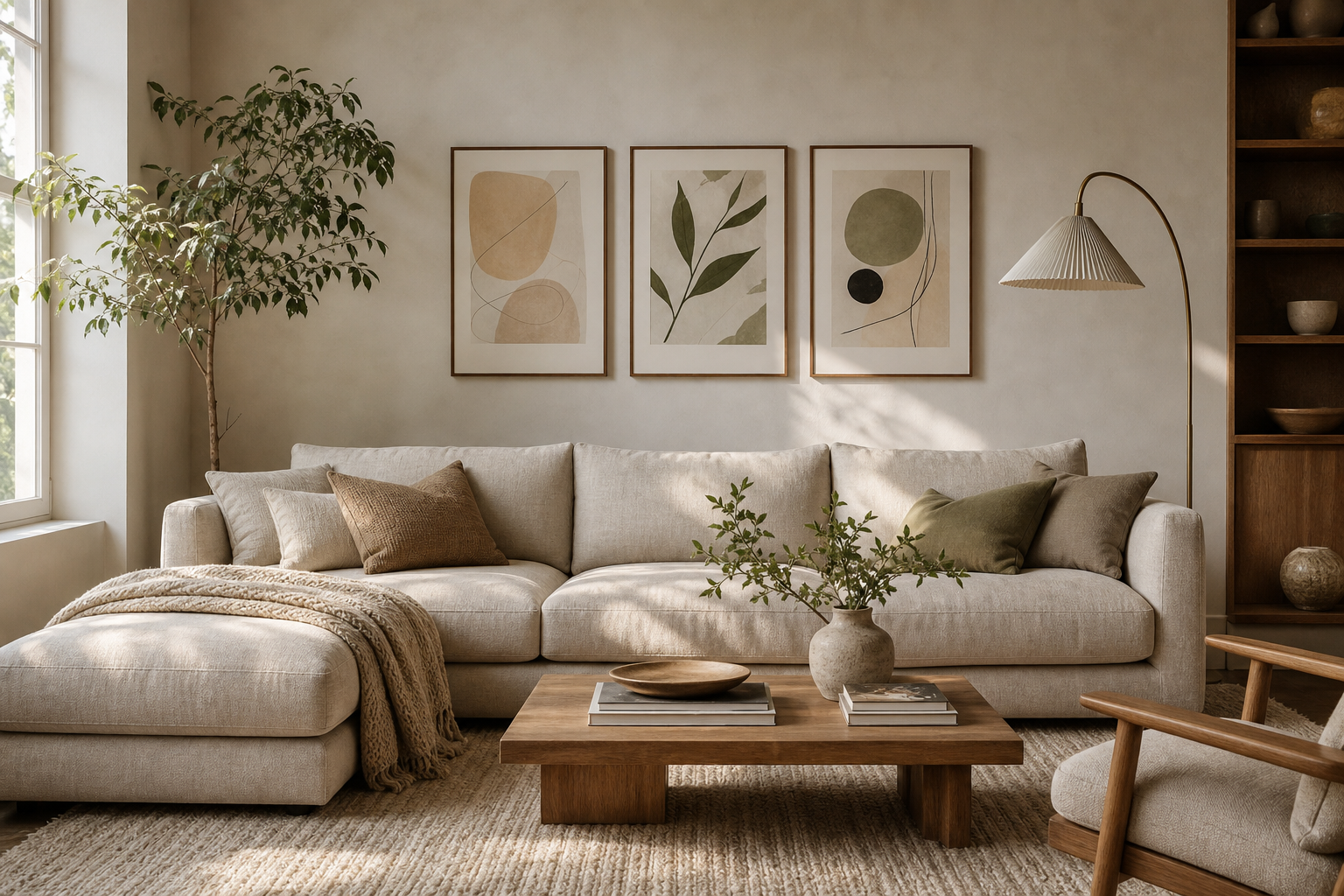
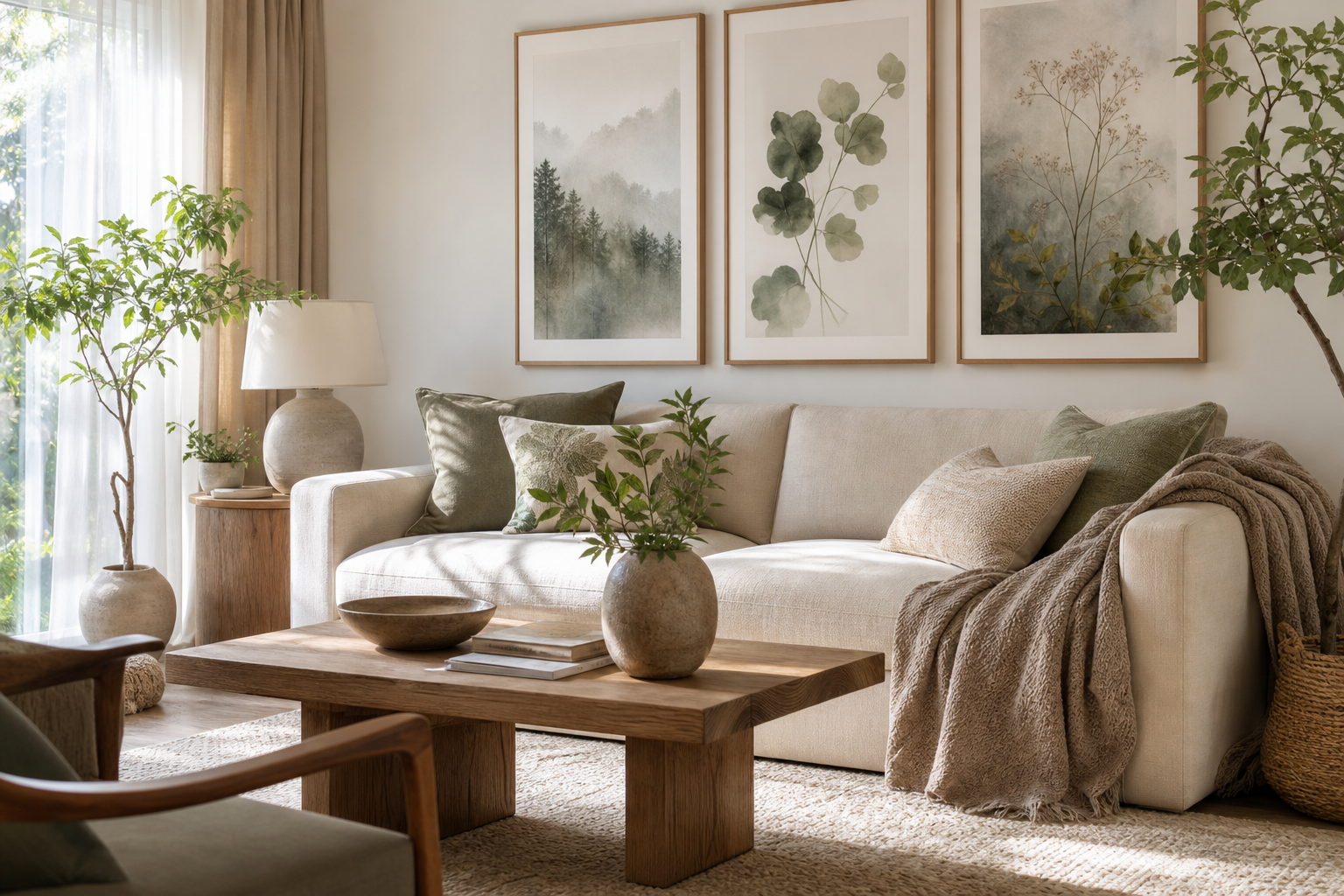
Creating more space for the living room starts with perception as much as square footage. A room feels larger when sightlines stay open, furniture has room to breathe, and the walls do more of the visual work than the floor. A few deliberate choices — layout, colour, scale, and wall art — can make even a tight room feel calm instead of crowded.
Start with the Layout
The fastest way to create space for the living room is to pull furniture into a clearer plan. Keep at least 70-90 cm of walking space through the main route of the room, whether that runs from the doorway to the sofa or from the sofa to a balcony door. If you have to turn sideways to pass a chair, the layout is too tight.
Start with one focal point, not three. That focal point might be a window, a fireplace, or a wall with art. When every large item points somewhere different, the room feels restless. In small living rooms, place the sofa against the longest wall, use one coffee table rather than several small side pieces, and avoid pushing every item to the perimeter if that leaves awkward dead space in the middle.
A useful rule is to choose furniture with visible legs. A sofa raised 15-18 cm off the floor shows more flooring, which makes the room read as larger. The same applies to narrow console tables and open-frame armchairs. Heavy skirted furniture blocks visual flow; lighter silhouettes help the room breathe.
If you want inspiration for pared-back compositions, browse our minimalist collection or look at interiors such as Modern Minimalist Living Room for a cleaner approach to proportion and spacing.
Use Wall Space to Free Up Floor Space
When floor area is limited, the walls should carry more weight. Hanging art above a sofa, sideboard, or reading chair adds personality without stealing a single centimetre of usable floor space. Vertical arrangements are especially effective because they pull the eye upward and make the ceiling feel taller.
A single large piece often works better than lots of small objects scattered across shelves. For example, one 50x70 cm framed print above a compact sofa can feel more expansive than five tabletop accessories spread around the room. If you prefer a grouped look, keep the spacing between frames tight — around 5-7 cm — so the arrangement reads as one visual unit rather than clutter.

Choose subjects that create openness rather than visual weight. Soft landscapes, airy abstracts, and window or horizon motifs help extend the room visually. Pieces from our abstract art prints and the fine art collection work well here because they add character without making the wall feel busy.
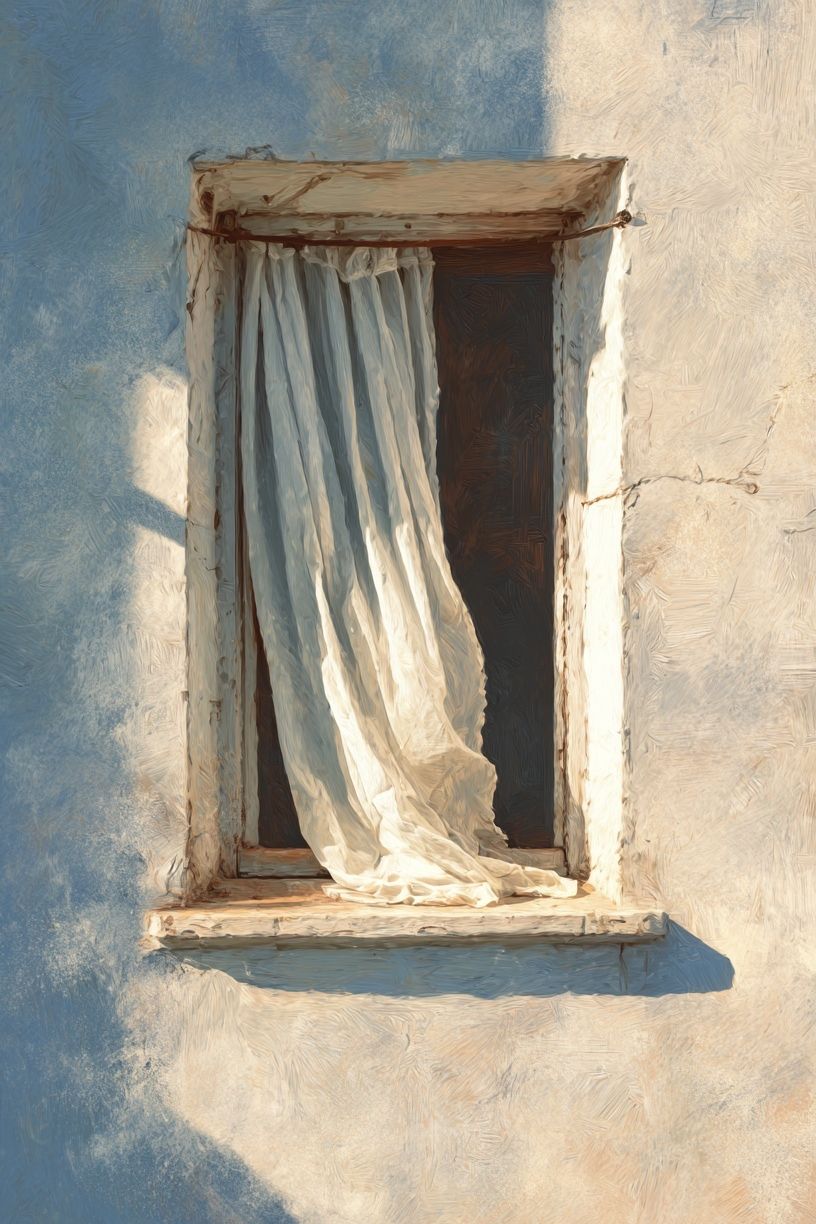
"Window with Sheer Curtain" is a smart example for smaller spaces because it echoes light, softness, and depth. Art that suggests an opening — sky, water, curtains, distance — helps a compact wall feel less closed in. If you want a similar restrained look, Window with Sheer Curtain suits neutral rooms and layered textures especially well.
Choose Colours That Make the Room Feel Bigger
Colour changes the edges of a room. Light tones reflect more daylight, so walls in off-white, soft sand, pale greige, or muted stone usually make a living room feel more open than stark contrasts do. That does not mean everything has to be white. A tonal palette with two or three close shades often feels richer and more spacious than a room packed with many competing colours.
Wall art should support that palette. If the room already has warm beige upholstery and oak wood, look for cream, blush, taupe, soft terracotta, or faded blue in your prints. If the room is cooler — grey upholstery, black accents, concrete or ash wood — choose smoky neutrals, washed charcoal, or misty blue. The aim is continuity. High contrast can look sharp, but in a small room too many hard stops visually chop up the space.


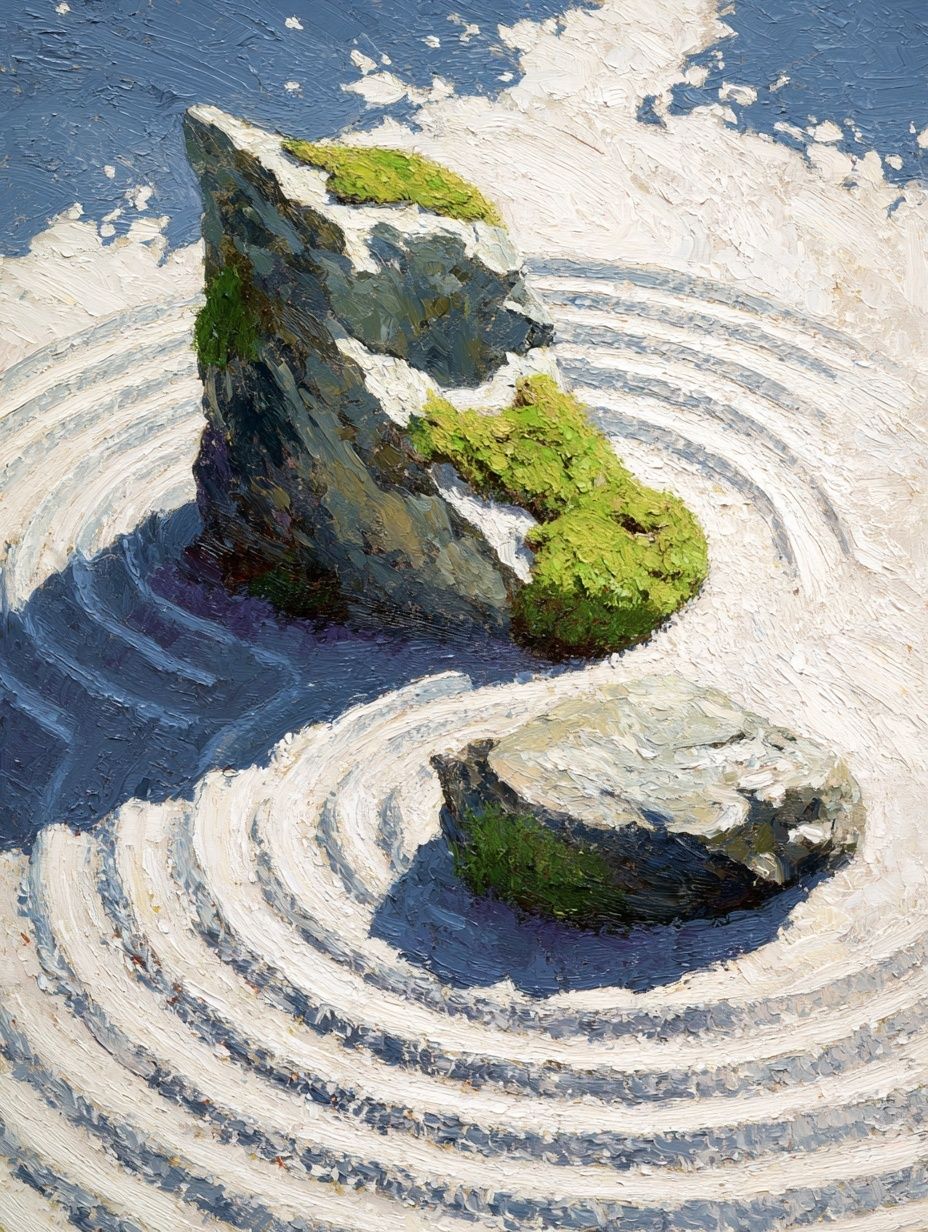
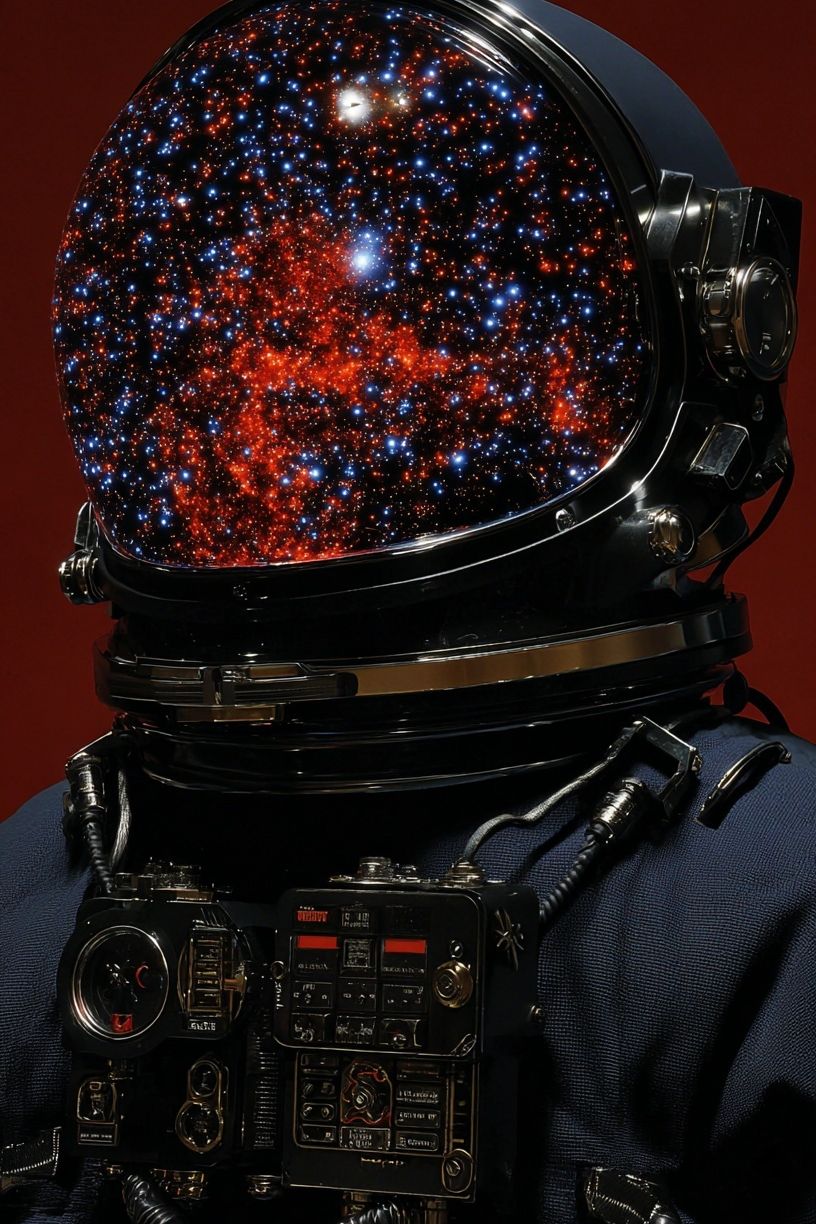
Muted abstract pieces are especially useful because they introduce movement without demanding attention from every corner of the room. Blush Watercolor Abstract works in warm neutral interiors, while Textured White Abstract keeps the palette bright and understated. If you prefer an organic, balanced finish, Zen Garden Stones adds depth through texture rather than strong colour.
Pick Art and Decor That Scale Well
Scale is where many small living rooms go wrong. A print that is too tiny looks lost and makes the wall feel unfinished. Decor that is too bulky eats up precious visual and physical room. The best balance usually comes from medium-to-large wall art paired with fewer, slimmer accessories.
Above a two-seat sofa, aim for art that covers around 60-75% of the sofa width. That usually means one 70x100 cm frame, two 50x70 cm frames, or a gallery of three smaller coordinated pieces. On a narrow wall between a window and a corner lamp, a single 30x40 cm or 40x50 cm piece is often enough. Keep frames slim — around 1-2 cm wide — in oak, black, or white to avoid adding heaviness.

Decor should follow the same logic. One generous table lamp, one rug, and one plant will usually do more for balance than six small ornaments. Try replacing clusters of small candles and trinkets with one sculptural object or a single framed print leaned on a shelf.
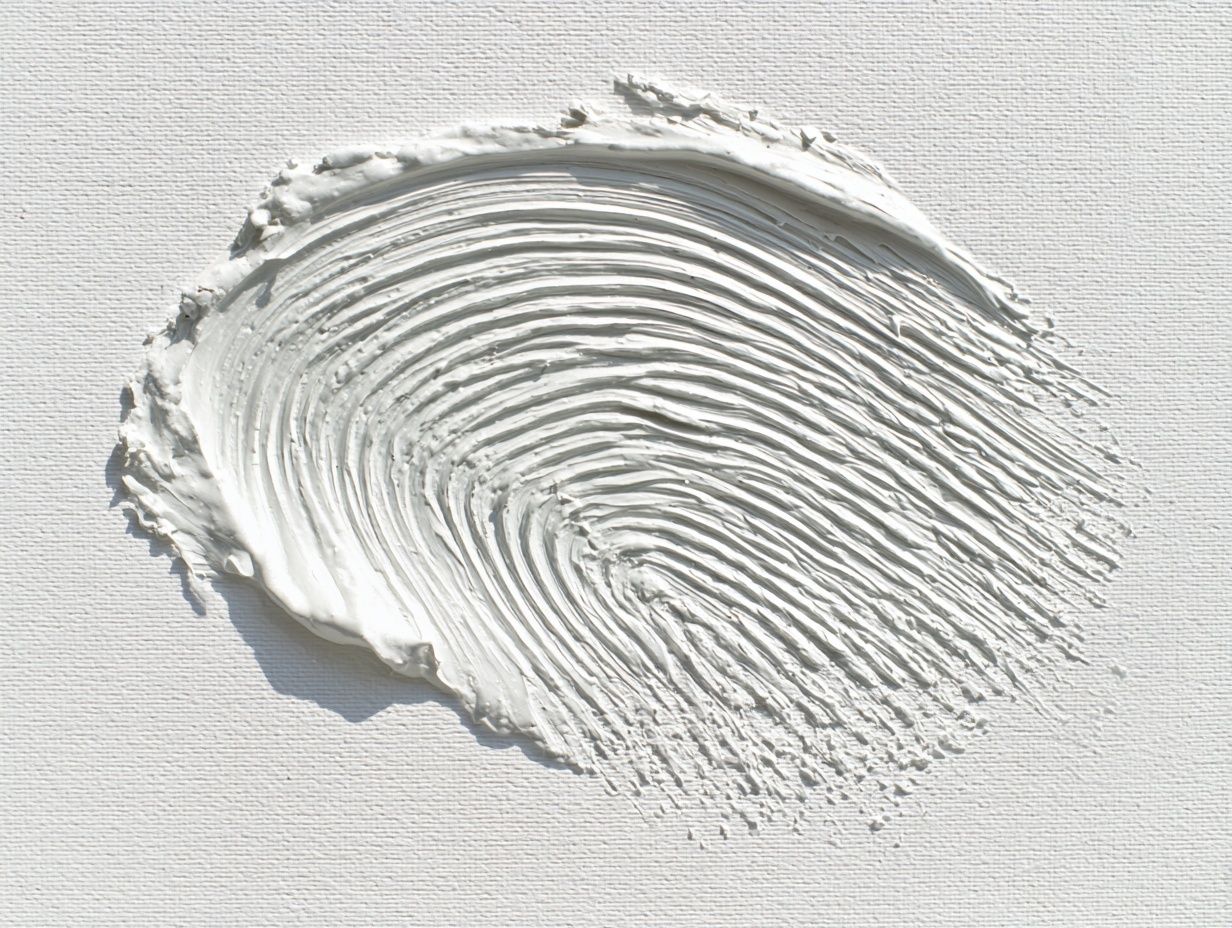
If you like a more graphic look but still want openness, the Mid Century Modern collection offers clean shapes that read clearly from a distance. In softer schemes, abstract wall art remains the most flexible option because it scales well without over-defining the room.
Add Depth with Mirrors, Layers, and Lighting
A room feels bigger when it has depth, not when it is stripped bare. Mirrors are useful because they bounce light and repeat the room visually, but placement matters. Hang a mirror opposite or adjacent to a window if possible, so it catches daylight rather than only reflecting a blank wall. Even a medium mirror around 60x90 cm can noticeably open up a compact seating area.
Soft layers matter too. A flat room can feel boxy, while a room with gentle variation feels dimensional. Use one large rug to anchor the seating zone, add cushions in two textures rather than five colours, and choose curtains that hang close to the ceiling and fall nearly to the floor. That vertical line lengthens the room.
Lighting should come from at least two or three sources: ceiling, table or floor lamp, and ambient light from a window or wall lamp. Warm white bulbs around 2700K-3000K usually make living spaces feel more relaxed and flattering than cooler light.

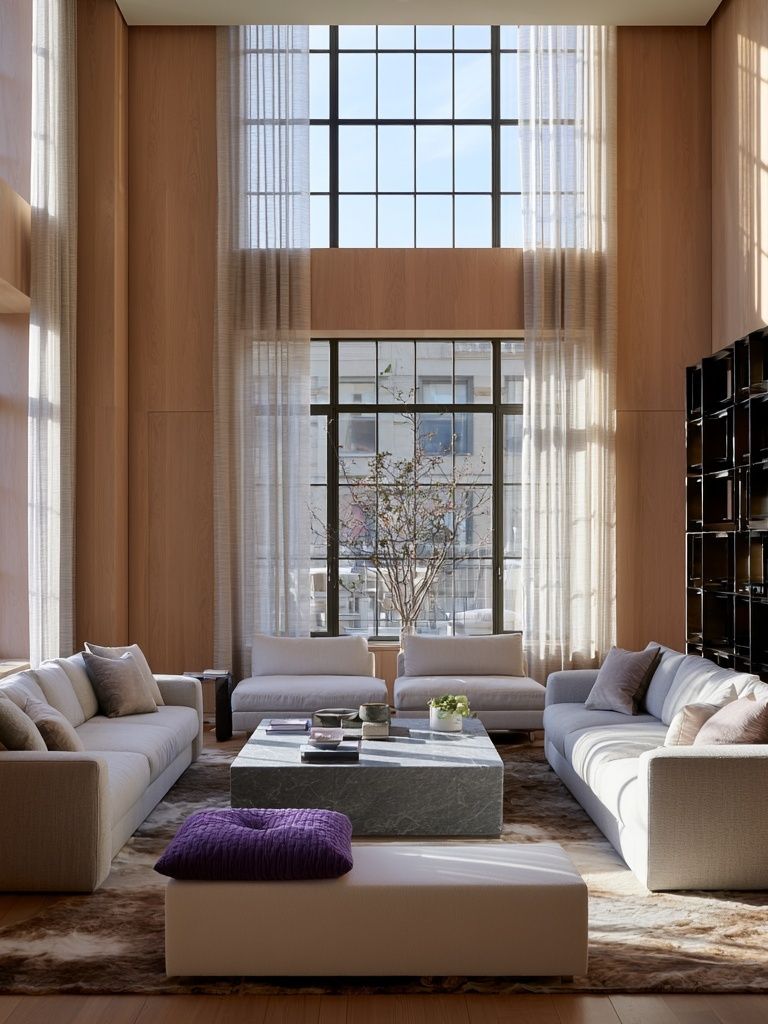
Art can reinforce this depth. Pieces with soft horizon lines, layered paint textures, or architectural openness tend to expand the feel of a room. If you want a print that supports a brighter atmosphere, Modern Sunlit Living Room shows how light-filled interiors stay airy through restraint and repetition.
Final Styling Tips for a Room That Feels Easy to Live In
The most effective rooms are edited, not empty. Keep surfaces 30-40% clear, repeat materials such as oak, linen, black metal, or brushed brass, and let the walls do more of the decorative work than the floor. That is the simplest route to more space for the living room without renovating.
A final check helps: remove one unnecessary side table, gather small decor into one tray, hang art at eye level, and make sure every piece has a reason to stay. If you want an easy starting point, combine one airy fine art print with one soft abstract from our fine art prints or the abstract collection. The result feels personal, lighter, and easier to live with every day.
Frequently Asked Questions
What size wall art works best above a small sofa?
A good target is 60-75% of the sofa width. For most compact sofas, that means one 70x100 cm piece or two 50x70 cm frames.
Should I use dark frames in a small living room?
Yes, if they are slim. Thin black frames can add definition without making the wall feel heavy, especially in rooms with black lighting or table legs.
Can mirrors and wall art work on the same wall?
They can, but keep one clearly dominant. Use a larger mirror with one smaller print nearby, or place art above furniture and the mirror on an adjacent wall.
What art subjects make a living room feel more open?
Look for landscapes, sky-inspired abstracts, soft architectural scenes, and light-toned compositions with visible depth. Busy, high-contrast subjects tend to shorten the room visually.