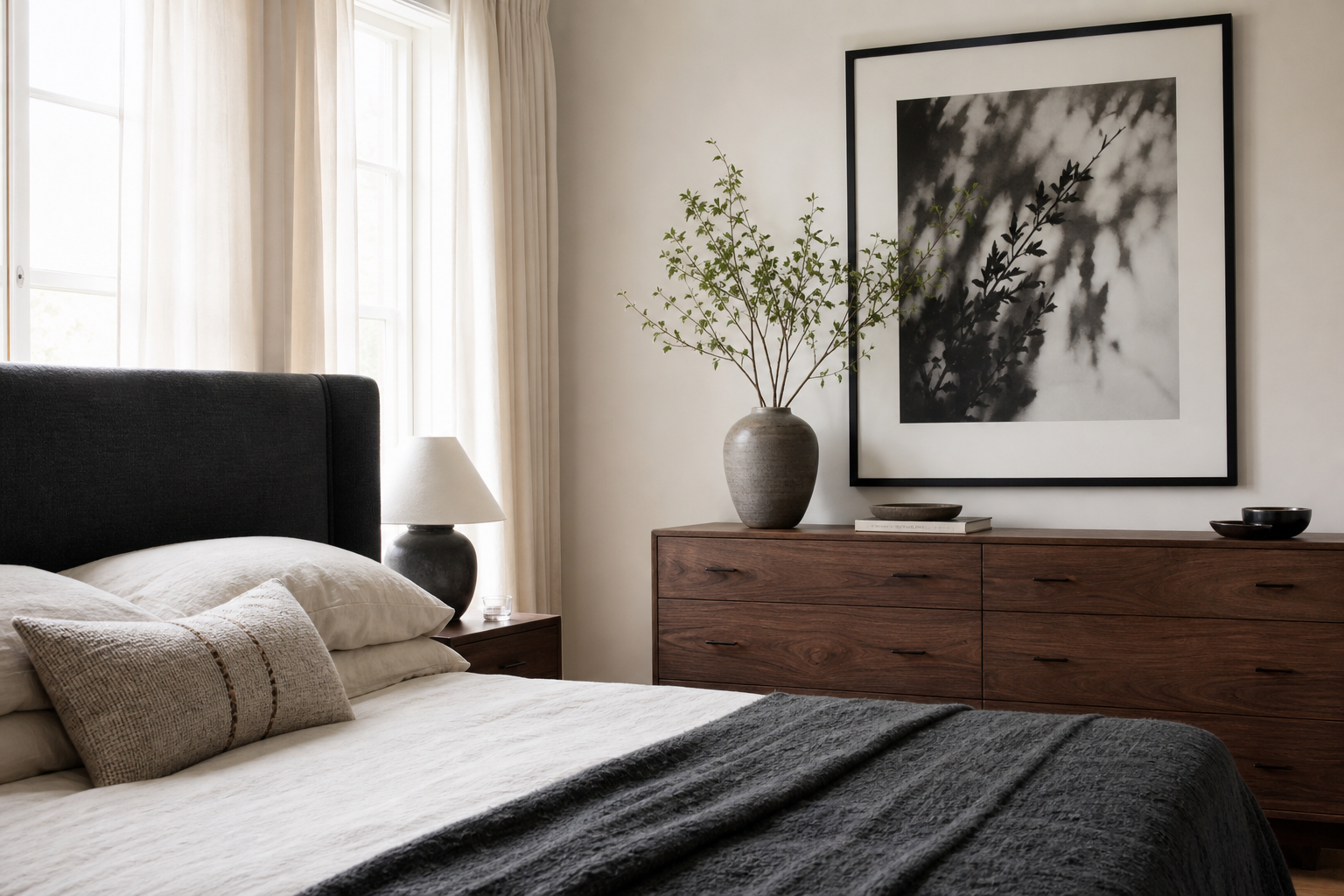
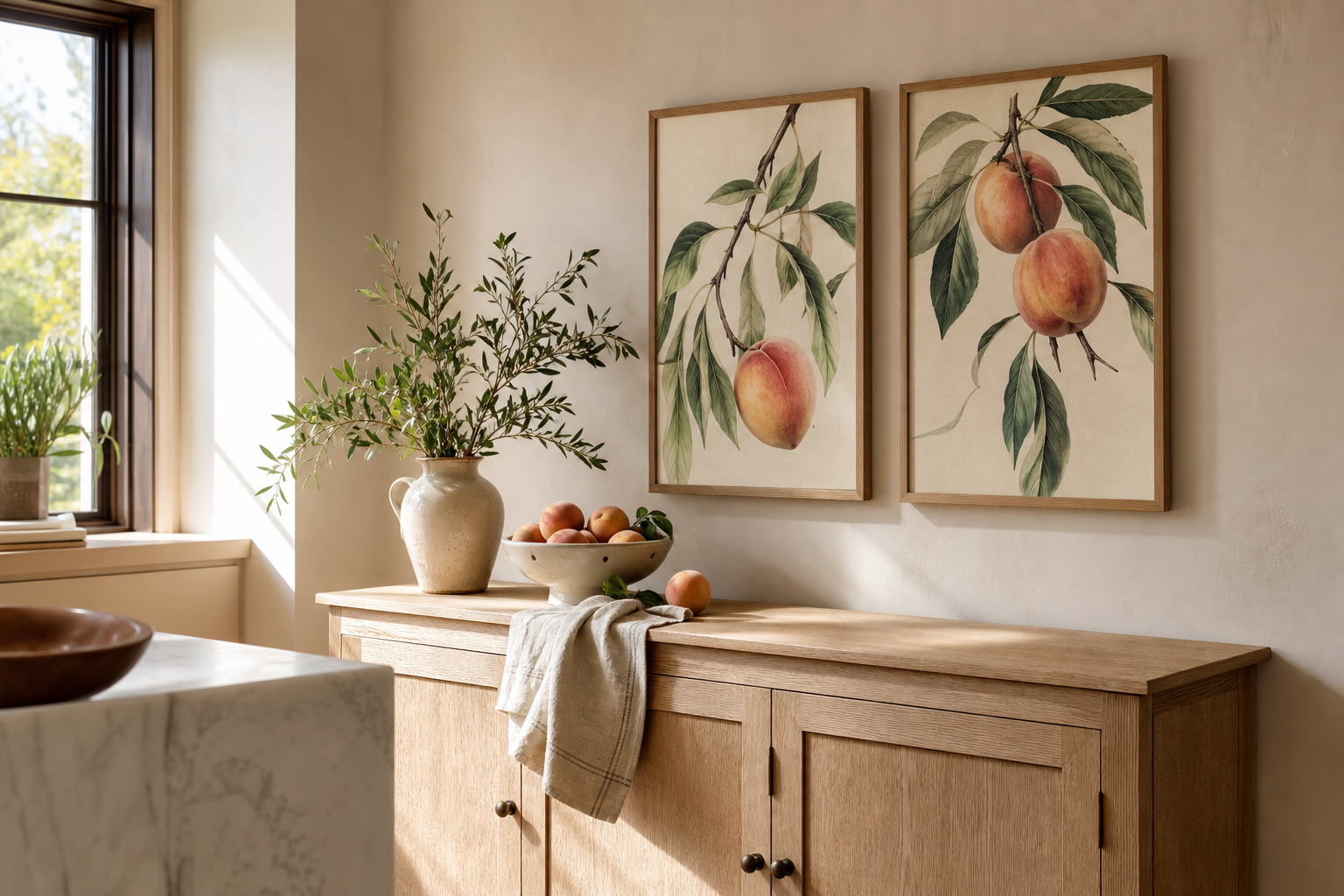
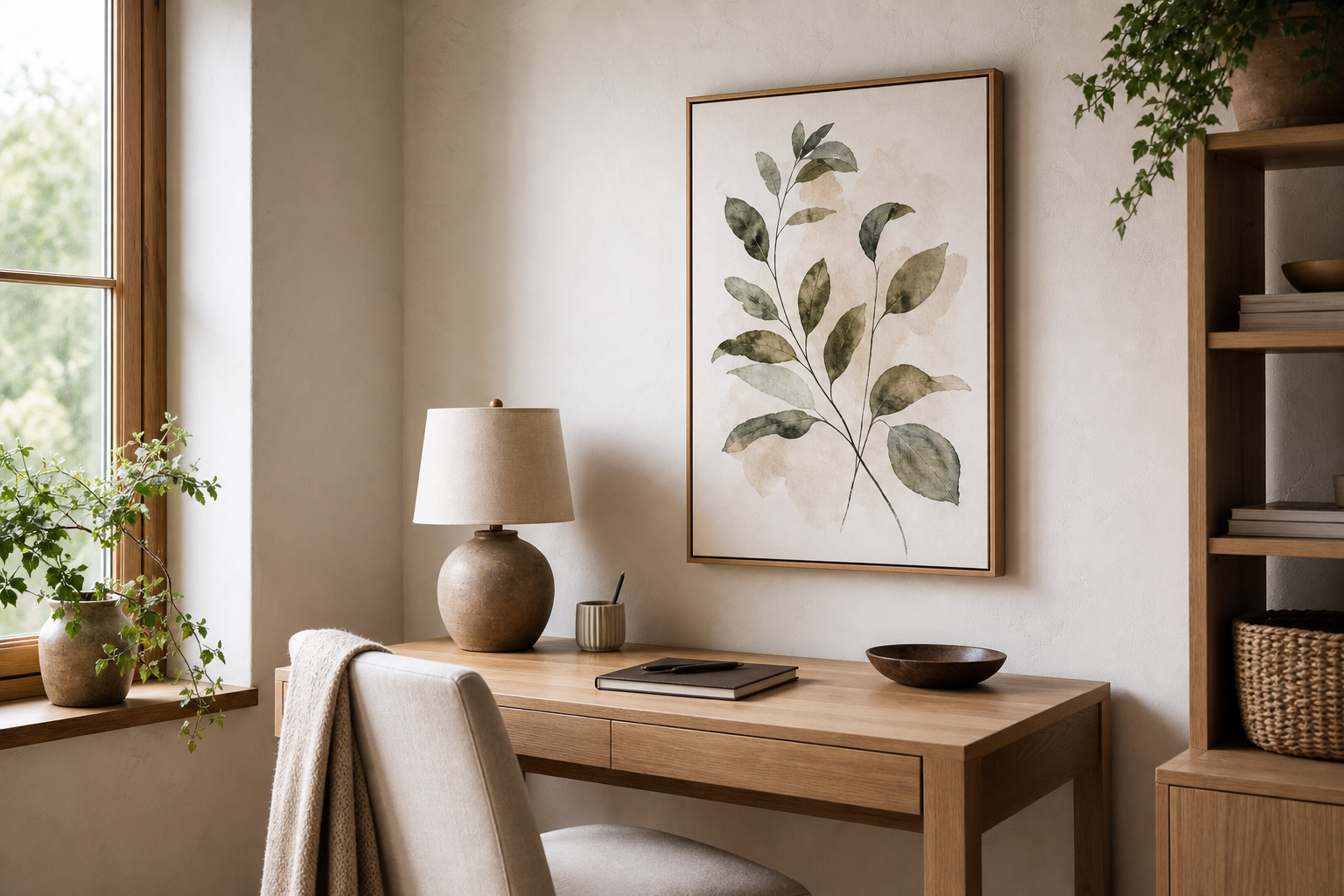
A coastal garden i poster print works because it balances two familiar decorating languages: the softness of botanical artwork and the open, airy character of seaside interiors. That mix feels relaxed rather than themed. You get natural detail, organic shapes, and a light palette without relying on overt nautical motifs.
What Makes the Coastal Garden Look Work
The best coastal-garden styling uses contrast in a restrained way. Botanical forms add movement — leaves, stems, wild blooms — while coastal rooms usually depend on calm surfaces such as washed wood, cotton, linen, and matte ceramics. When those elements meet, the wall art gives the room texture without making it visually heavy.
A coastal garden i poster print also suits more than one decorating style. In a classic scheme, it can sit comfortably beside pieces from our botanical collection. In a simpler space, it works with pared-back pieces from our minimalist wall art range. If you prefer a layered, collected look, it can bridge soft florals and landscape scenes from our nature art selection.
The appeal is partly about colour temperature. Coastal artwork usually lands in low-saturation tones — chalk white, misty blue, pale green, sand, and weathered beige. Those shades reflect light well, which makes them especially useful in rooms that need to feel fresher or larger. Even a medium print in 50 x 70 cm can visually lift a narrow wall if the palette stays light.

Choosing the Right Room for the Print
Bedrooms are often the easiest place to start. A coastal botanical piece above the bed creates a quiet focal point and supports a lower-contrast palette that encourages rest. For a double bed, aim for wall art around 60 to 75% of the bed width. That usually means one 70 x 100 cm print, or a pair of 50 x 70 cm pieces if you want symmetry.
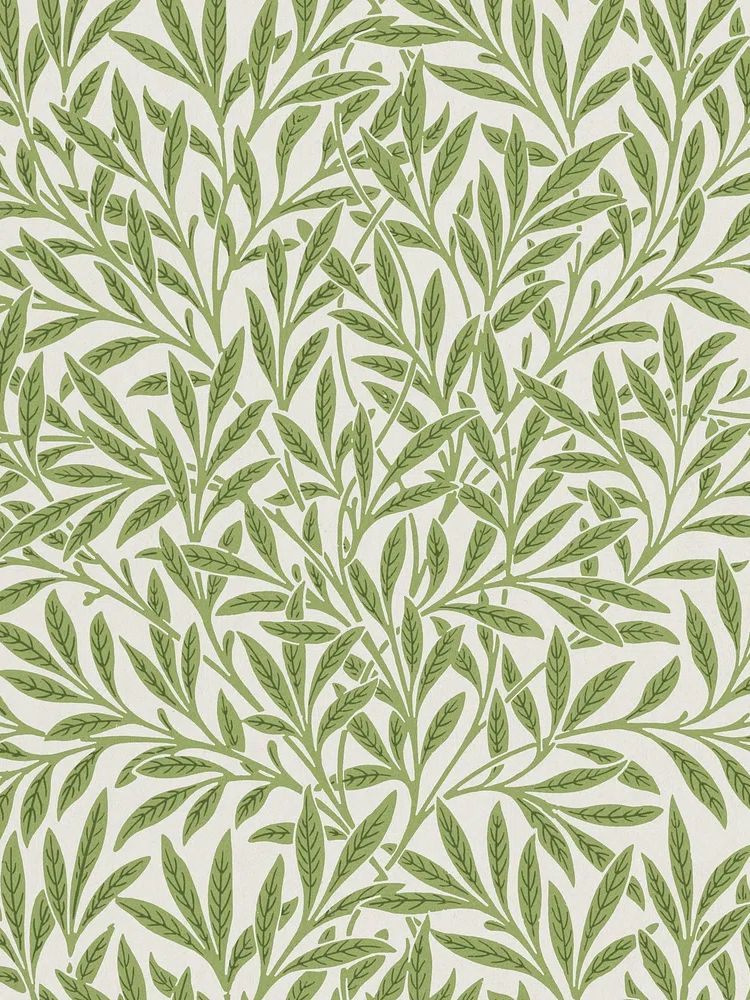
Living rooms suit this look when you want the wall art to soften the geometry of larger furniture. A sofa with straight lines, pale upholstery, and light timber side tables benefits from artwork with more fluid detail. If you are building around a botanical base, look at decorative pieces like William Morris's vintage willow leaves for a leaf-rich companion with natural rhythm.
Hallways are useful for smaller formats. A 30 x 40 cm or 40 x 50 cm framed print can break up a long corridor without crowding it. Keep the frame slim — around 1 to 2 cm visible width — so the overall effect remains airy. If the hallway lacks daylight, choose prints with more white or pale ground rather than dense, dark colour blocks.
Bathrooms are an underrated match for coastal garden styling, especially if the room already includes brushed brass, stone-look tile, or soft grey cabinetry. Use moisture-safe framing with an acrylic glaze rather than glass in high-humidity spaces. A print hung at eye level — roughly 145 cm from floor to centre — will feel intentional even on a compact wall.
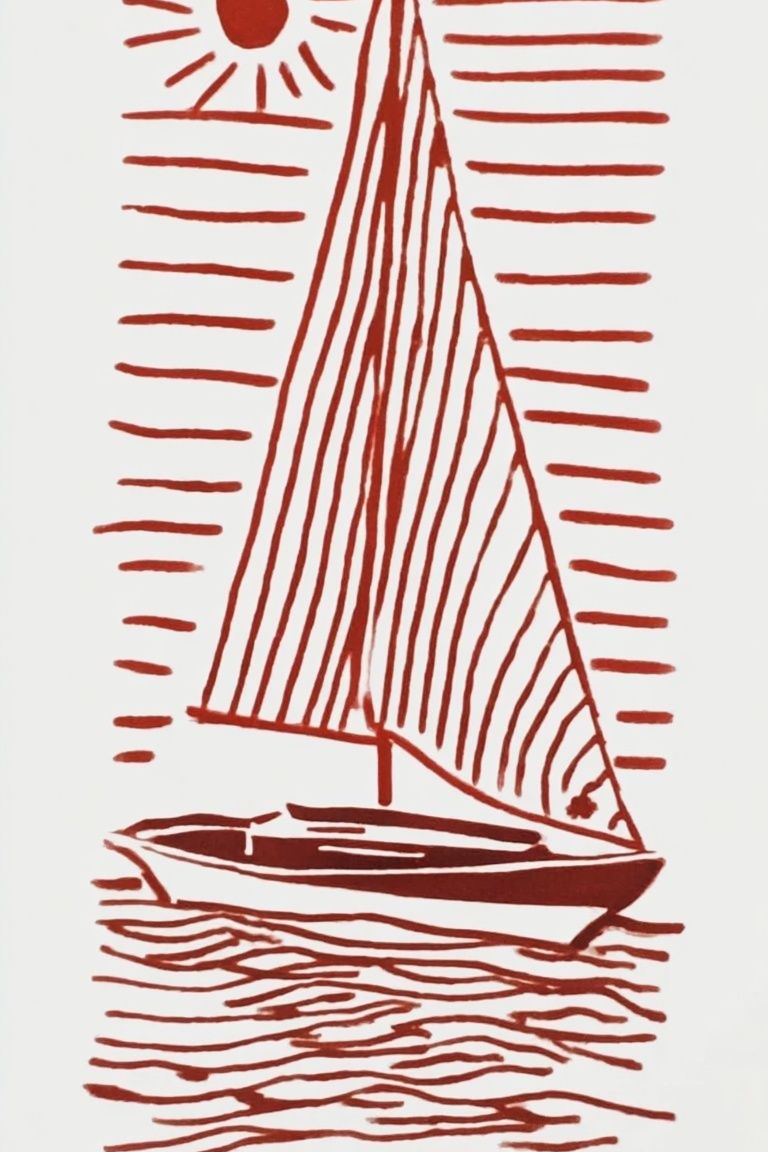
If you want the room to lean slightly more seaside than botanical, pair the print with a restrained marine image such as Sailing Boat Minimalist Wall Art. The key is keeping one piece detailed and the other quiet so they do not compete.
Colour Palettes That Bring Out the Print
The most reliable palette starts with four tones: chalk white, sand, muted sage, and sea glass blue. Use white for the largest surfaces, sand for warmth, green for softness, and blue as the smallest accent. A practical room ratio is 60% light neutral, 25% warm beige or wood, 10% green, and 5% coastal blue.
That ratio matters because coastal artwork loses its calm effect when surrounded by too many competing hues. If your room already has stronger colours — rust, black, or deep navy — keep them to accessories only. A single dark lamp base or thin black frame can sharpen the look; a dark sofa plus dark curtains plus dark frames will flatten the print's freshness.
For rooms that feel cold, add warmer botanical references instead of brighter colour. Pieces from our bohemian floral collection can introduce muted clay and soft wheat tones that still sit naturally with coastal decor. The same approach works with heritage botanical designs such as Honeysuckle by William Morris (1874) if you want more pattern.

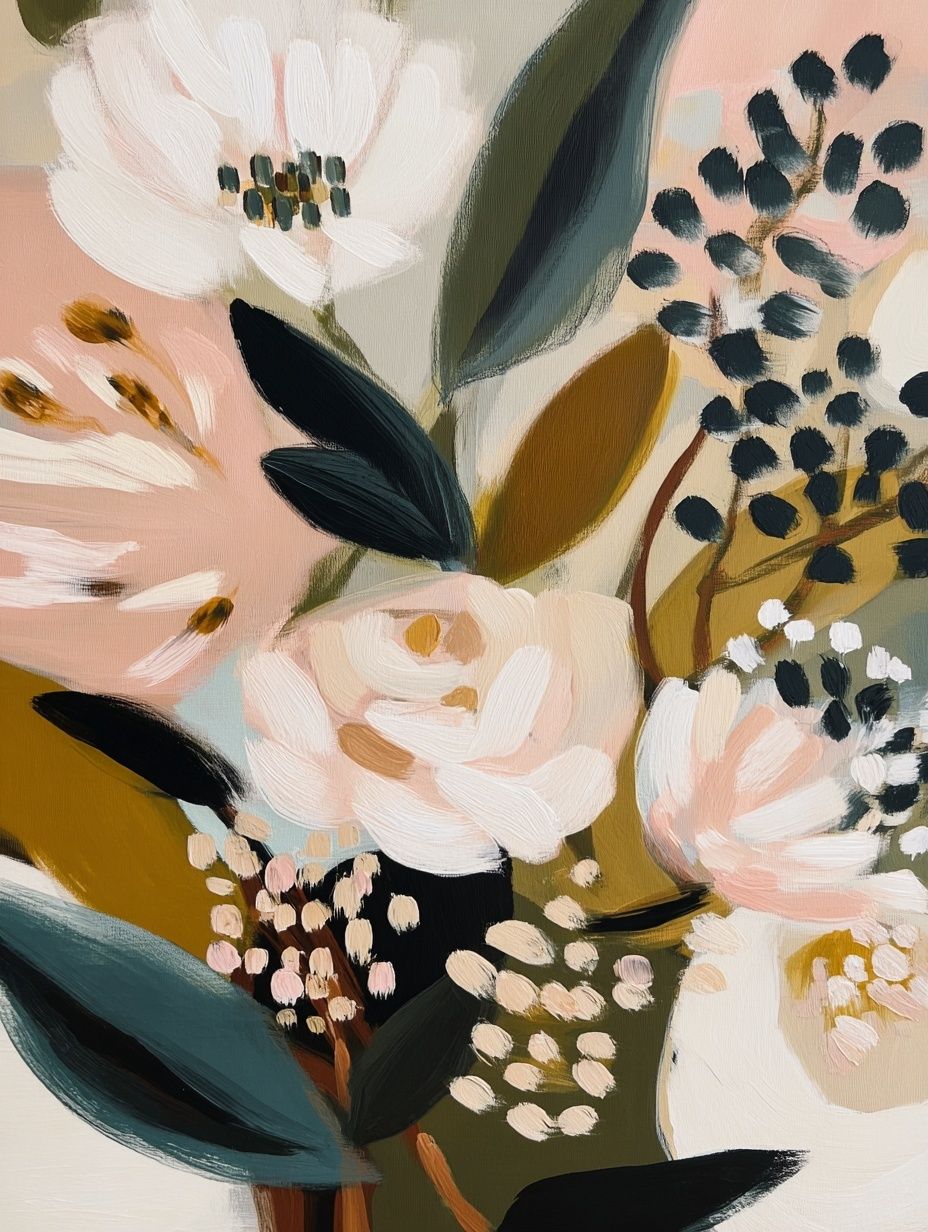


Another effective route is tonal layering. Instead of matching colours exactly, repeat the same family in different textures: painted walls, linen drapery, glazed ceramic vases, and washed oak. This gives the coastal garden i poster print more presence because the room supports it without turning literal.
Sizing, Framing, and Placement Tips
Frame finish changes the mood more than most people expect. Natural oak feels relaxed and contemporary. White frames look crisp in bright spaces and work well against pale blue-grey walls. Thin black frames add definition, but use them sparingly in coastal rooms — best on smaller prints or gallery walls where you need structure.
Matting helps detailed botanical art breathe. A white mount of 5 to 8 cm around the print can make a 40 x 50 cm piece feel more refined and gallery-like. If the artwork itself already has plenty of pale negative space, skip the mat and keep the profile simple.

As for placement, hang art 15 to 25 cm above furniture. Above a console, keep the artwork width at roughly two-thirds of the console width. Above a bed or sofa, centre the composition with the furniture rather than the wall. These small measurements are what make styling look composed instead of accidental.
If you are pairing your coastal botanical print with a second piece, choose one with a different visual density. A detailed floral or foliage artwork sits well beside a more open landscape such as Serene Landscape — Watercolor Print. That contrast gives the eye a place to rest.

For a more decorative, historic feel, a classic botanical like Green Tulip by William Morris brings richer pattern without losing the garden theme. Use it in a study, guest room, or hallway where a slightly denser look feels appropriate.
How to Build a Coastal Gallery Wall
A strong coastal gallery wall usually combines three image types: botanical detail, horizon-based landscape, and one quieter abstract or minimalist piece. That formula keeps the arrangement from becoming repetitive. For a 4-piece layout, use two verticals and two horizontals with 5 to 7 cm spacing between frames.
Start with your anchor piece — the coastal garden print — then add one ocean or shoreline image, one botanical companion, and one very simple balancing print. If you want a slightly vintage angle, a piece like Lighthouse Coastal Toile Print can add narrative without overpowering the wall, provided the rest of the set remains light.

Keep the layout tight if the artwork is delicate. Wide spacing makes small and medium pieces feel disconnected. On a wall above a sideboard, a total grouping width of 120 to 150 cm usually feels balanced. In a hallway, keep the grouping narrower — around 80 to 100 cm — so circulation still feels open.
If you prefer an organic, layered interior rather than a crisp coastal one, mix in art from our fine art collection or softer decorative florals from Floral Birds — Bohemian Print. The thread that keeps everything coherent is colour restraint, not identical subject matter.
Final Styling Ideas and Shop Tips
Small styling details finish the look. Place a ribbed ceramic vase, coral-toned shell, or a branch clipping near the framed print rather than directly under it. Keep tabletops at about 70% filled at most — too many objects dilute the calm, editorial feeling coastal rooms need.
Seasonally, switch textiles rather than the art. In summer, use washed cotton in white and faded blue. In autumn, bring in oat, flax, and muted olive through throws and cushions. The wall art stays relevant because the palette is already grounded in nature.
When shopping, check the room from 2 to 3 metres away before deciding on size. If the wall art disappears at that distance, go larger. If it dominates the furniture beneath it, reduce the width or add a mat to create more visual breathing room. A coastal garden print should feel settled, not loud.
Putting it together
A coastal garden look succeeds when the room feels light, natural, and slightly layered. The easiest formula is simple: one botanical focal piece, one or two supporting coastal accents, pale materials, and disciplined colour use.
A coastal garden i poster print gives you that balance quickly. Style it with soft neutrals, natural frames, and companion artwork that shares the same calm tempo, and the whole room reads more polished with very little effort.
Frequently Asked Questions
What frame material works best for a coastal botanical print?
Light oak is the safest choice because it adds warmth without heaviness. White-painted wood also works well in bright rooms with cool wall colours.
Can I hang this type of print in a bathroom?
Yes — use a sealed frame and acrylic glazing if the room gets steamy. Keep the print away from direct splash zones near the shower or sink.
What size should I choose for a narrow hallway?
For most hallways, 30 x 40 cm or 40 x 50 cm works well. If the ceiling is high, a vertical 50 x 70 cm print can make the wall feel taller.
Does coastal wall art have to include blue?
No. Sand, chalk white, sage, and weathered wood tones can carry the look on their own. Blue works best as a small accent rather than the dominant colour.
What other prints pair well with a coastal garden style?
Look for soft landscapes, understated ocean scenes, and botanical pieces with pale grounds. Minimal line work and gentle watercolour textures also blend well.