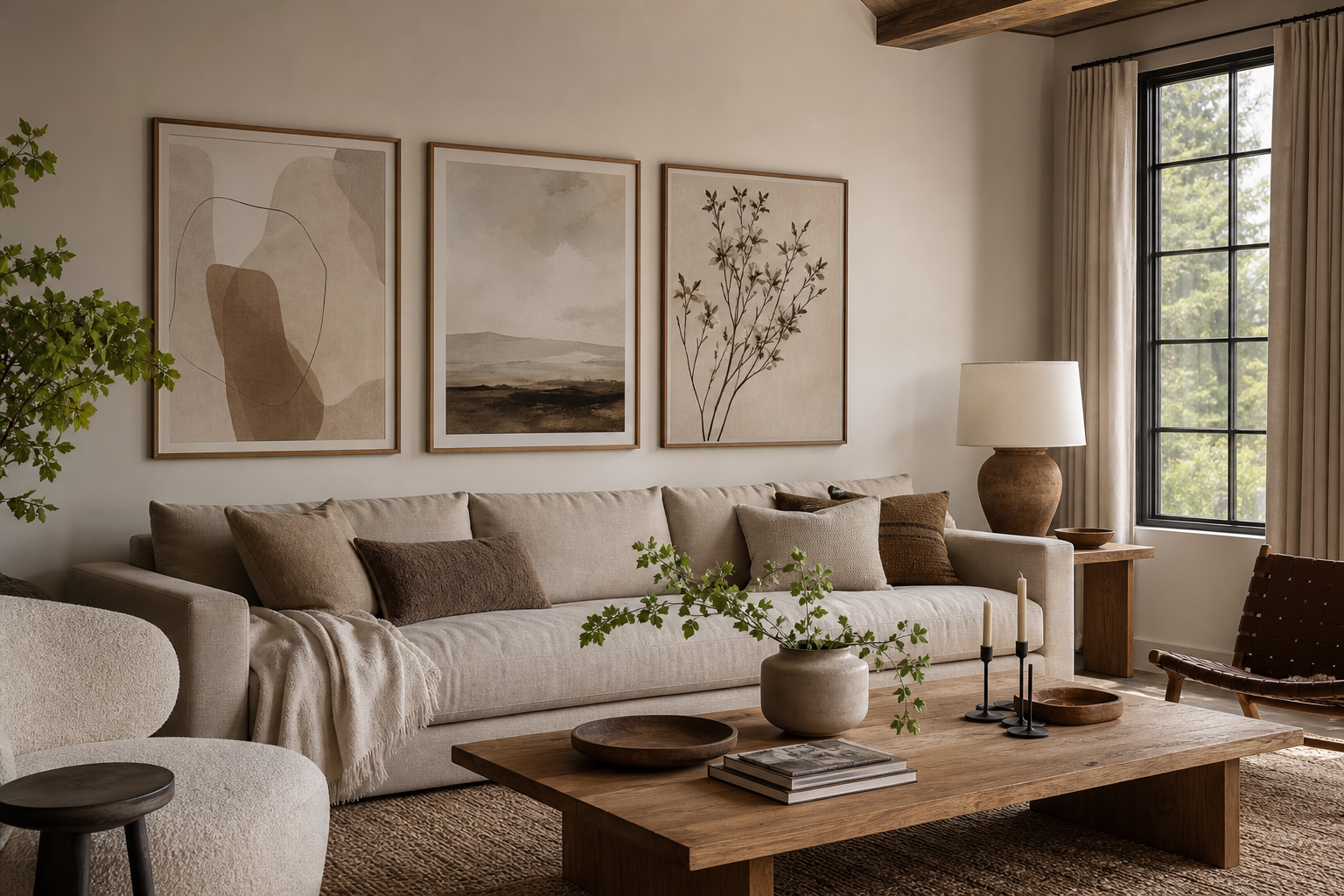
The best wall art living room ideas start with one simple question: which surface should carry the visual weight of the room? In most living rooms, that is the wall above the sofa, the chimney breast, or the first wall you see when entering. If the room already has a strong focal point such as a fireplace, built-in shelving, or a large window, art should support it rather than compete with it. If the room lacks a focal point, art can create one in under 10 minutes of planning and one careful hanging session.
A finished room usually has one dominant art moment and one or two quieter supporting areas. That is why strong wall art living room ideas are less about filling every blank patch and more about choosing where the eye should land first. In practical terms, stand at the doorway and at your main seating position. If a wall is visible from both angles, it is usually the right place to anchor the room with a larger piece or a structured arrangement.
Start With the Wall You Want to Transform
Above-sofa placement works because the furniture gives the art a visual base. A good rule is to make the arrangement about 60% to 75% of the sofa width. For a 220 cm sofa, aim for art spanning roughly 132 to 165 cm. That could mean one oversized 100 x 140 cm piece, two 50 x 70 cm frames side by side, or a gallery wall built within a 140 x 90 cm envelope. When art is much narrower than this, the wall often looks unfinished rather than intentional.
Fireplace walls need a different approach. Keep art slightly narrower than the mantel, and leave 10 to 20 cm of breathing room on each side. If you have open shelving or a media unit, choose calmer pieces with less visual noise so the room does not feel crowded. our minimalist wall art collection works especially well on busy architectural walls because restrained compositions keep the room balanced.
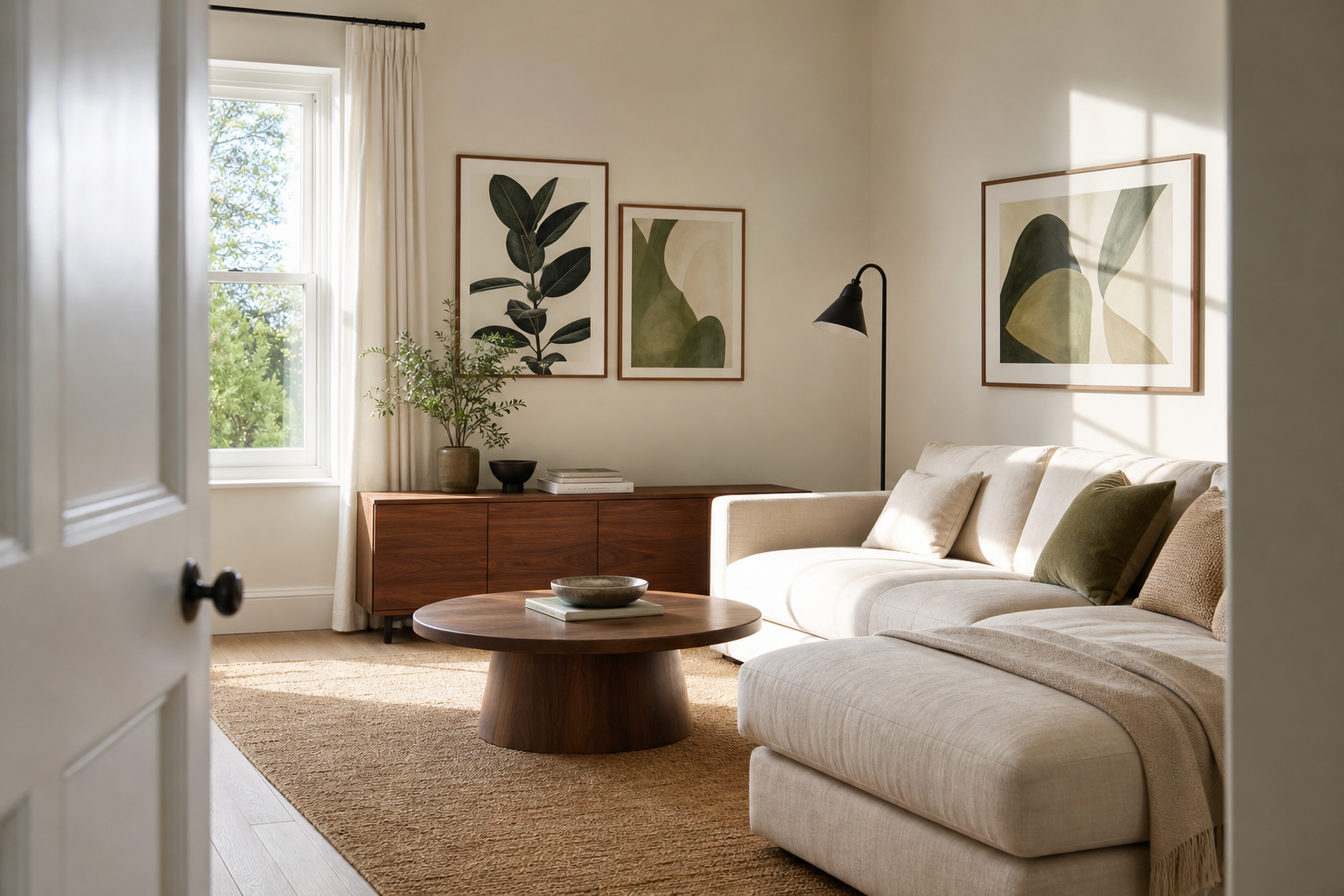
If your layout is open plan, use art to define the living zone. A wall behind the sofa or beside the lounge chair can separate the seating area from dining or kitchen spaces without adding any physical divider. Architectural pieces from our architecture collection are especially effective here because they echo clean lines, windows, and built structures already present in the room.
Choose Art That Matches the Mood of the Room
The subject and palette of the art change the room faster than almost any accessory. Soft neutrals, pale textures, and gentle botanical forms make a room feel calmer. High-contrast black and white creates a sharper, more tailored effect. Saturated blues, rusts, and layered brushwork add energy and depth. If your living room already has strong furniture silhouettes, quieter art keeps the room refined. If the furniture is simple, more expressive pieces can carry the personality.
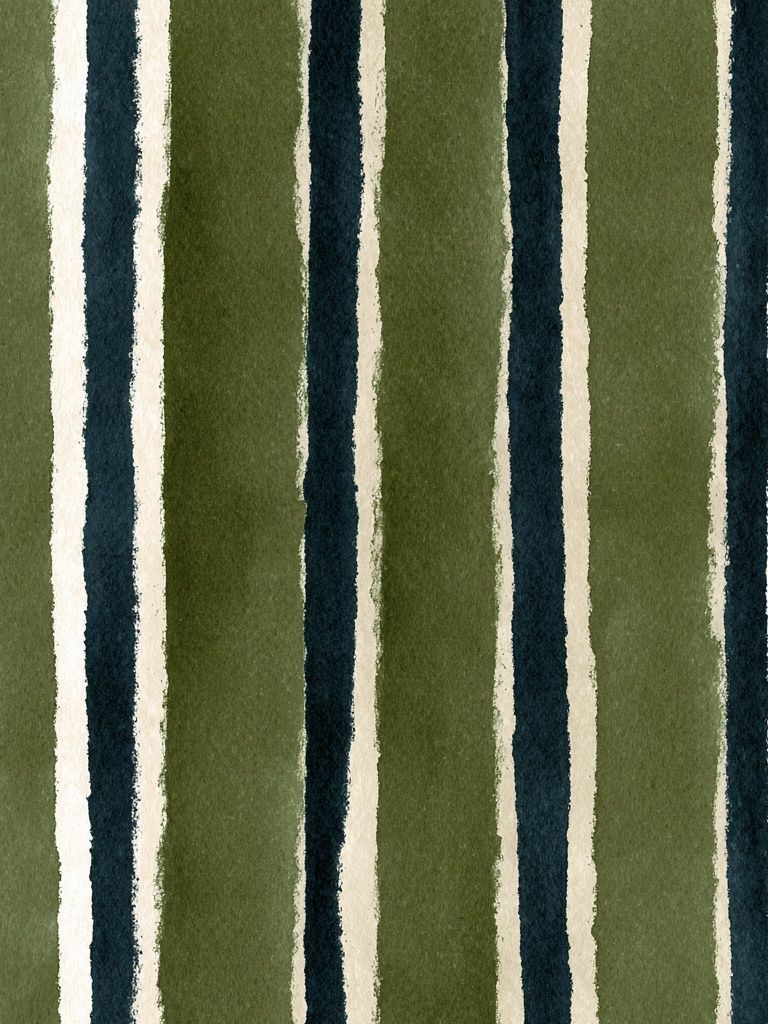
Rooms designed for calm often benefit from tonal work rather than busy detail. A textured cream piece, a soft floral silhouette, or a minimal seascape can make a space feel more spacious because the eye is not constantly interrupted. White Cream Texture Poster is a strong example for neutral interiors, especially with oak, travertine, boucle, or light linen.

For a more layered, lived-in room, fine art landscapes and painterly subjects add warmth. They pair particularly well with vintage wood, curved lamps, and patterned rugs. If you want a living room to feel collected rather than newly decorated, browse our fine art prints or our botanical collection and look for muted greens, dusty blues, and softened edges.
If your space leans modern, abstract pieces often work best because they echo the geometry of contemporary furniture. our abstract wall art includes options with movement, texture, and color blocking that give a room energy without relying on literal subjects.
Get the Scale Right for Sofas, Mantels, and Blank Walls
Scale is where many living rooms go wrong. A beautiful print can still look lost if it is too small. For most standard living rooms, 50 x 70 cm is the minimum size that reads clearly over a sofa when framed. On a larger wall, 70 x 100 cm or 100 x 140 cm gives proper presence. If you are using two pieces above a sofa, two 50 x 70 cm or two 70 x 100 cm frames usually feel balanced. Leave 5 to 8 cm between paired frames so they read as one composition.
For blank walls with no furniture underneath, you can go larger than you think. A tall vertical piece works well on narrow walls near windows or reading chairs, while a wide horizontal arrangement makes a long wall feel proportioned. If the wall is more than 240 cm wide, one small frame in the center will almost always look under-scaled. Fill at least half of the visual width, and often closer to two-thirds.
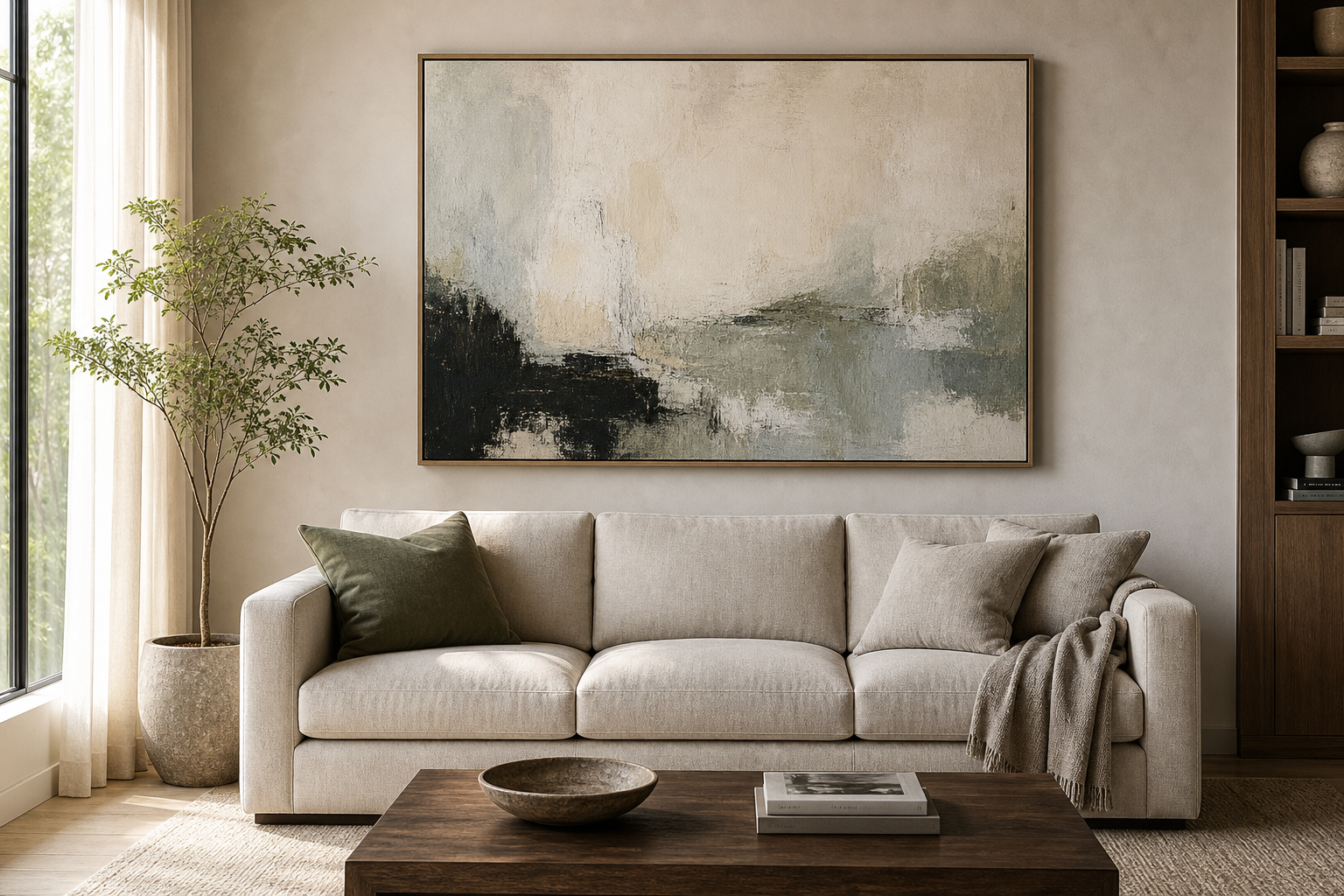
A useful hanging height rule is to place the center of the arrangement at about 145 cm from the floor, then adjust slightly for low sofas or high mantels. Above seating, keep the bottom of the frame 15 to 25 cm above the back of the sofa. Above a mantel, 10 to 15 cm is often enough. These numbers create connection between art and furniture, which is what makes the room feel finished rather than floating.
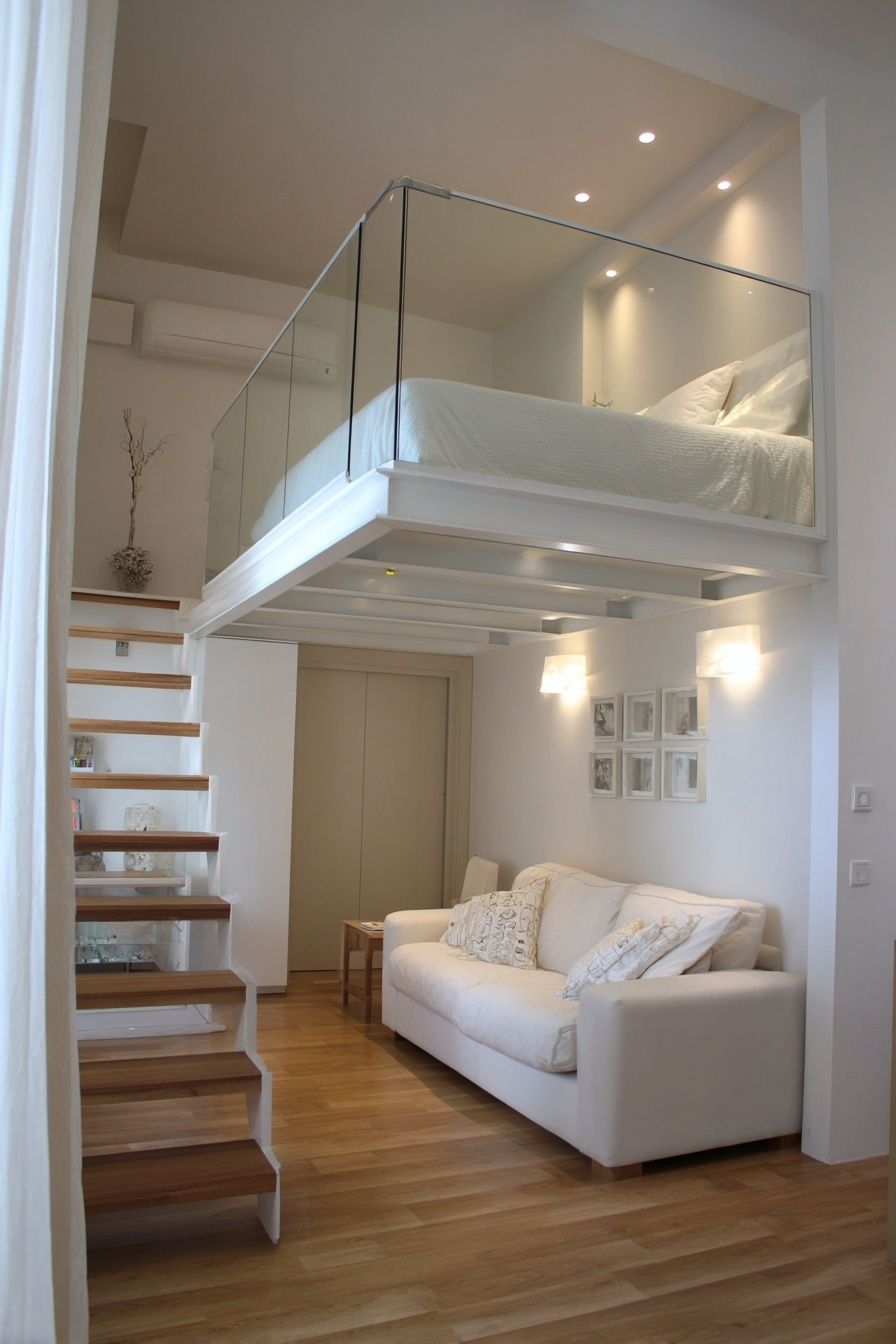
Pieces with visible interior perspective, like Modern Loft Living Room — Interior Design Print, are useful on medium-to-large walls because they have enough structure to hold space without feeling heavy.
Try a Gallery Wall, Diptych, or Oversized Statement Piece
A gallery wall suits living rooms that already have a relaxed, layered look. It works especially well with bookshelves, collected objects, and mixed textiles. Keep the spacing consistent — 5 to 7 cm between frames is a good working range — and build the arrangement inside an invisible rectangle. That hidden outer shape is what stops the display from becoming messy.
A diptych is often the smartest option for symmetrical rooms. Two related pieces above a sofa or sideboard create width and order with less effort than a gallery wall. This is one of the most reliable wall art living room ideas for modern and transitional interiors because it feels polished without being stiff. Choose pieces with a shared palette, subject, or horizon line to keep the pair connected.
An oversized statement piece is best when the room needs clarity. One large artwork can quiet down a space full of mixed furniture, patterned upholstery, or open shelving. If the wall is the room's main blank surface, do not be afraid of scale. A single large piece often looks cleaner than four smaller ones trying to do the same job.


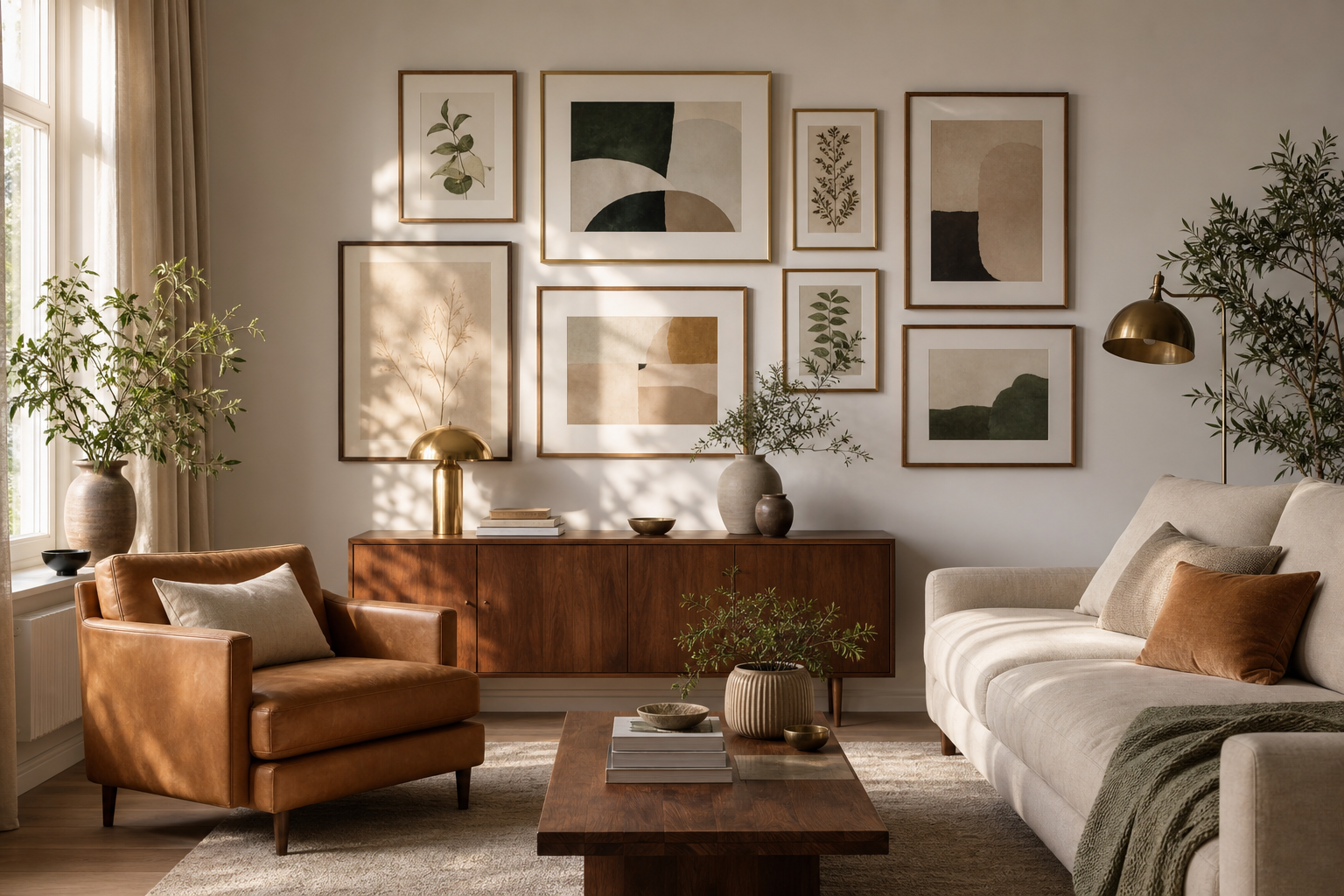
For gallery walls that need cohesion, use one frame finish across all pieces. For more variety, keep the frame color limited to two finishes — such as oak and black — and repeat each at least twice. You can also mix categories in a controlled way: one or two works from our photography collection paired with abstracts and a fine art piece often creates just enough contrast.
Use Colour and Framing to Tie the Room Together
The easiest way to connect art to the room is to repeat one or two colors already in the space. Pull green from a plant, rust from a cushion, charcoal from a lamp, or cream from upholstery. You do not need an exact match. In fact, near-matches usually look richer. If 20% to 30% of the artwork shares tones with the room, it will feel integrated.
Frame finish matters just as much as the print itself. Oak frames warm up cool palettes and suit Scandinavian, organic modern, and bohemian spaces. Black frames sharpen neutral rooms and help pale art stand out on white walls. White frames work best when the artwork has enough internal contrast to avoid fading into the wall. If your room already has mixed wood tones, choose the frame that matches the largest visible wood surface — often the coffee table, flooring, or media unit.

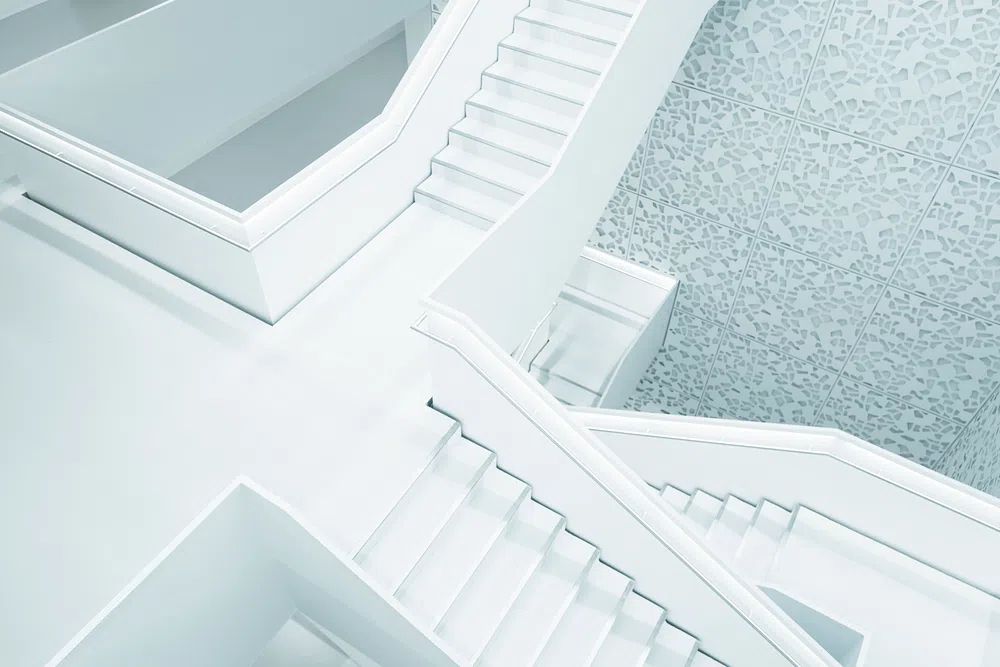
Painterly works such as Water Lilies — Fine Art Print bring several tones into one piece, which makes them useful bridge items in rooms with mixed textiles and layered surfaces. For cleaner, more architectural rooms, Textured Waves — Abstract Print or Modern White Staircase — Minimalist Print can echo the room's structure without adding clutter.
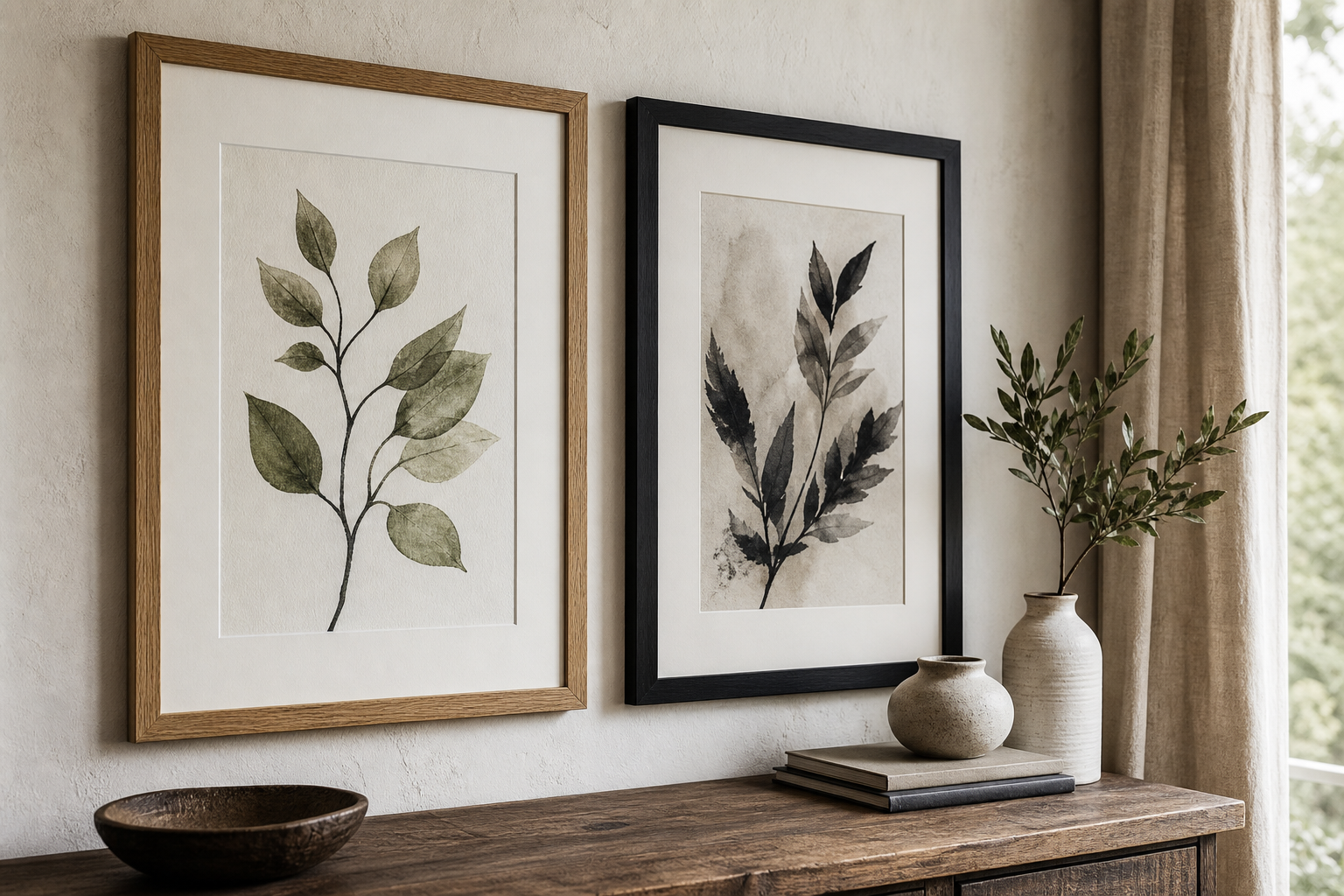
Matting is worth using when you want a more elevated look. A white mat can make a 50 x 70 cm print feel more substantial in a 70 x 100 cm frame, and it gives delicate artwork more breathing room. In minimalist rooms, that extra border often makes the whole arrangement feel more intentional.
Finish With Styling Tips That Make Art Feel Intentional
Spacing is what separates decoration from design. Keep 5 to 8 cm between frames in a pair, 15 to 25 cm above sofa backs, and enough side clearance so art does not crash into lamps, curtains, or shelving. If you are styling a narrow wall near a window, leave at least 10 cm from the trim so the arrangement has room to breathe.
Layering can also help. A framed piece placed on a picture ledge, console, or mantel creates softness because not everything is pinned flat to the wall. Leaned art works best when anchored by something with volume nearby — a vase, stacked books, or a table lamp. In living rooms, this is a useful technique for secondary areas, while the main wall should usually remain hung and properly centered.
If you are mixing art with mirrors, sconces, or shelves, choose one dominant element and let the others support it. A common ratio is roughly 70% art, 30% accessory across the focal wall. That keeps the wall from feeling fragmented. Among the most reliable wall art living room ideas, this is the one that creates the quickest improvement: fewer elements, better placed, at the right scale.
Final thoughts
The living room feels finished when the art matches the room's proportions, mood, and materials. Start with the wall that deserves attention, choose a layout that suits the furniture below it, and size the arrangement generously enough to hold the space.
The strongest wall art living room ideas are rarely complicated. One well-scaled piece, a balanced pair, or a tightly edited gallery wall can do the whole job — especially when color, framing, and hanging height are handled with care.