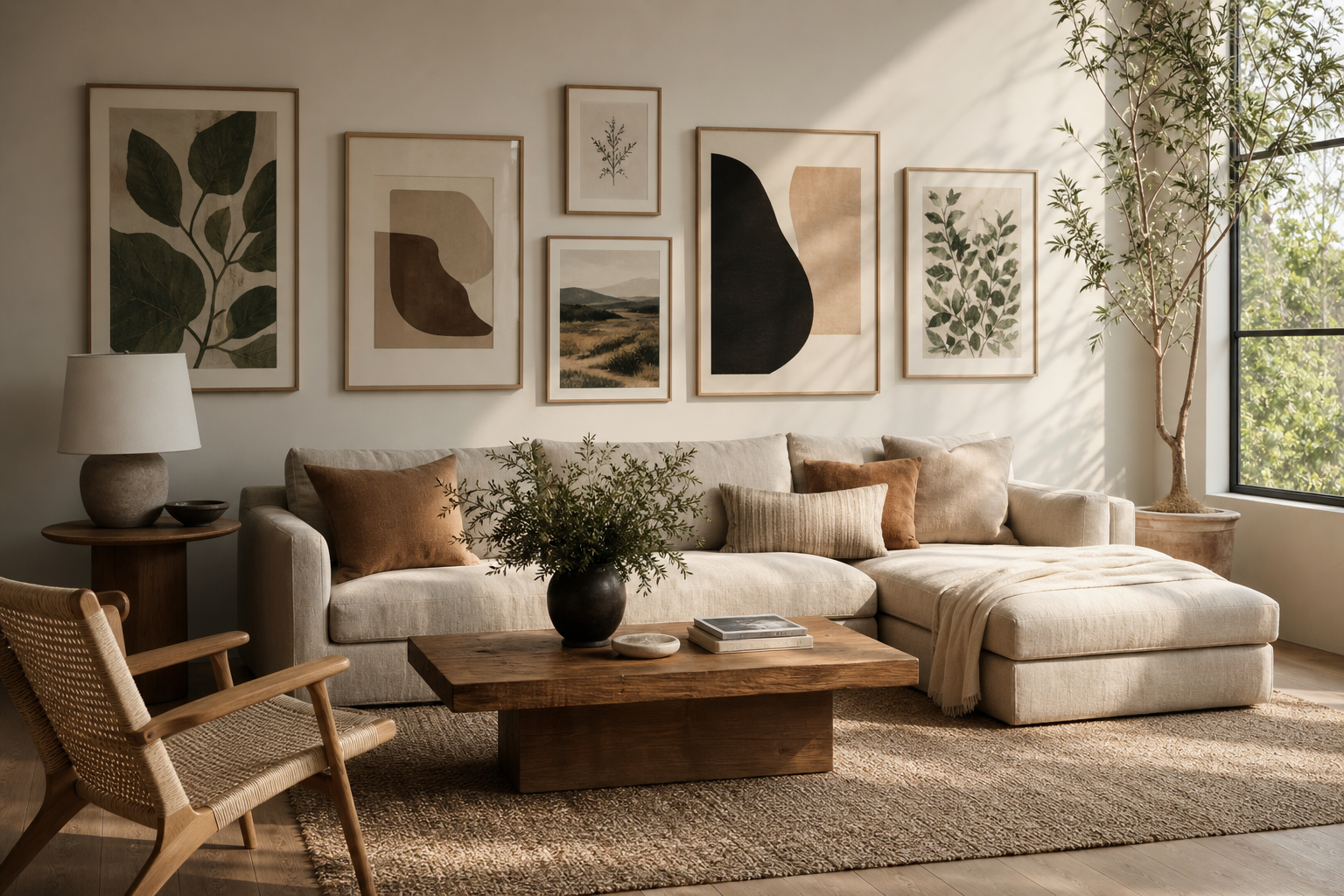
The best living room wall art does more than fill an empty surface. It sets the tone of the room in the first 5 seconds — calm, bold, collected, playful, or refined — and helps the furniture feel anchored rather than floating. If your seating area looks finished but still slightly flat, art is often the missing layer.
Start with the mood you want to create
For a calm, restorative room, choose pieces with open space, soft edges, and a restrained palette. Misty landscapes, tonal abstracts, and light botanical studies work well because they lower visual noise. Rooms with lots of hard lines — square sofas, straight shelving, angular coffee tables — benefit from softer imagery to balance the geometry. For this effect, look at our nature collection or quieter works from our fine art prints.
If you want more energy, use contrast instead of clutter. A single artwork with deep navy, rust, black, or ochre can wake up a neutral room faster than adding five small accessories. Strong living room wall art is especially useful in spaces dominated by beige, grey, or off-white upholstery, where a high-contrast focal point can add definition without changing the furniture.

A classic example is Starry Night — it brings movement, rhythm, and saturated blue into a space while still feeling timeless. For a quieter version of the same idea, water-based landscapes and impressionist scenes create atmosphere without overpowering conversation areas.
Match wall art to your interior style
Modern living rooms usually suit art with clarity and structure. That can mean geometric forms, bold negative space, or one commanding piece with clean framing. If your room has low-profile furniture, metal accents, or sculptural lighting, browse abstract wall art and minimalist prints. They echo the same disciplined lines and controlled palette.
Minimalist spaces need more warmth than people expect. The rule is not "less art" — it is "fewer, larger, better-placed pieces". One 70 x 100 cm print above a sofa often looks more intentional than three small 30 x 40 cm frames spread too far apart. Minimalist living room wall art should carry subtle interest through texture, brushwork, or shape rather than busy detail.
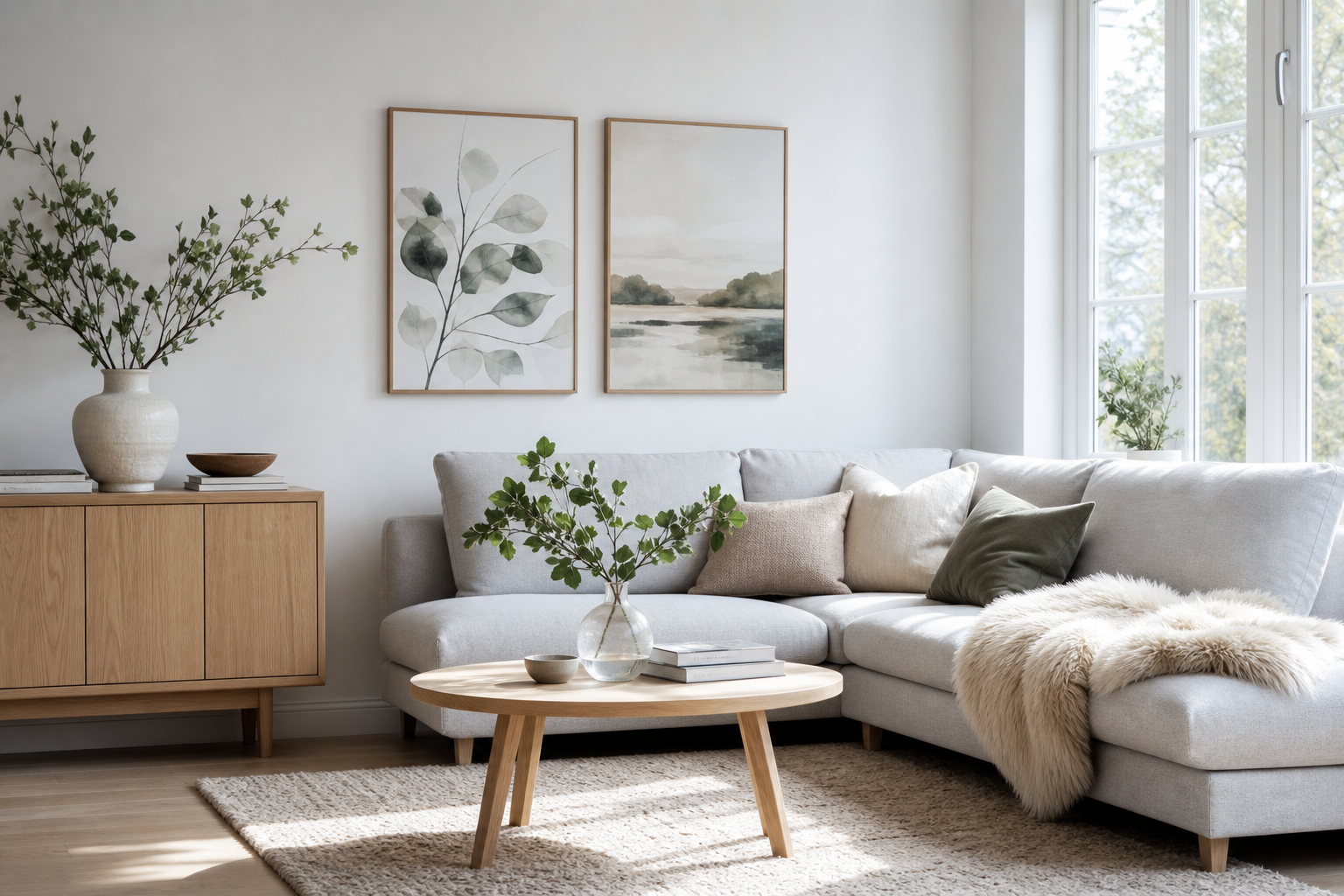
Scandinavian rooms work well with pale landscapes, softened black lines, muted greens, and sandy neutrals. Natural oak frames, white mounts, and art that references nature keep the look light. If you want that relaxed Nordic balance, pieces from landscape-inspired wall art pair easily with boucle, ash wood, and wool textiles.
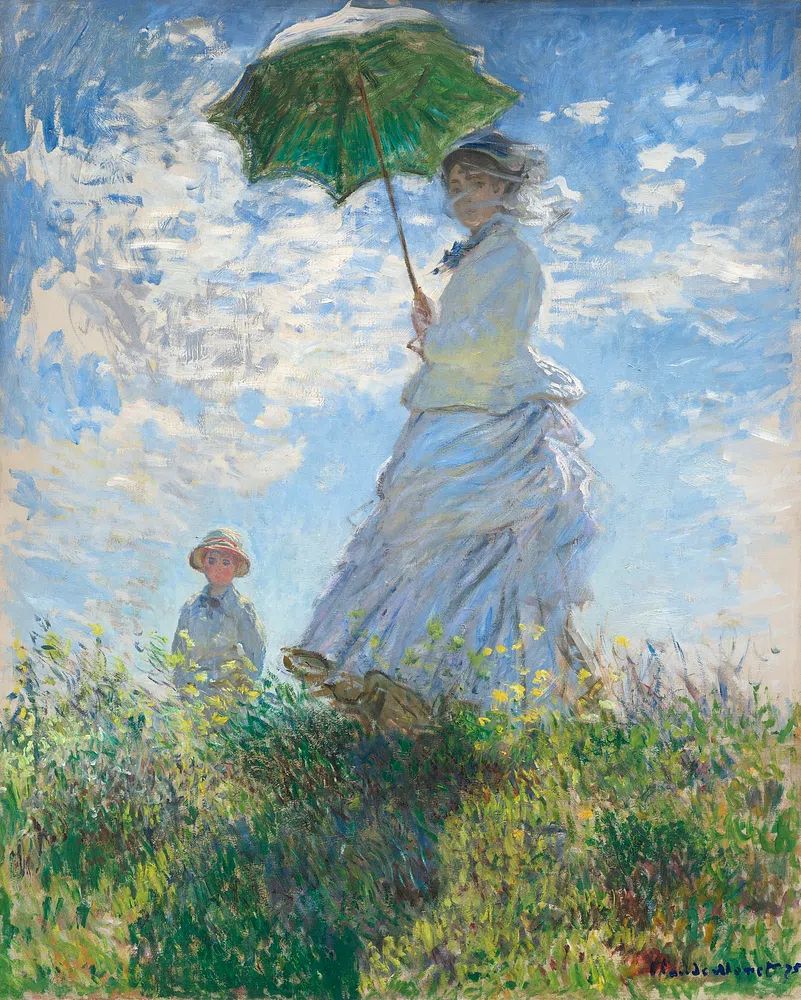
Vintage and classic interiors can handle more detail and ornament. Impressionist florals, painterly scenes, and heritage-inspired compositions give depth to rooms with mouldings, antique tables, brass lamps, or velvet upholstery. Woman with a Parasol is a strong fit for this kind of setting because the palette feels airy while the subject adds historic character.
Eclectic rooms need one unifying rule. Mix styles, but repeat either colour, frame finish, or subject matter at least three times across the wall. For example, combine a fine art landscape, a bohemian pattern, a minimal line-based piece, and a typography print — but keep all frames black oak, or repeat terracotta and olive throughout. That prevents the arrangement from looking accidental.



Choose the right size and placement
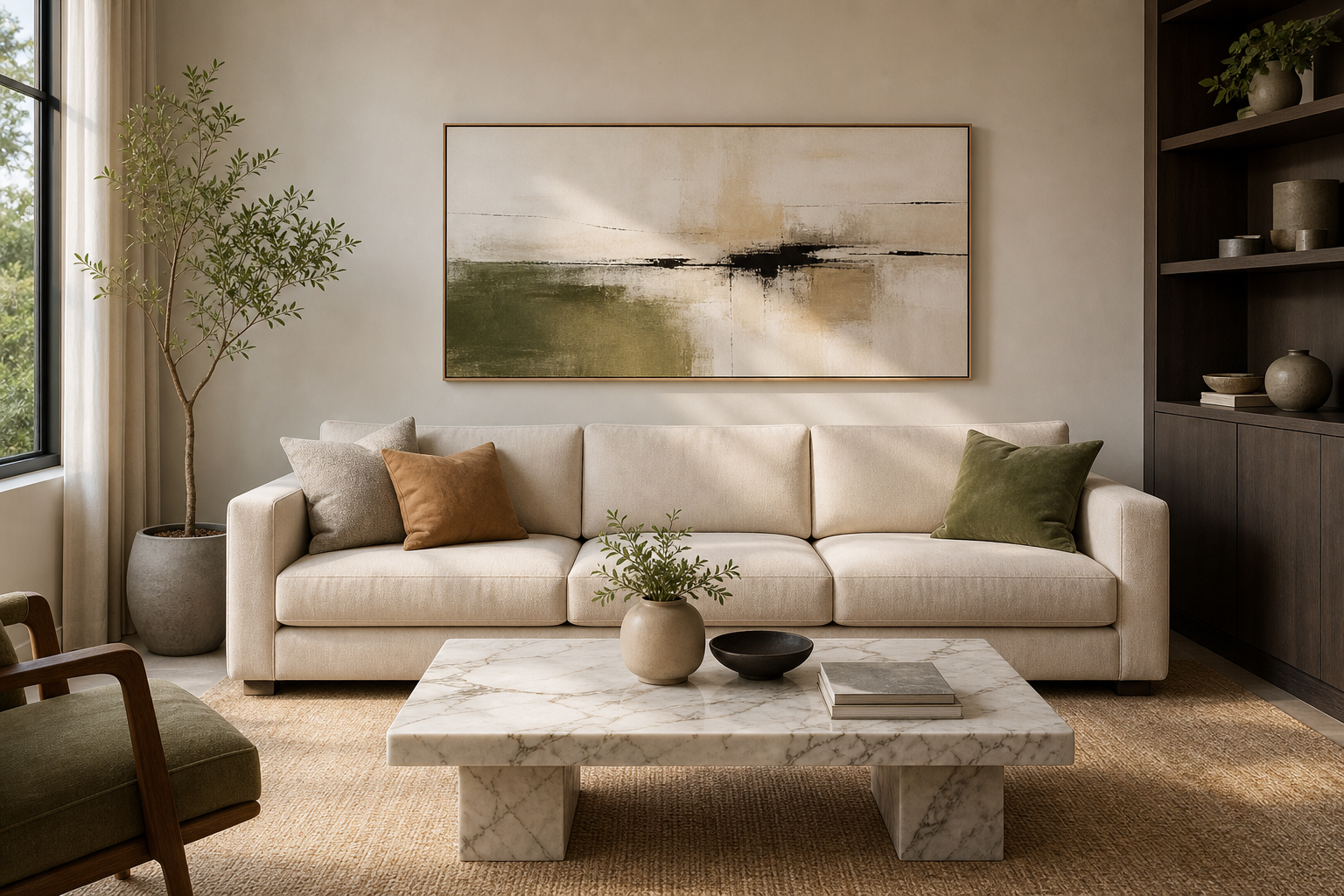
The simplest sizing rule for living room wall art above a sofa is 60 to 75% of the sofa width. If your sofa is 220 cm wide, your art grouping should land around 132 to 165 cm total. That range feels balanced without stretching beyond the seating zone.
Hang art 15 to 25 cm above the back of the sofa. More than that, and the piece starts to drift upward visually. The same applies over sideboards and console tables. Above a fireplace, keep the bottom edge close enough to connect with the mantel — usually 10 to 20 cm works well, depending on ceiling height.
If you are grouping frames, keep the gaps consistent — 5 to 8 cm between smaller pieces, or 8 to 10 cm for larger frames. Treat the whole arrangement as one visual rectangle, then centre that shape above the furniture. This matters more than perfect symmetry between individual pieces.
Build a colour story that ties the room together
A room looks considered when the art repeats at least one colour already present elsewhere. Pull from cushions, a rug, curtains, ceramics, or even a timber tone. You do not need a perfect match — in fact, a 70% similarity usually looks better than exact coordination. If your room already has warm beige and walnut, wall art with clay, caramel, olive, or dusty rose will sit naturally.
Contrast is useful when the room lacks definition. In a pale scheme, one print with indigo, charcoal, or forest green can sharpen the whole composition. In darker rooms, lighter art with cream, sky blue, or sage lifts the walls and stops the space feeling heavy. This is where bohemian art prints and colour-led abstract pieces can do a lot of work.
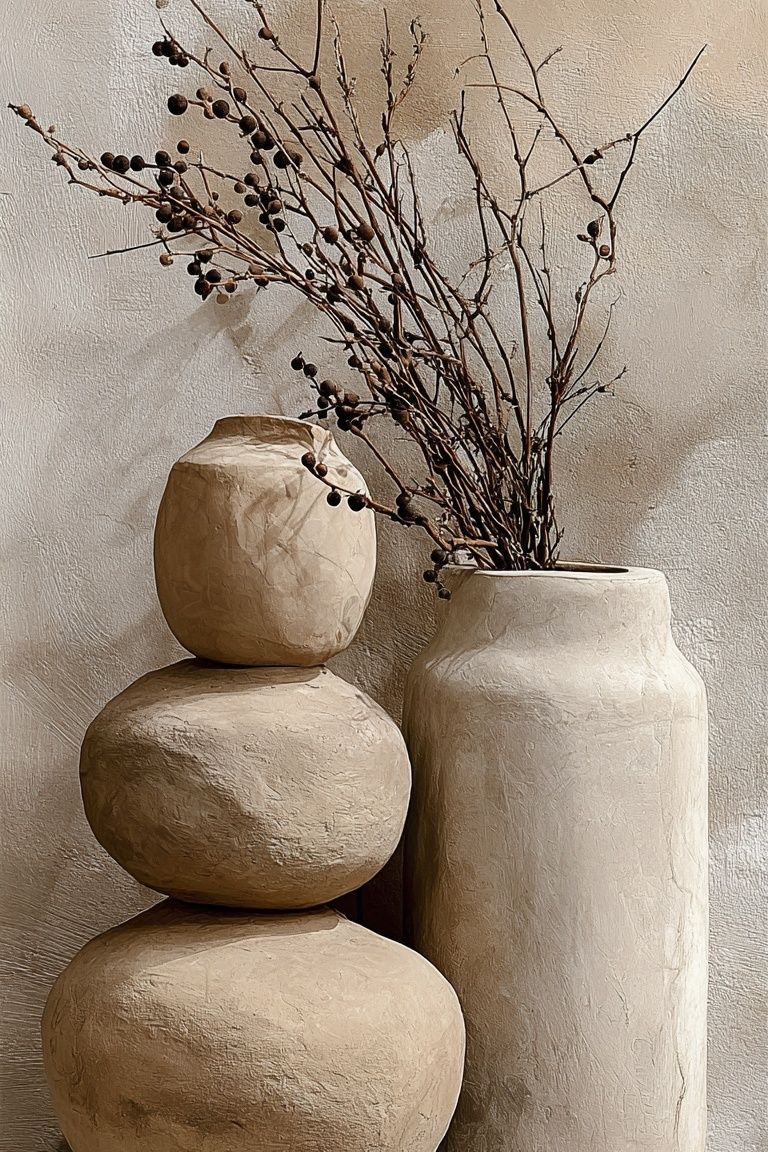
Earthy artwork such as Ceramic Vases with Dried Branches works particularly well in living rooms with linen upholstery, jute rugs, travertine, or warm wood. It adds texture visually, even behind glass, because the subject already suggests natural materials and depth.
Use framing and finish to elevate the look
Frames change the character of art more than most people realise. Black frames create definition and suit modern, minimalist, and monochrome rooms. Oak and walnut feel softer and work well with Scandinavian, bohemian, and mid-century spaces. White frames are useful when you want the artwork to blend into a pale wall rather than stand out sharply.
Mounts matter too. A white mount gives smaller art more breathing room and can make a 30 x 40 cm print feel more substantial. Wide mounts are especially effective for fine art and delicate landscape pieces because they create a gallery-like margin around detailed imagery.
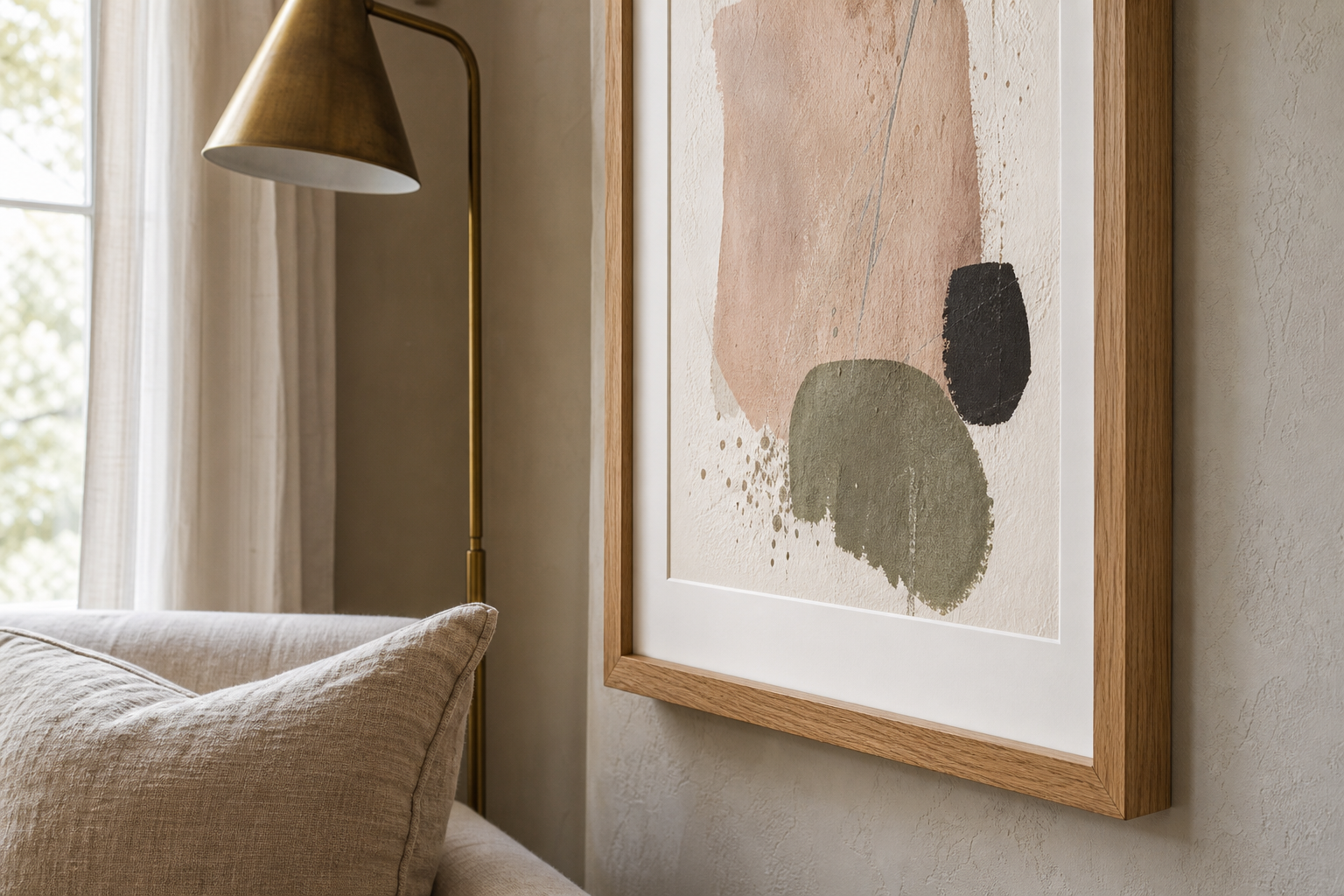
For a softer, more tactile room, choose subjects with visible brushwork, textile references, or painterly edges. Even in a sleek space, this prevents the wall from feeling flat. If your room already includes many textures — boucle, wool, ribbed glass, fluted wood — simpler framed artwork can provide relief and keep the balance clean.
Layer, group, or go big: styling options to try
An oversized single piece is the easiest route if you want impact with minimal decision-making. One large print above the sofa creates a strong focal point and keeps the room calm. This works especially well in open-plan living areas where many smaller frames would compete with dining furniture, shelving, and lighting.
A gallery wall is better when the room has personality already and can support more detail. Use 4 to 8 pieces for a living room rather than trying to fill the entire wall edge to edge. Start with the largest piece slightly off-centre, then build around it. Keep one element consistent — frame colour, art genre, or palette — so the composition reads as intentional.

If you prefer a layered look, rest one medium or large frame on a picture ledge, then overlap a smaller frame in front. This approach is practical for renters and for anyone who likes to rotate art seasonally. A painterly piece such as Water Lilies works well in layered arrangements because the softer edges blend easily with neighbouring works.
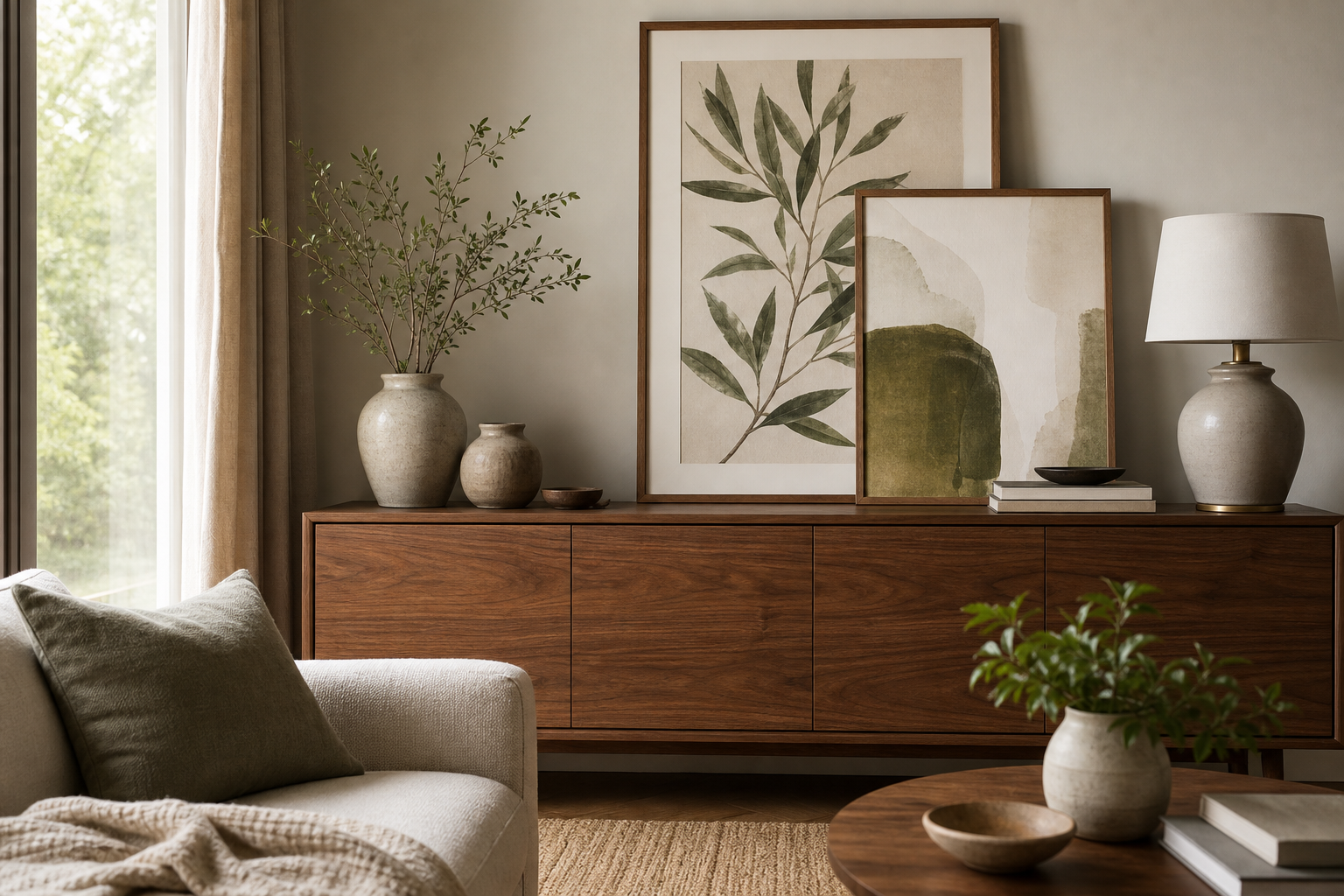
Leaning larger frames on a mantel or sideboard also works in casual interiors, but scale still matters. Keep the piece at least half the width of the surface beneath it, and add one or two objects in front — a vase, candleholder, or stack of books — to create depth without hiding too much of the image.
Shop smart: easy ways to choose art that lasts
Buy for range, not just impulse. The most durable living room wall art can move with you between homes and still work if your sofa, rug, or paint colour changes. Pieces in natural colours, balanced compositions, and classic subjects tend to stay relevant longer than highly trend-driven motifs. That does not mean safe or bland — it means flexible enough to restyle around.
A useful formula is to build in three layers: one timeless anchor piece, two supporting prints, and one optional seasonal or trend-led addition. The anchor might come from our fine art collection or our landscape and nature prints. Supporting works can introduce pattern, shape, or a newer colour accent. That way, you can refresh the room by swapping 25% of the wall rather than replacing everything.
If you are unsure where to start, choose art that connects to what is already strongest in the room — the architecture, the palette, or the mood. Good living room wall art does not fight the space. It clarifies it.
Putting it together
The most successful walls follow a few simple rules: match the mood first, size the art to the furniture, repeat colour with intention, and choose frames that support the room's style. Once those basics are right, the arrangement feels natural rather than over-styled.
Whether you prefer one statement piece or a layered gallery wall, strong living room wall art gives the room structure, character, and finish. Start with one wall, get the proportions right, and let the rest of the room follow.