Why kids room posters work so well
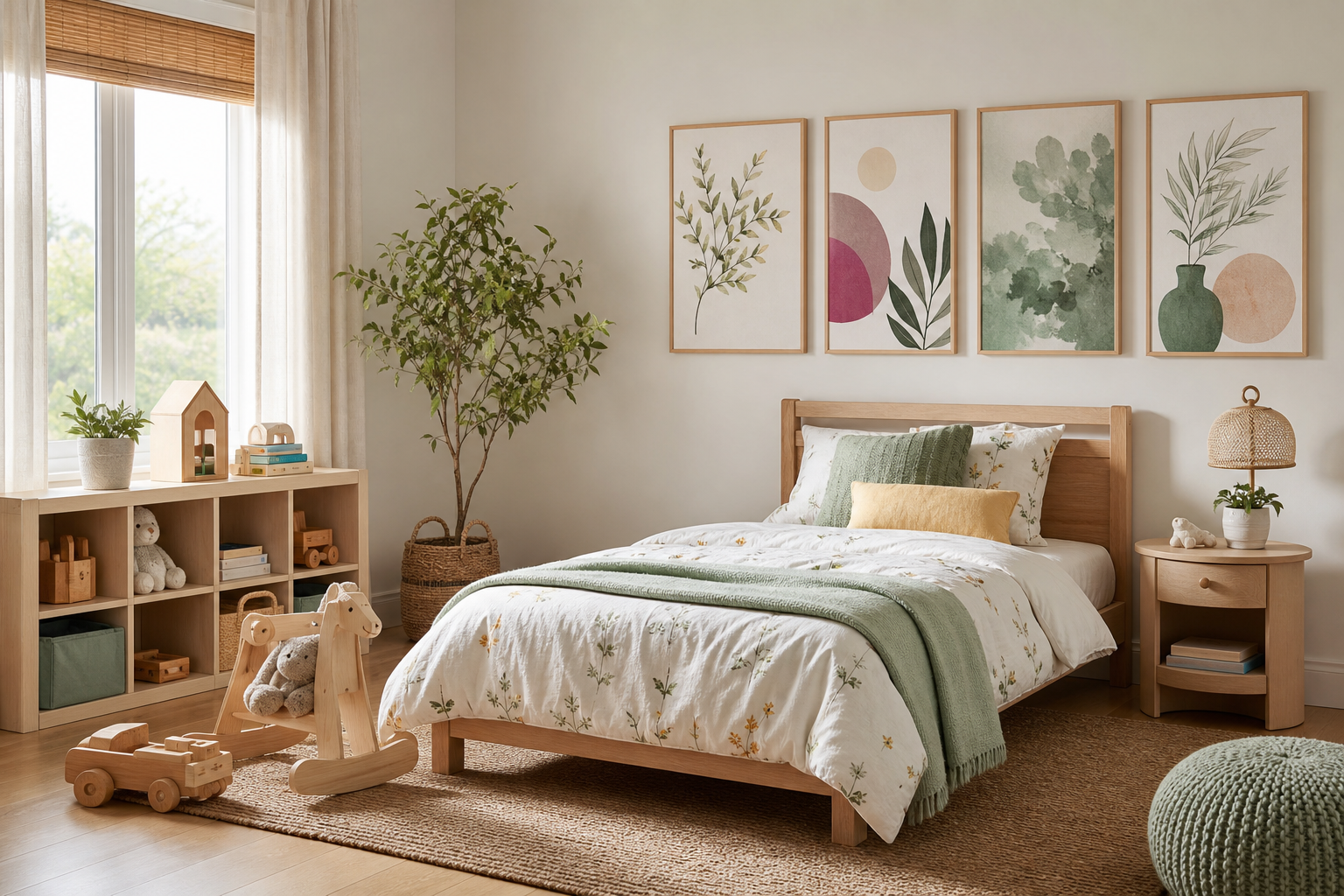
The best kids room posters do three jobs at once: they decorate blank walls, give the room a clear personality, and offer visual cues a child can come back to every day. A soft animal illustration above a cot feels comforting at 6 months, while a playful character print near a reading corner helps define a small zone for books and quiet play. Because wall art sits above floor level, it brings colour and story into the room without taking up storage space or creating clutter.
Children's rooms respond well to simple focal points. One 30 x 40 cm print over a small dresser can be enough in a nursery, while a trio of 40 x 50 cm frames can anchor a bed or toy storage wall in a shared room. If you want the space to feel lively but not busy, choose artwork with one main subject and plenty of breathing room around it. Our Kids collection and illustration art prints are especially useful for that balance, because they offer playful imagery without making the room feel visually noisy.
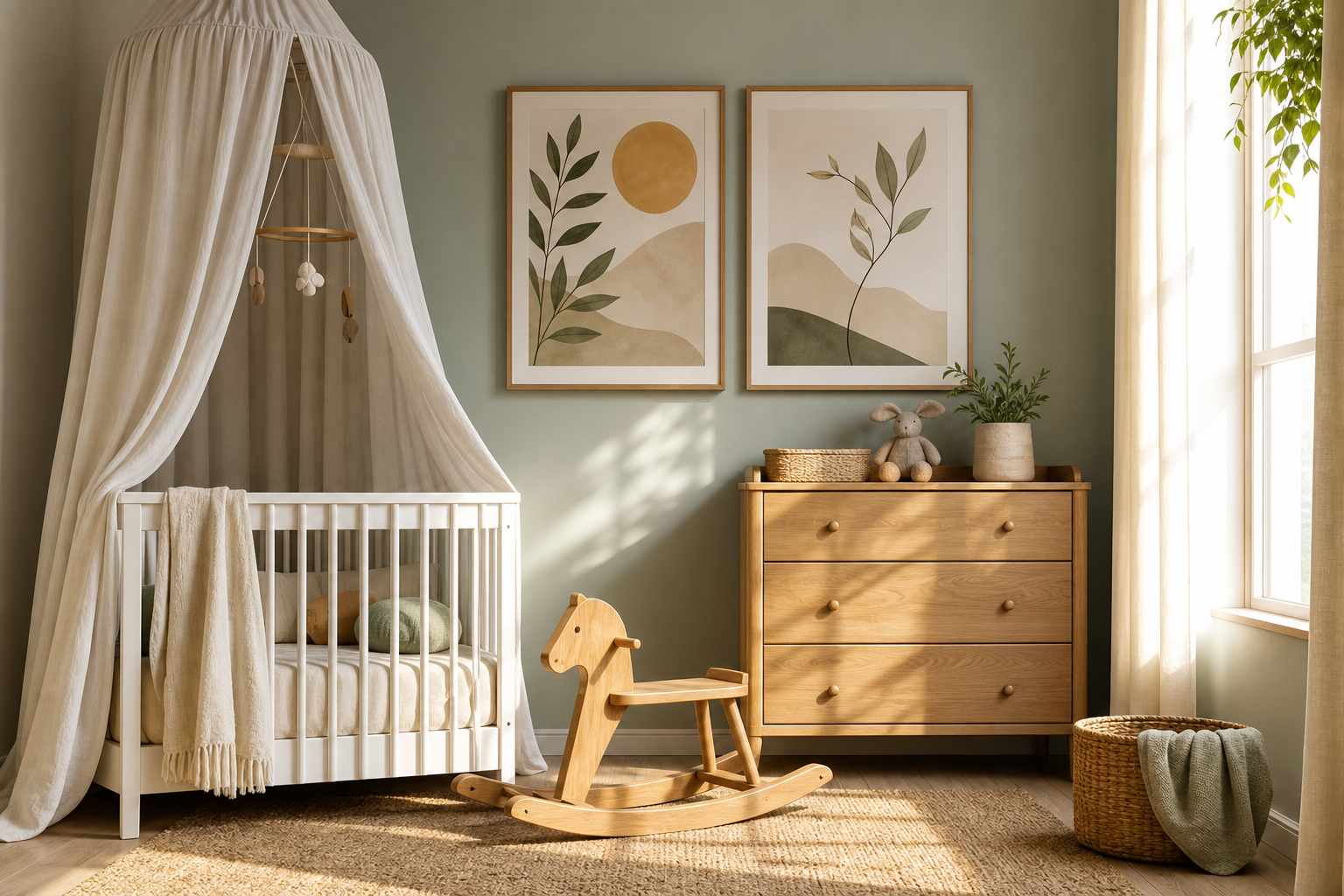
A gentle theme also helps a room feel intentional. Animals, stars, boats, storybook figures, and simple nature scenes tend to last longer than very trend-led motifs. That is why kids room posters are often more practical than murals or heavily themed wallpaper — you can update one frame in five minutes instead of redesigning the whole room.
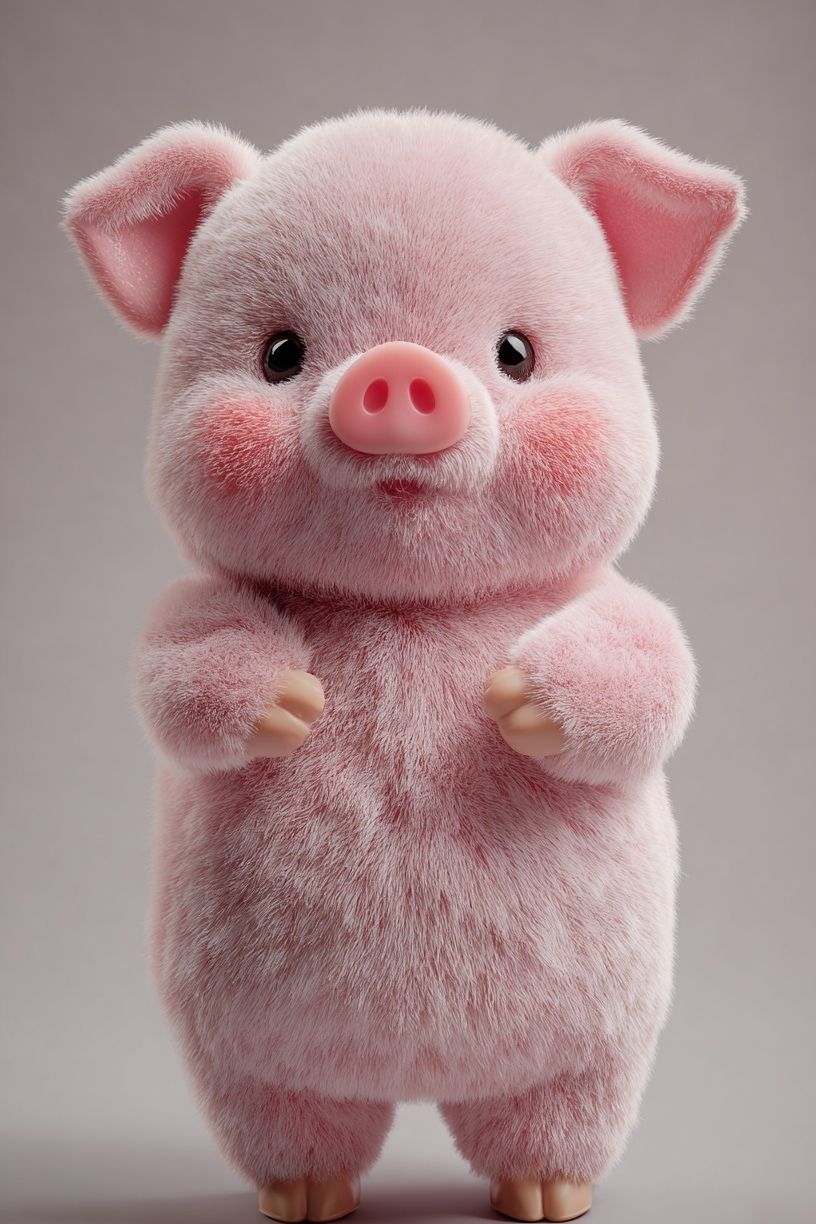
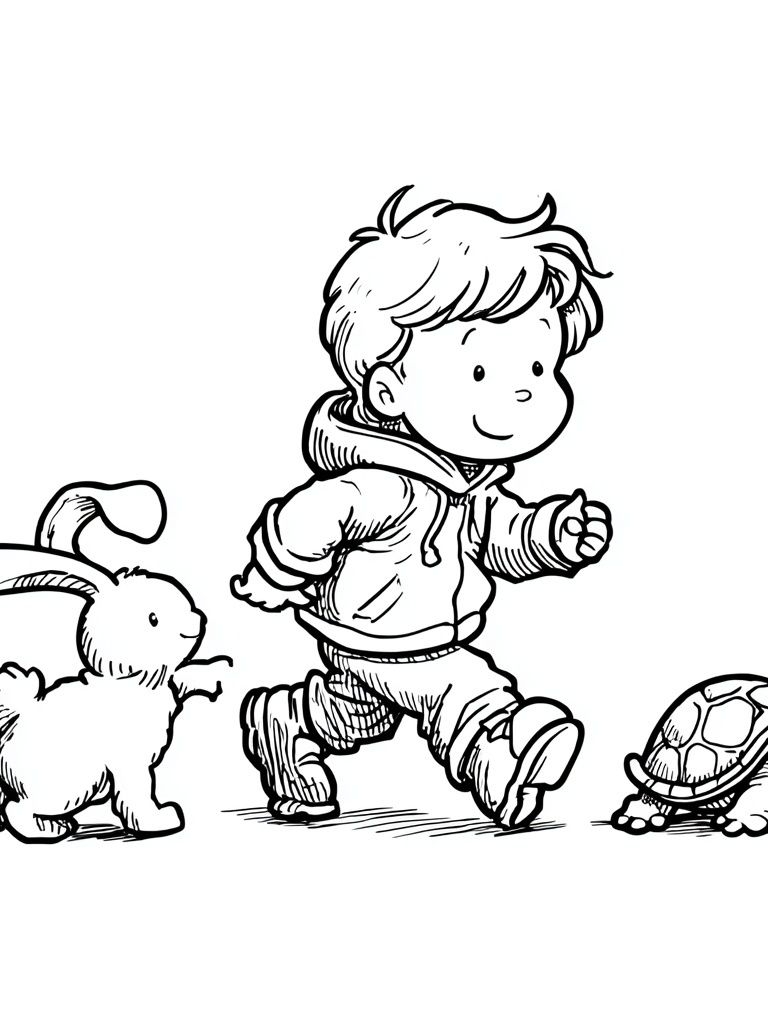
Choose designs by age and stage
For babies, aim for calm shapes, friendly faces, and low-contrast pastels or muted tones. Prints with a single animal, sun, moon, or floating object work well because they are easy to read from a distance. A nursery wall does not need a lot — often two frames at 21 x 30 cm or one larger 30 x 40 cm piece is enough above a changing table or beside a cot.

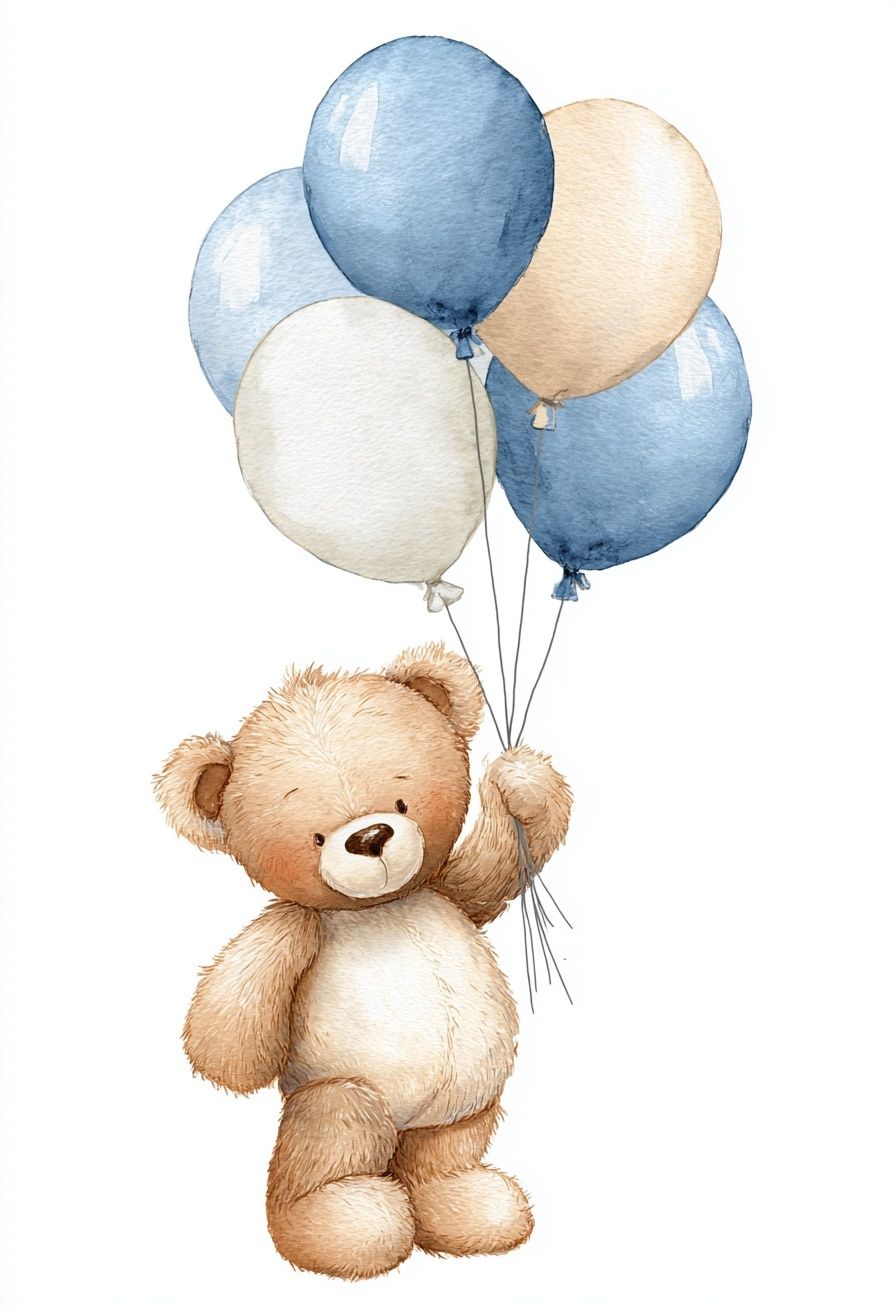
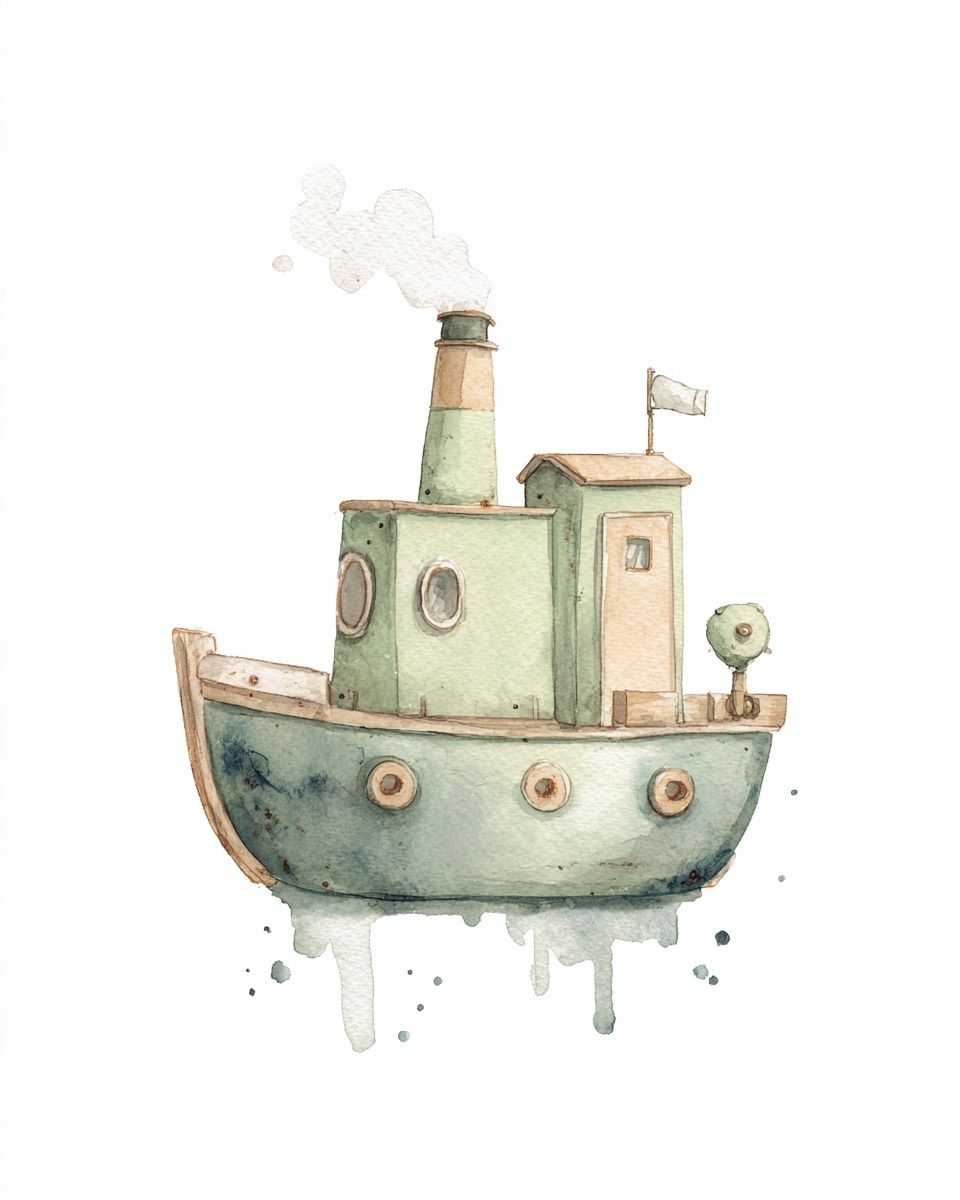
Toddlers usually respond to more character and movement. This is a good stage for cheerful animals, balloons, garden scenes, or transport themes. Pieces such as Teddy Bear with Balloons or Whimsical Tugboat Watercolor feel playful without locking you into a very narrow style. If you hang art at toddler eye level in a play corner — around 90 to 110 cm from the floor to the centre of the frame — it becomes part of how they use the room.
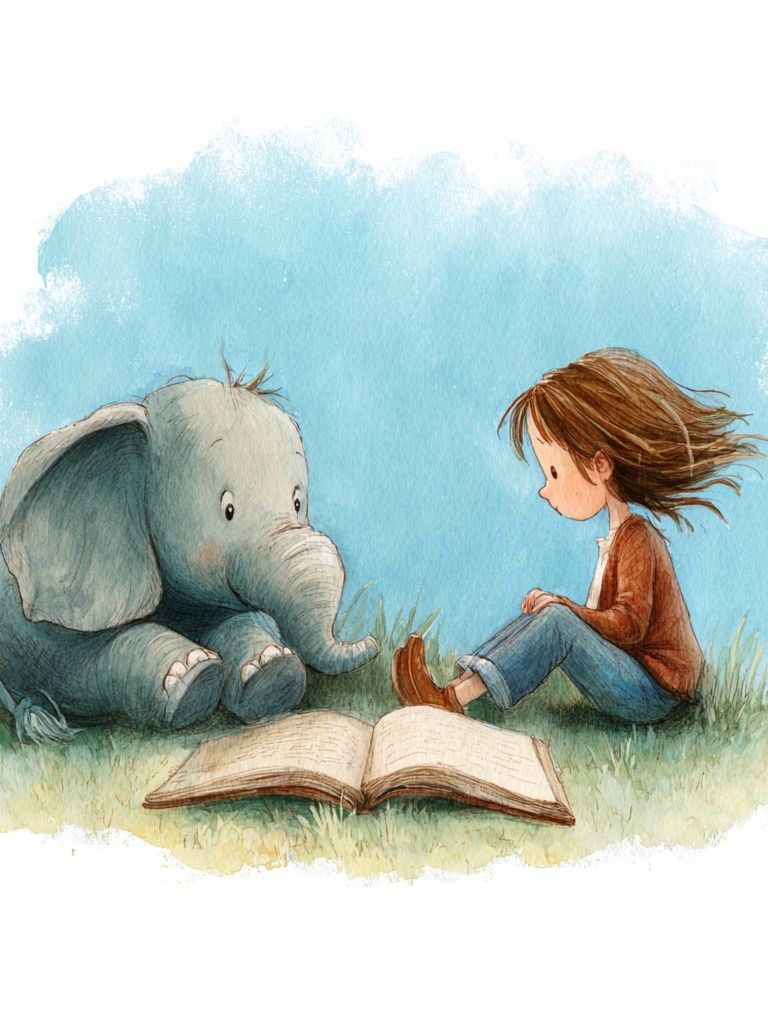
For preschoolers, you can add more narrative detail. This is the age when a child starts inventing stories around what they see on the wall. Forest scenes, animal friendships, and magical illustrations work especially well. The Baby Fairy Garden illustration or Little Girl and Elephant watercolor print suit that transition from nursery sweetness to a more imaginative "big kid" room.
For older children, choose art that reflects interests rather than age labels. Space, maps, wildlife, and bold illustration styles can carry a room from age 7 to 12 with very little adjustment. That is where categories like Space wall art and animal-themed prints become especially useful.
Make learning part of the decor
Educational wall art works best when it still feels decorative. Instead of turning every wall into a classroom, pick one or two learning-led pieces and mix them with softer illustrations. A solar system print over a desk, a moon map near a bookshelf, or an animal print in a reading nook can encourage curiosity without making the room feel formal.
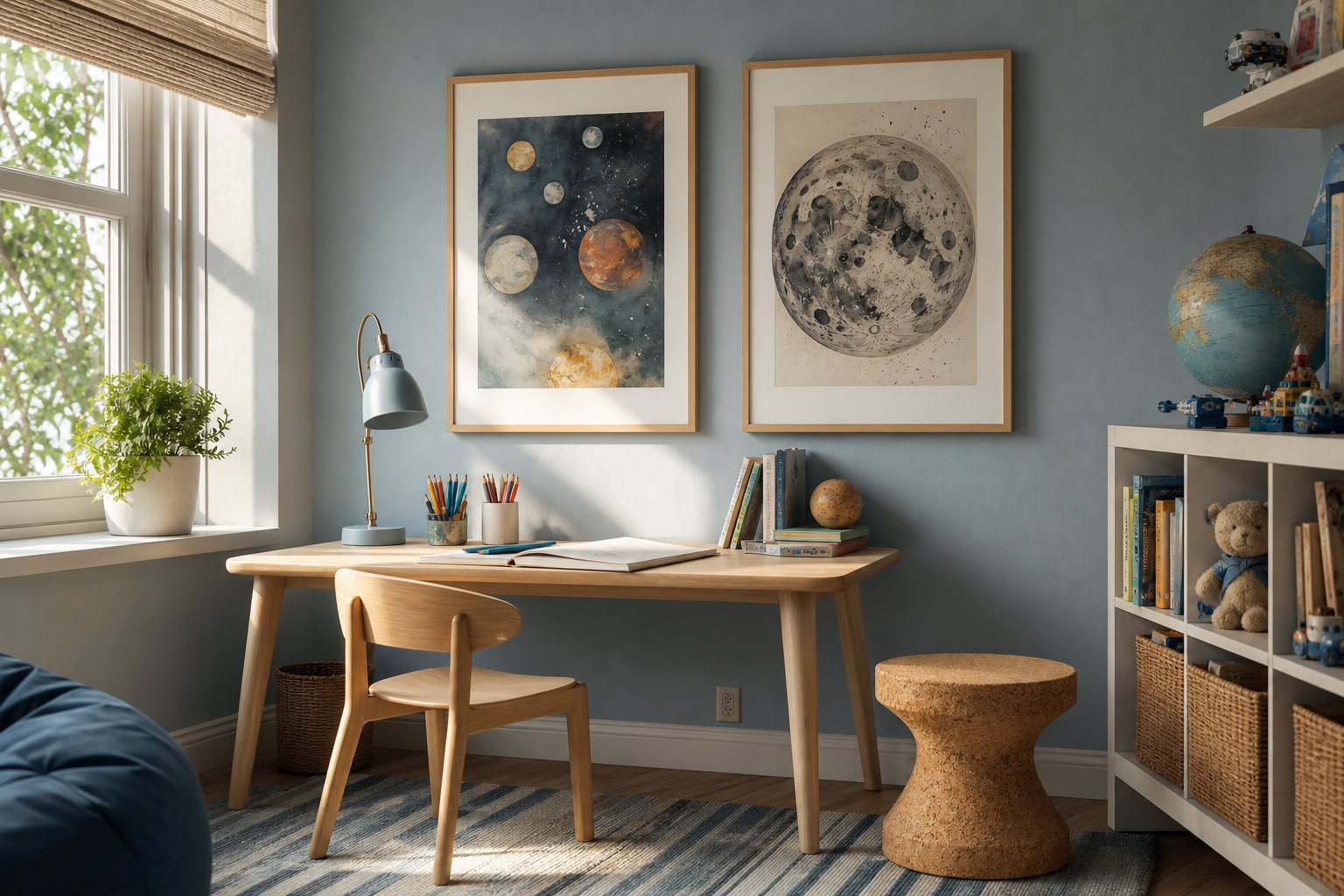
Space themes are especially strong because they feel both educational and imaginative. A print like the Solar System print introduces planets in a format that still looks polished on the wall. Maps have a similar effect — they add shape, history, and a subtle academic feel that works well in bedrooms for school-age children.

Animals are another smart route for gentle learning. They teach names, habitats, and observation skills without looking instructional. If you want a more realistic direction for an older child, browse our Animals collection. If you prefer a friendlier illustrated look for younger kids, the kids art print selection offers softer options.
Pick colours that suit sleep and play
Colour has a direct effect on how busy or restful a room feels. For sleep areas, keep about 70% of the palette soft and quiet — cream, dusty blue, sage, pale peach, warm white, or muted sand. Then use 20% mid-tones and 10% brighter accents through art, cushions, or toys. This ratio keeps the room from feeling flat while still supporting rest.
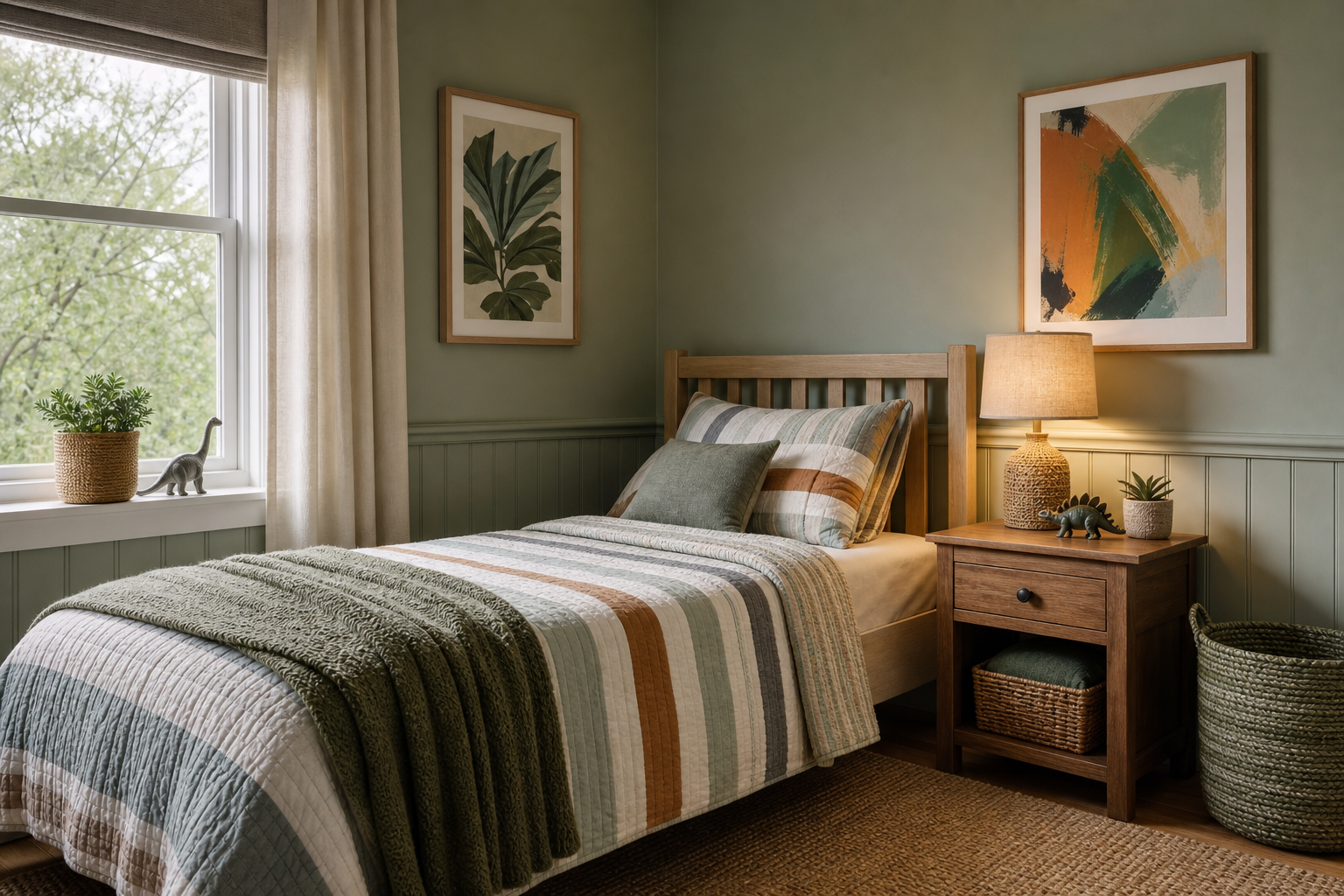
In play zones, stronger colour is useful. Yellows, coral tones, sky blue, grass green, and red accents can help a corner feel active and cheerful. The key is containment: keep brighter pieces grouped above toy storage, a craft table, or a reading tent rather than scattering them across every wall. That way, the room still has a visual rhythm.
If you are mixing calm and bright pieces, repeat one or two colours across the room so everything connects. A zebra print with sandy neutrals can sit comfortably beside pastel bedding; a space print with deep navy can relate to a rug or storage bins. For a room that needs a little humour, the Funny prints category can add energy in a play area, but use it sparingly if the room also needs to work for bedtime.
Size, placement and framing tips
Good placement matters as much as the art itself. Above a cot, leave at least 20 to 25 cm between the top rail and the bottom of the frame, and always secure the frame properly. Above a bed, aim for artwork that spans roughly 50% to 70% of the bed width. For a 90 cm single bed, that usually means one 50 x 70 cm piece or two 30 x 40 cm frames side by side.
Frames in children's rooms should be simple, light-looking, and easy to update. Natural oak, white, and matte pastel frames are the most versatile. Acrylic glazing is often a better choice than glass in active rooms because it is lighter and more shatter-resistant. If you like a softer finish, wooden magnetic hangers can work for older children's spaces, but framed pieces usually look neater and more finished.
Gallery walls can work well in kids' rooms if you keep the spacing tight — around 5 to 7 cm between frames — and limit the arrangement to 3 to 6 pieces. A mix of one hero image, two supporting prints, and one educational design tends to look more composed than four equally busy artworks. If you need inspiration, explore our maps and travel prints for study corners and our typography wall art for simple affirmations or name-based styling.
Build a room that can evolve over time
A room that lasts is usually built on a flexible base: neutral walls, practical furniture, and art that can be swapped in stages. Start with one or two timeless pieces — animals, nature, sun, moon, or soft storybook imagery — then update the accent prints as interests change. That is much easier than replacing rugs, paint, and storage every few years.
One reliable approach is a 60/40 split. Make 60% of the wall art timeless and 40% interest-led. A zebra illustration, a gentle sun print, or a sweet animal scene can stay in place for years. Then you can add a current favourite — space, maps, robots, or quirky characters — in smaller frames that are easy to rotate.
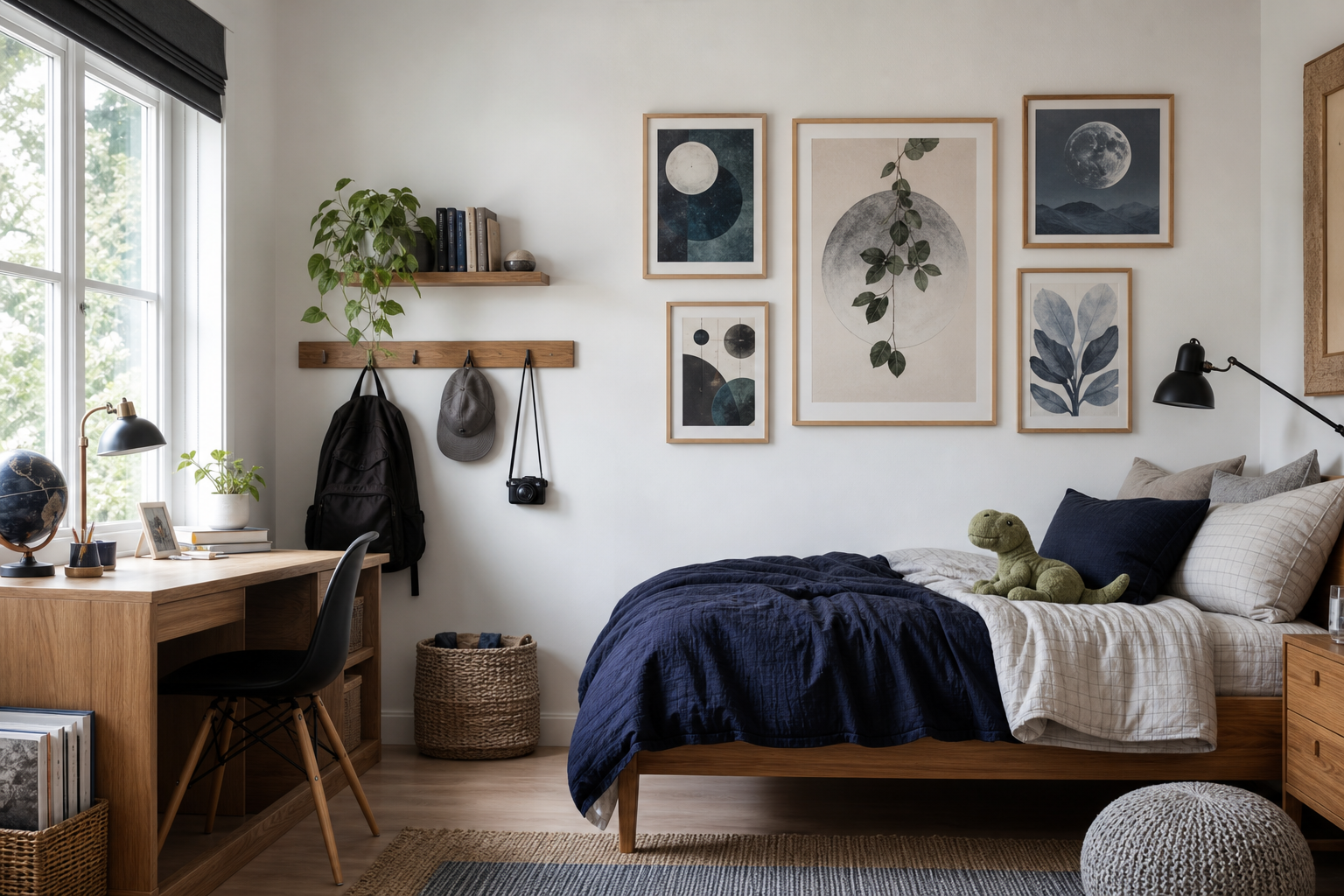
For example, a softer nursery favourite can be paired later with bolder pieces like UFO in the Clouds or a map design for a more grown-up look. If you want one playful statement piece with enough personality to bridge ages, an expressive animal print can do the job better than very baby-specific art.

Final tips for choosing posters they’ll love
Start with safety and practicality. Use secure fixings, avoid heavy frames over sleeping areas, and choose finishes that can be wiped clean. In high-traffic rooms, smaller framed prints often outperform one oversized piece because they are easier to position safely and easier to replace if the room changes.
Then involve your child where it makes sense. Give them two or three curated options instead of an open-ended choice. That keeps the room cohesive while still giving them ownership. A child who chooses between an animal print, a space print, and a map is far more likely to connect with the finished room than one who simply inherits it.
The strongest kids' spaces are rarely overloaded. A few well-chosen kids room posters, placed thoughtfully and updated over time, will do more for the room than filling every wall. Focus on art that supports calm, play, and curiosity in equal measure — and the room will keep working as they grow.