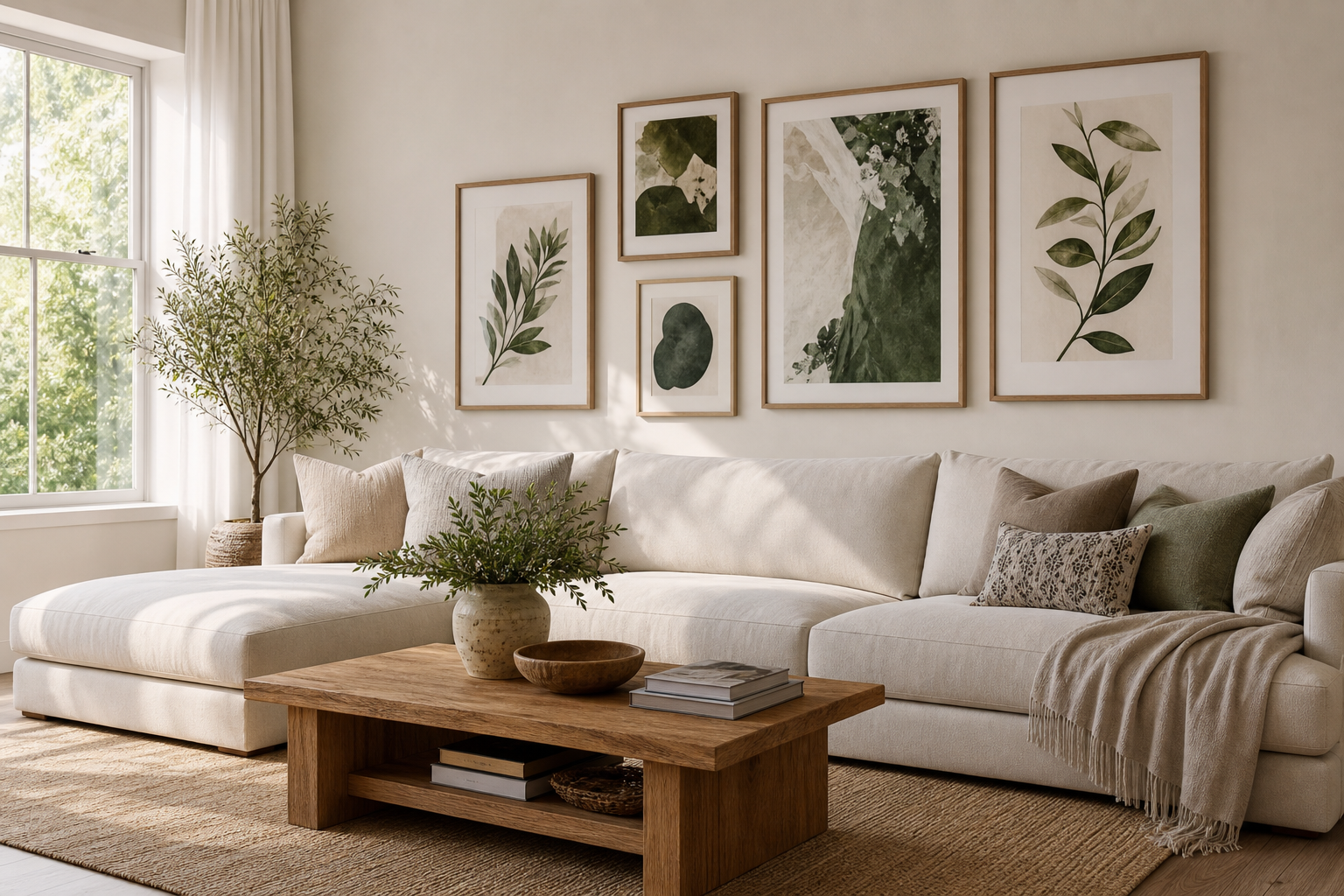
Choosing the best poster sizes is less about rules and more about proportion. A print that feels perfect in a hallway can look lost above a 220 cm sofa, while an oversized piece that anchors a bedroom wall might overwhelm a narrow desk corner. The goal is to make the art feel connected to the room, not floating beside it.
Well-chosen scale also changes how a space reads. Smaller framed pieces work as accents — they add detail, texture, and rhythm. Larger formats act as focal points — they pull the eye first and help define the room. That is why the best poster sizes usually depend on two things: the amount of empty wall you actually have and the size of the furniture sitting below it.
How poster size changes the feel of a room
A small print, such as A4 or A3, feels intimate. It suits bedside walls, entry nooks, shelving, and narrow vertical spaces where you want interest without visual weight. These sizes are especially effective when paired with restrained subjects from our Minimalist collection or tonal pieces from our Photography art prints.
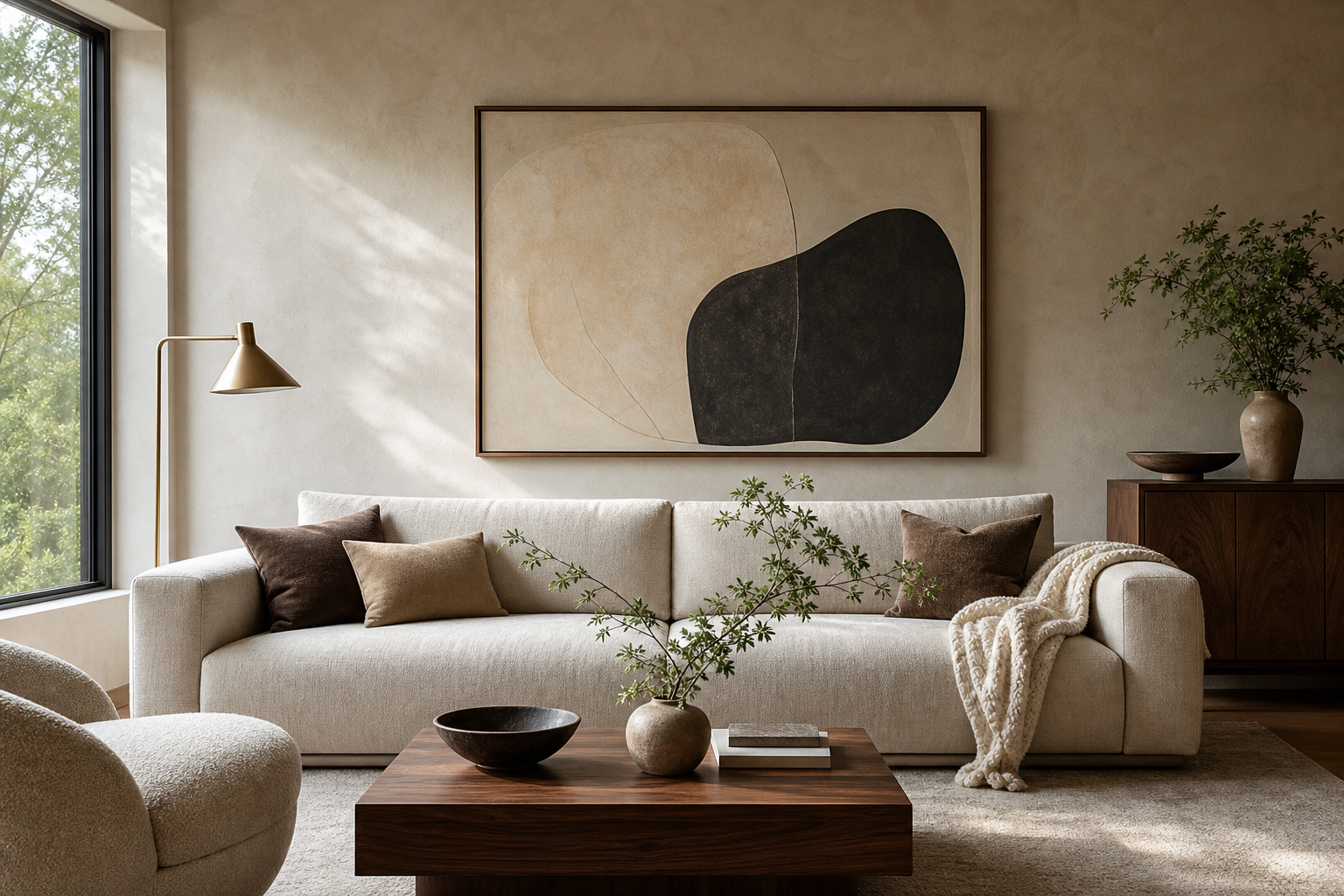
By contrast, A1 and larger formats create structure. On a blank wall, one large piece can do the work of three smaller ones. In living rooms and dining rooms, that often makes the space feel cleaner and more intentional because the eye lands in one clear place instead of darting across scattered objects.
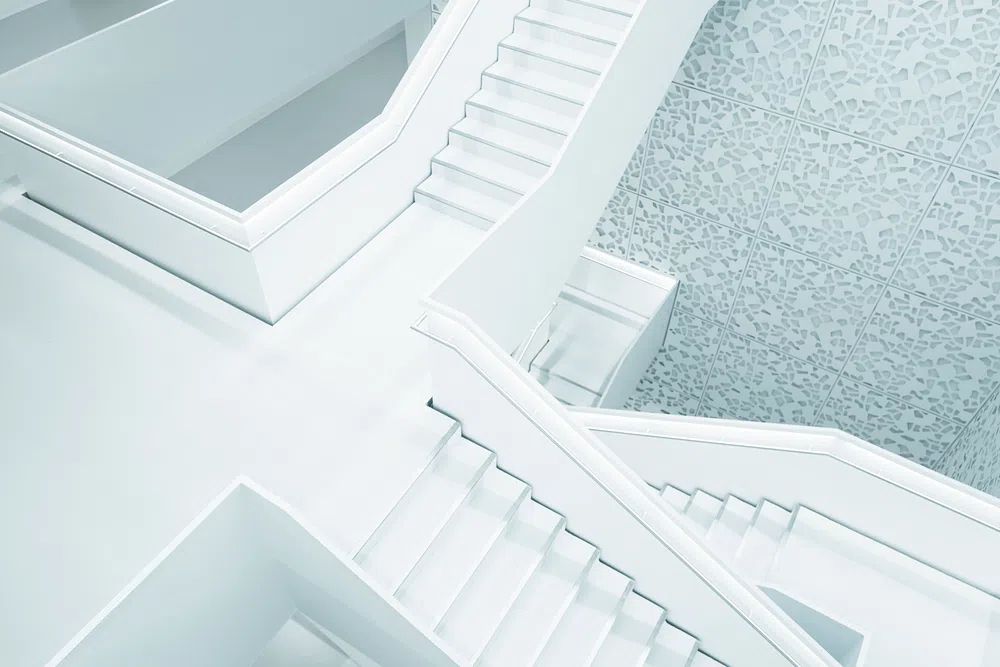
If you like quiet interiors, a larger piece with a simple composition often works better than several busy ones. A clean architectural image such as Modern White Staircase or a tonal piece from our Architecture wall art can fill the wall without making the room feel crowded.
The most popular poster sizes and where they work best
A3 measures 29.7 x 42 cm, and it is one of the easiest sizes to place. It works on narrow walls, above a nightstand, beside a mirror, or layered on a shelf. In a home office, A3 is often enough when the desk is 100 to 140 cm wide. It adds personality without competing with screens, lamps, or storage.
A2, at 42 x 59.4 cm, is the flexible middle ground. It suits bedrooms, kitchens, hallways, and smaller living rooms. One A2 frame can stand alone on a compact wall, or two A2 pieces can form a balanced pair above a bed or sideboard. For this kind of setup, graphic pieces from our Abstract art collection or calm works like Textured Waves are easy to style.
A1, at 59.4 x 84.1 cm, is where wall art starts to feel architectural. This size works well above a console, behind a dining banquette, or on a bedroom wall with little else around it. If your ceiling is 240 to 270 cm high, A1 tends to feel substantial without looking oversized.
Anything larger than A1 — 70 x 100 cm, 100 x 140 cm, or similar statement sizes — is best on broad, uninterrupted walls. Use it above a sofa, at the end of a hallway, or in a dining room where you want one dominant visual anchor. Scenic photography such as Yosemite National Park often benefits from larger scale because the detail has room to breathe.


How to choose the right size for your wall
The simplest sizing rule is this: your art should cover about 60 to 75 percent of the width of the furniture beneath it. If your sofa is 200 cm wide, aim for a total art width of roughly 120 to 150 cm. That could be one large piece, two medium frames, or a grouped arrangement.
For blank walls with no furniture below, measure the empty area rather than the full wall. Leave at least 15 to 25 cm of breathing room around the outer edges so the arrangement does not feel pressed into corners or ceiling lines. On tall walls, height matters just as much as width — an undersized frame can make the room feel oddly top-heavy.
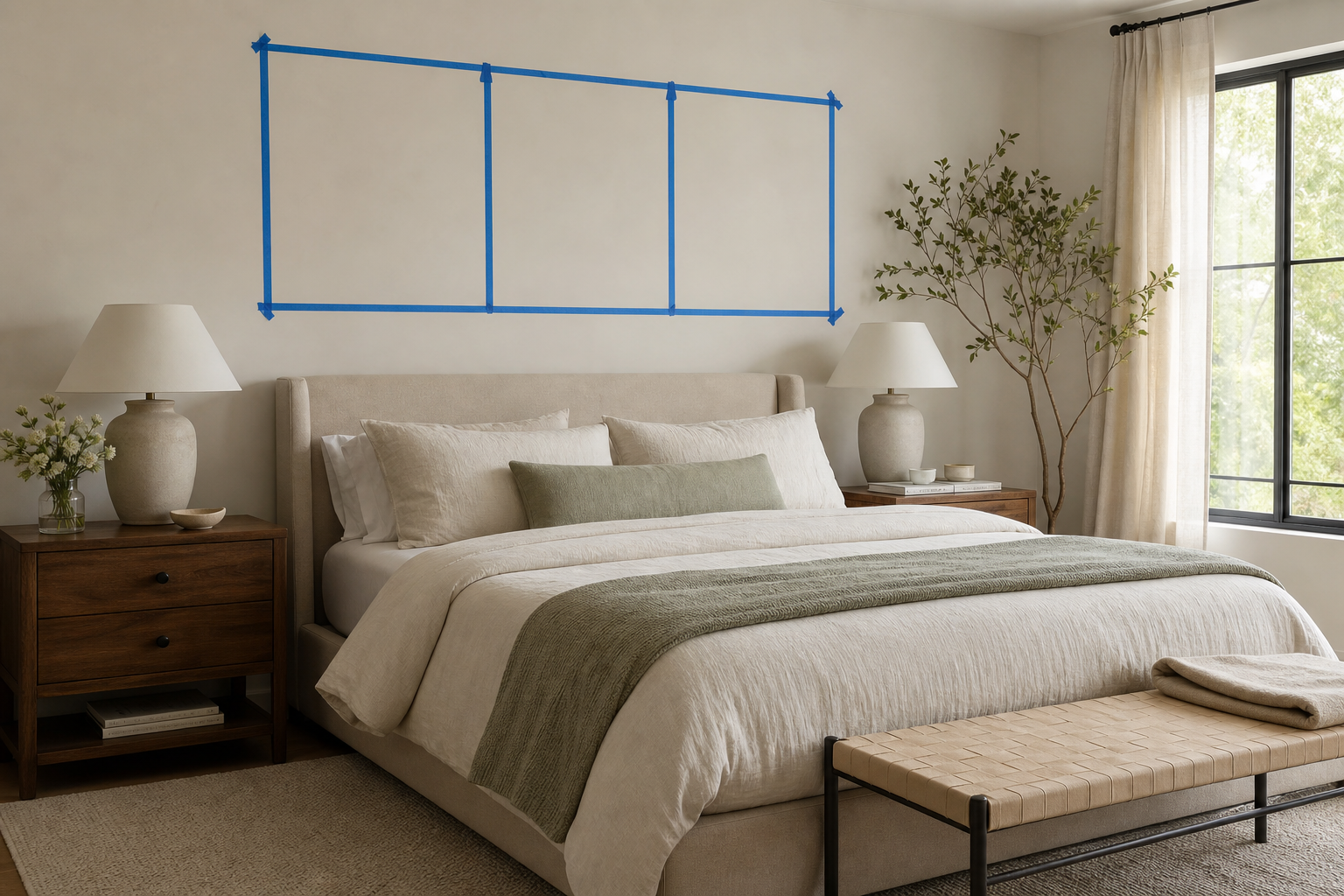
A quick test helps before you buy. Mark the planned size on the wall with painter's tape. Step back 2 to 3 meters and check whether it looks connected to the furniture. If it seems smaller than expected, it usually is. Most people underestimate scale when viewing dimensions on a screen.
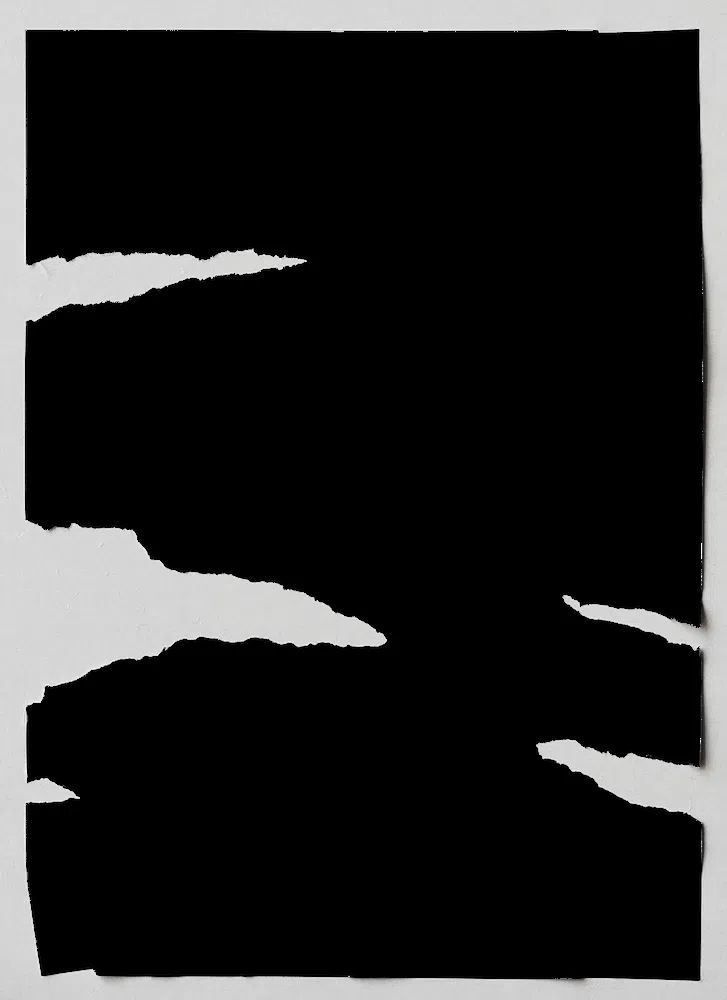
Frame thickness also changes perception. A 50 x 70 cm print in a 3 cm frame with a wide mat can read closer to a 60 x 80 cm wall presence. That is useful if you want the refinement of a moderate print but need slightly more visual weight. You can see this effect clearly with clean, high-contrast designs like Torn Paper Black and White.
Single posters, pairs, and gallery wall combinations
One large print is usually the easiest way to make a room feel polished. It suits renters, minimal interiors, and anyone who wants a strong focal point without planning a full arrangement. A single landscape photograph or architectural composition works especially well when centered with discipline and hung at eye level — roughly 145 cm from the floor to the center of the frame.
Pairs create symmetry. Two equal-size prints above a bed, sideboard, or desk feel orderly and calm. Leave 5 to 10 cm between frames for smaller sizes, or 10 to 15 cm for larger ones. Matching pairs are useful when one wall needs width more than height.
Gallery walls give you the most flexibility, but they need one thing to look good: a clear outer shape. Build around an invisible rectangle or square rather than adding frames at random. Start with your largest piece near the center, then balance the visual weight on either side with smaller works. Collections from our Fine Art selection and Typography prints can mix well when the palette is consistent.
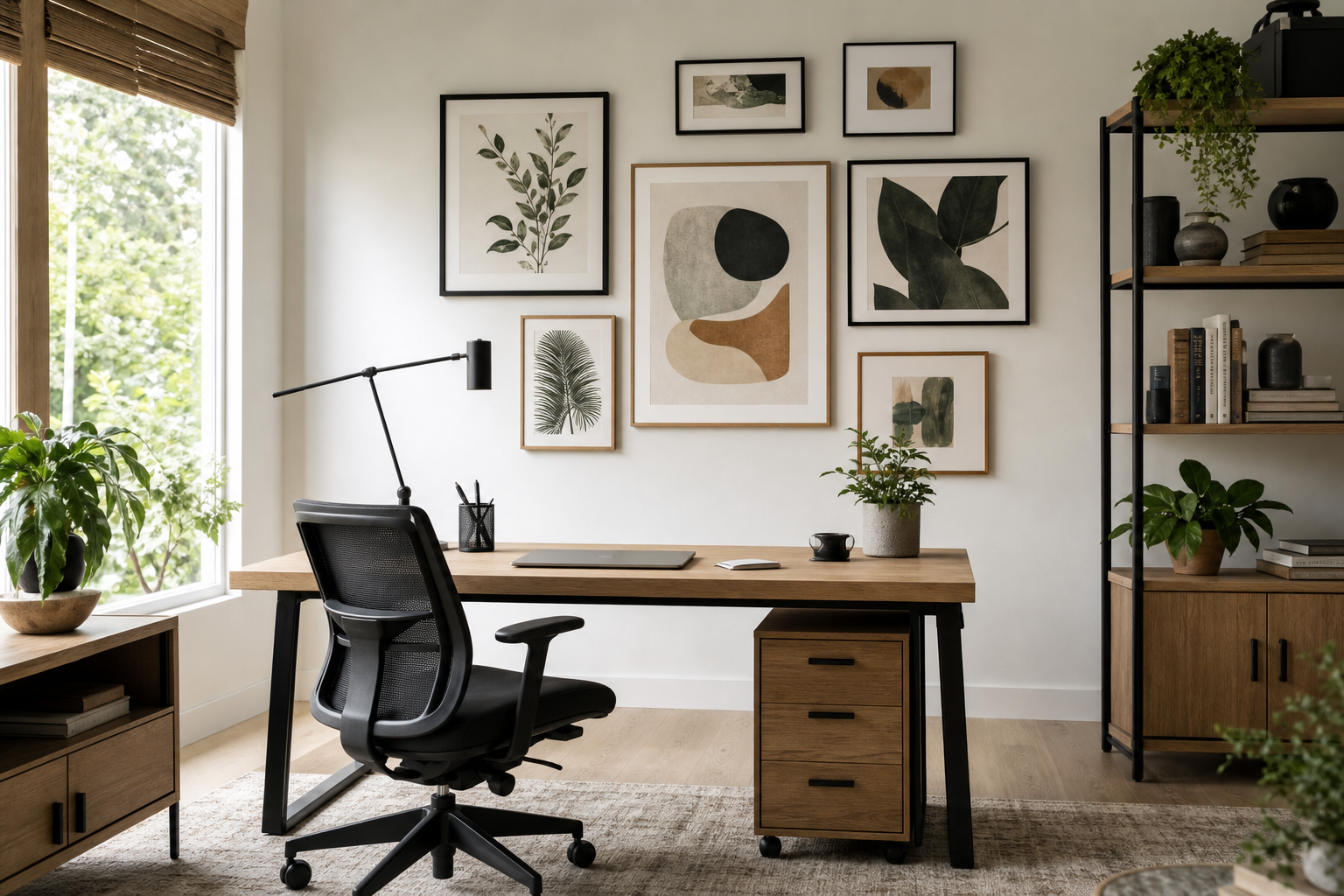
If you want variety without clutter, use three frames in a simple rhythm: one larger center piece with two smaller companions. For example, a 50 x 70 cm print flanked by two 30 x 40 cm pieces often works above a 140 to 180 cm console. The subjects should relate — similar tones, shared architecture, or a repeated natural motif.

Framing, spacing, and the finishing details
The same print can feel casual or elevated depending on how you finish it. Thin black frames sharpen graphic art and photography. Oak frames add warmth and suit softer subjects such as landscapes or texture-led works. White frames visually recede and help smaller formats look lighter on busy walls.
Mats are useful when the print itself is modest in size. A 30 x 40 cm artwork with a wide white border can feel more collected and gallery-like than the same piece framed edge to edge. This works particularly well with restrained subjects such as White Flower Silhouette or the reflective tones of Sunlit Water Surface.
Spacing matters as much as size. Frames hung too far apart stop reading as a set. In most rooms, 5 to 8 cm between small and medium frames looks intentional. For larger pieces, 8 to 12 cm is enough. Above furniture, keep the bottom of the arrangement about 15 to 25 cm above the top edge of the sofa, headboard, or console.
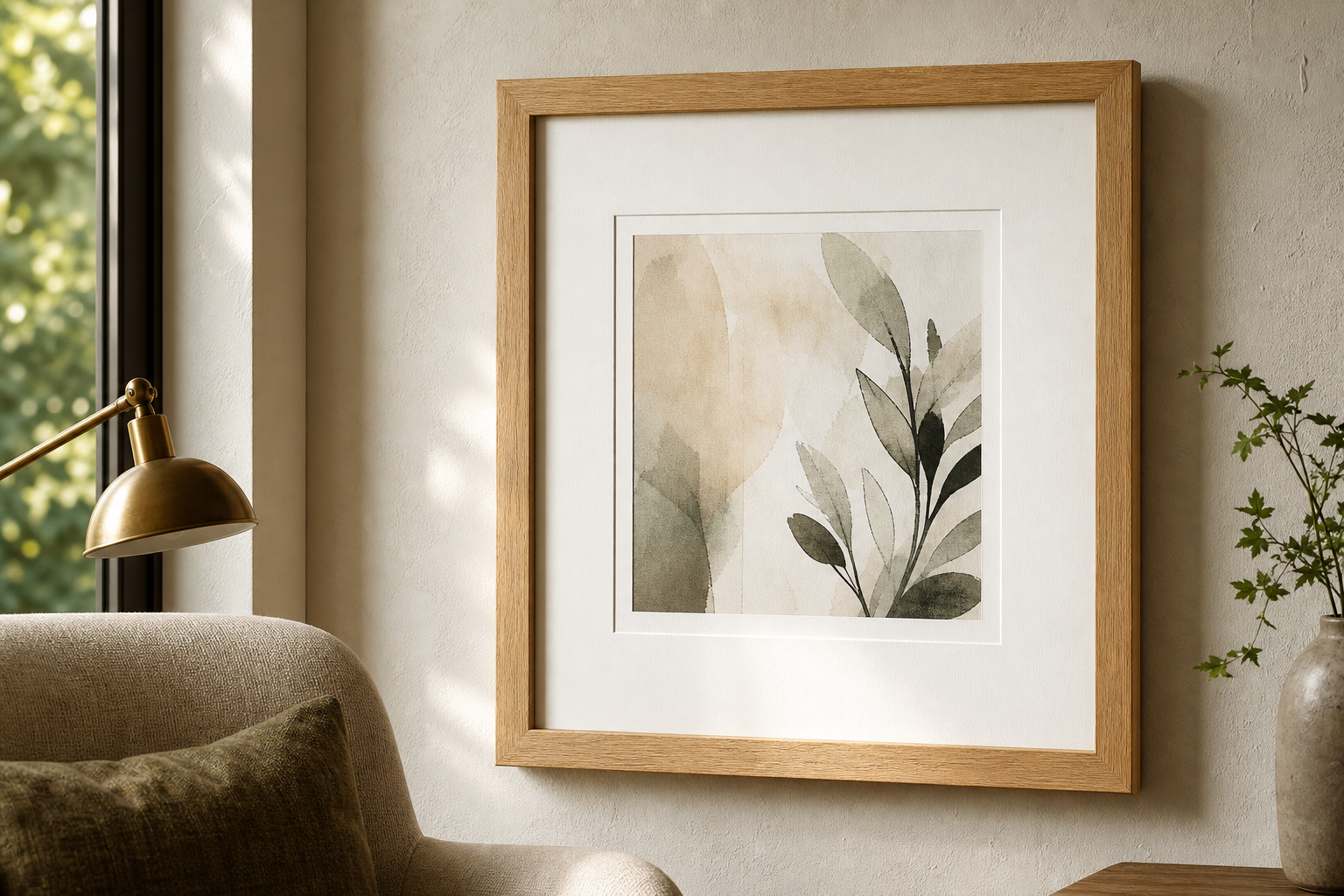
If you are choosing the best poster sizes for a room that already has strong furniture, curtains, or rugs, simpler frames usually perform better. They let the scale do the work. If the room is plain and needs more presence, a larger mat or slightly thicker frame can add that extra layer without changing the art itself.
A quick guide to picking the right size with confidence
Start with the wall, not the artwork. Measure the available width and height, then match your total arrangement to roughly 60 to 75 percent of that usable area if furniture sits below. Choose one large piece if you want a focal point, a pair if you want symmetry, or a grouped set if you want movement and variety.
The best poster sizes are the ones that look in proportion from across the room, not just on your phone screen. If you are unsure, size up once. Most walls can handle more scale than people expect — especially in living rooms, above beds, and over sideboards. Keep the palette coherent, repeat frame finishes across the room, and let spacing stay tight and intentional. That is usually all it takes to make wall art feel settled.