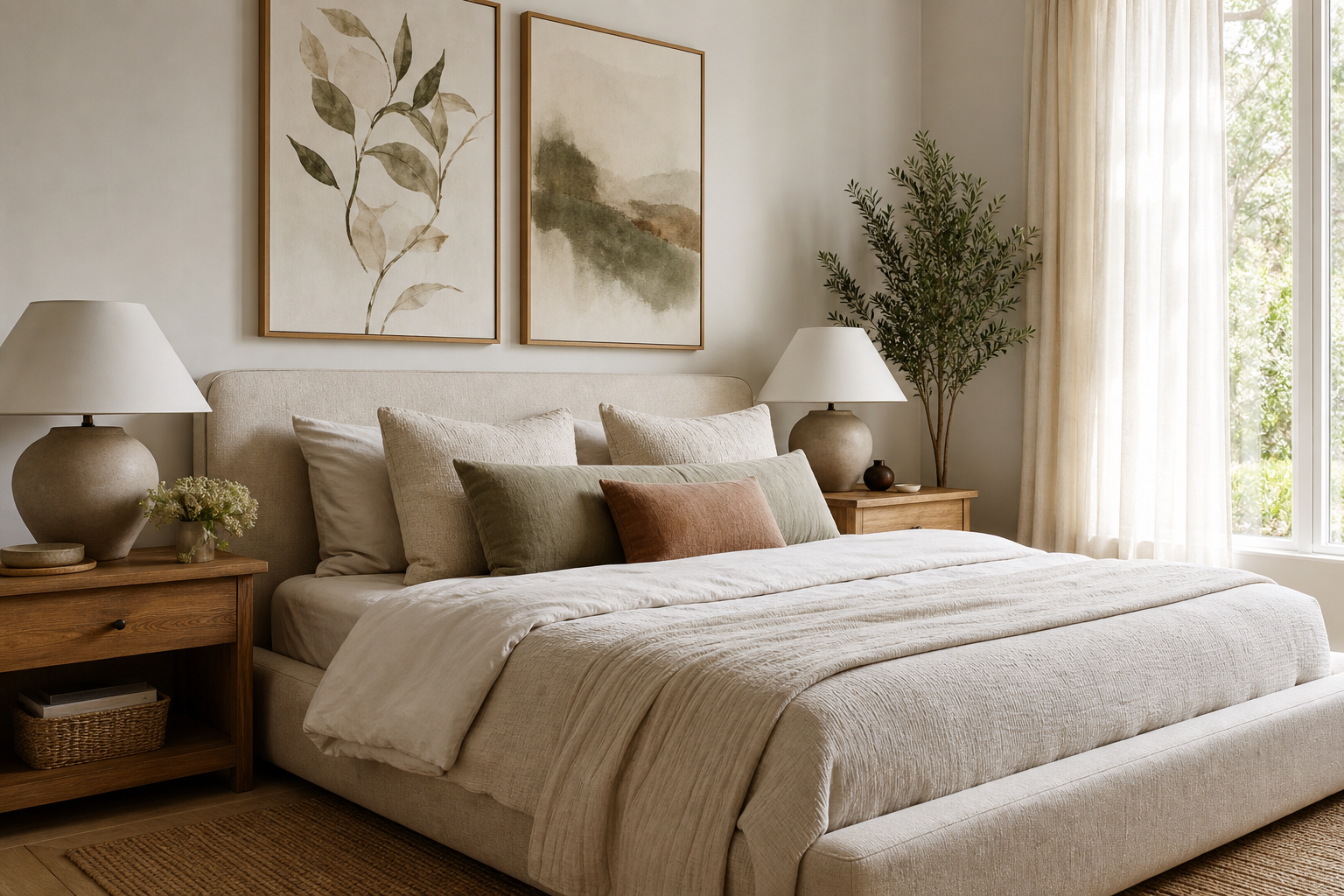
Good bedroom wall decor starts with atmosphere. In a room built for rest, the wall should lower visual noise rather than compete for attention. That usually means softer imagery, fewer pieces, and more breathing space between elements than you would use in a living room or hallway. If your bedroom feels busy, reducing one-third of the visual detail on the walls often has more impact than buying something new.
Start with a Calm Mood, Not a Theme
A peaceful bedroom is easier to style when you define the mood first. "Restful" often leans airy and light, with pale neutrals and gentle forms. "Cocooning" works better with deeper taupes, warm browns, and richer texture. "Romantic" benefits from softer curves, faded florals, and muted blush, cream, or dusty rose. Instead of asking what style you want, ask what you want to feel at 10 p.m. and again at 7 a.m.
That shift keeps bedroom wall decor from becoming too literal. A coastal theme can feel obvious; a calm coastal mood feels refined. A floral theme can become overly sweet; one or two pieces from our botanical collection in quiet colors feel more grown-up. The same applies to pared-back rooms anchored by minimalist art prints or softer contemplative work from the mindfulness collection.
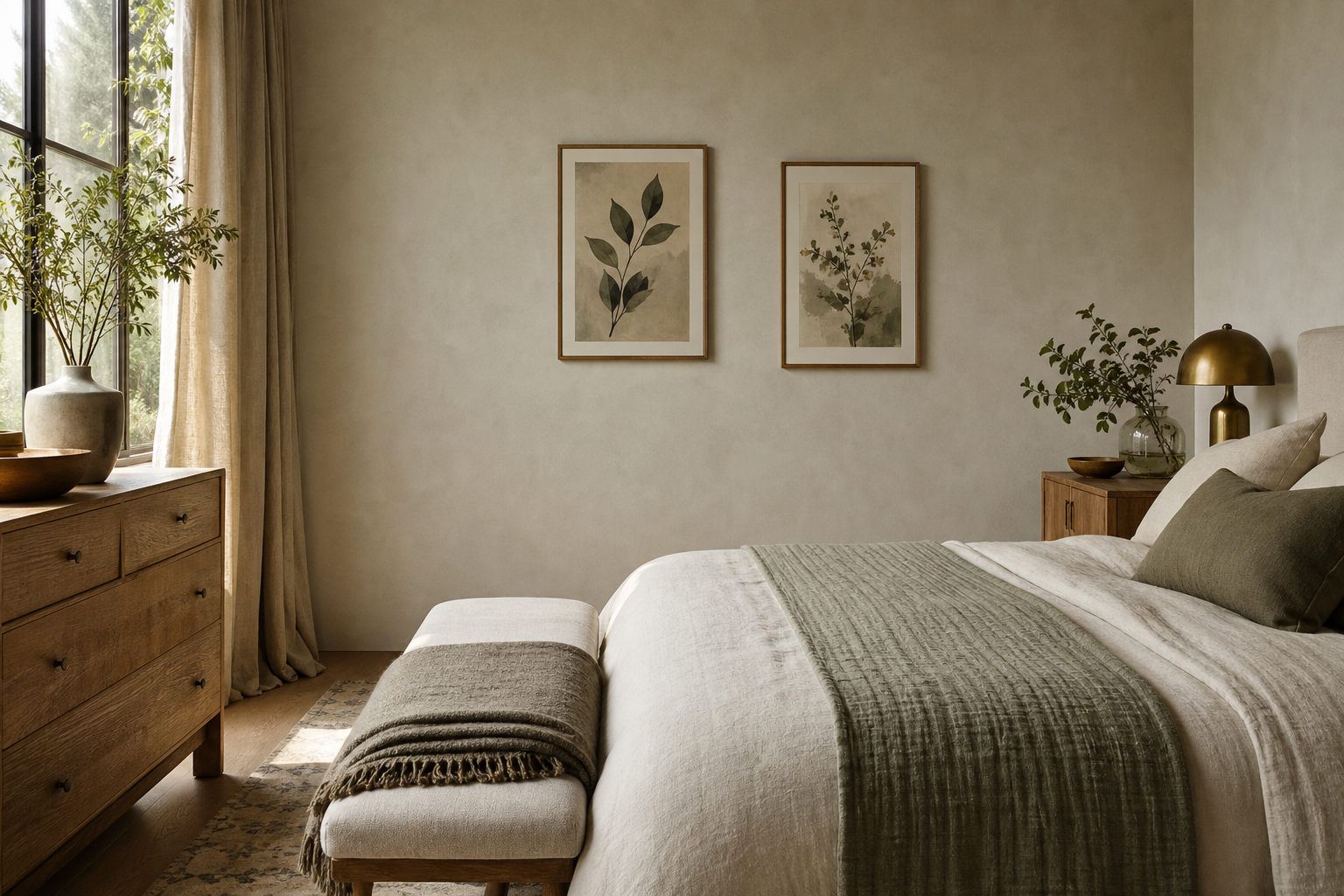
A simple filter helps: every piece on the wall should support one of three qualities — softness, spaciousness, or warmth. If a print is sharp, high-contrast, or emotionally loud, it belongs elsewhere. Bedroom wall decor works best when the eye can move across the room without abrupt stops.
Choose Art That Softens the Space
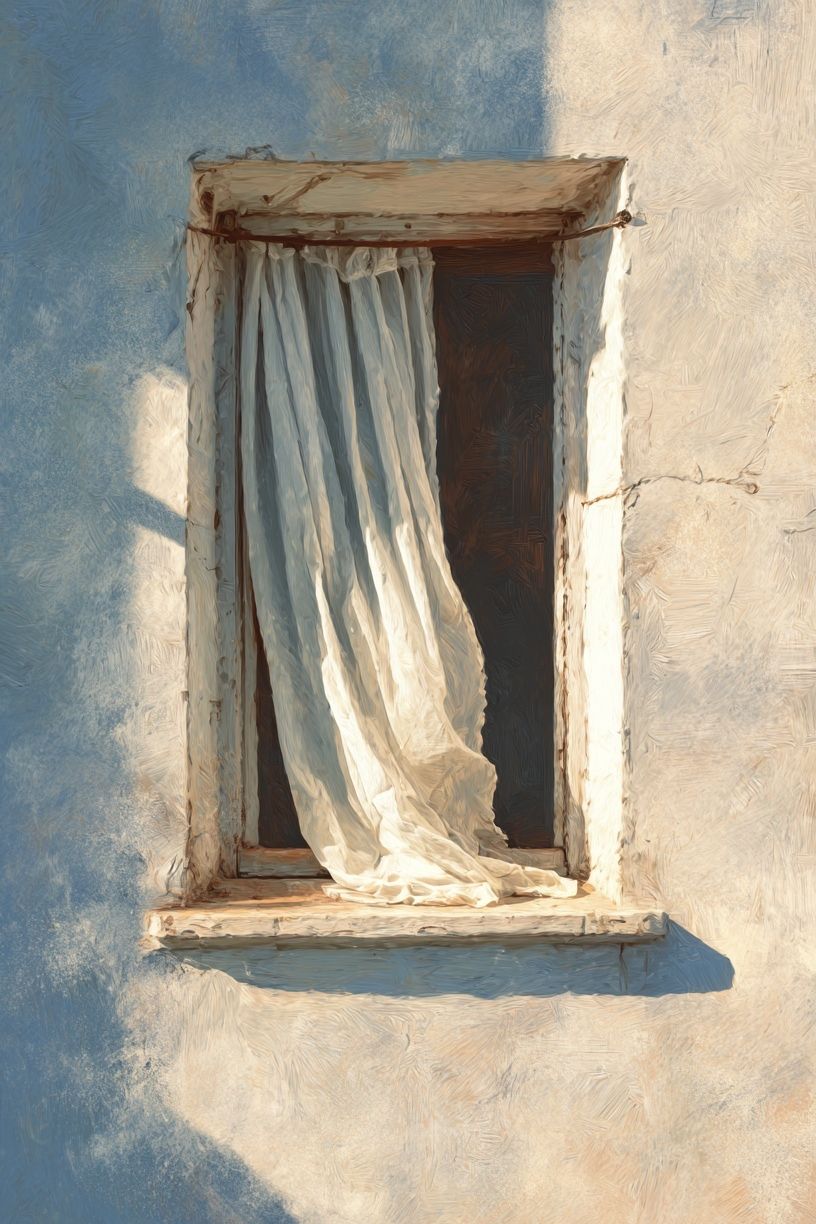
Bedrooms respond well to subject matter that feels still. Botanical silhouettes, distant landscapes, water scenes, draped fabric studies, and minimal linework all create that effect. You can see this in Window with Sheer Curtain — the subject is simple, but the movement is gentle and light-diffused, which suits a sleep space better than something dramatic or crowded.
Nature is one of the safest categories for a restful room because it naturally carries slower visual rhythm. Mist, trees, water, and horizon lines all help. If you want more visual structure without losing calm, explore nature wall art or fine art prints for softer interiors with subdued detail and open composition.
A good example is Serene Landscape — Watercolor Print. Watercolor edges read lighter than hard graphic outlines, which makes them especially useful in smaller bedrooms where bold art can dominate too quickly.

For more intimate rooms, one quiet piece above each nightstand can work better than a large statement over the bed. Try artwork with curved forms, pale negative space, or tonal subjects such as White Flower Silhouette — Minimalist Print. These choices soften the architecture without making the wall feel empty.
Use Color to Quiet the Room
Color does as much work as imagery. In bedroom wall decor, muted tones usually outperform saturated ones because they connect more easily with bedding, rugs, and painted walls. Think in 60-30-10 proportions: 60% dominant room color, 30% secondary color, 10% accent. If the room is mostly warm white and flax linen, keep wall art in ivory, stone, faded green, dusty blue, or soft clay.




Tonal coordination matters more than matching exactly. Bedding in greige, oat, or mushroom looks stronger with nearby art in the same temperature range, not the exact same shade. Warm neutrals pair well with Honeysuckle by William Morris or natural studies from our botanical art range. Cooler rooms with pale gray-blue walls can take misty landscapes or water-based imagery from the nature collection.
If your room already has patterned textiles, choose simpler wall art. If the bedding is plain, you can bring in a little more movement through washed brushwork or textile-inspired prints. Bedroom wall decor should feel cohesive at a glance from the doorway — if one piece reads much brighter or darker than the rest, it will keep pulling attention.
Get the Scale and Placement Right
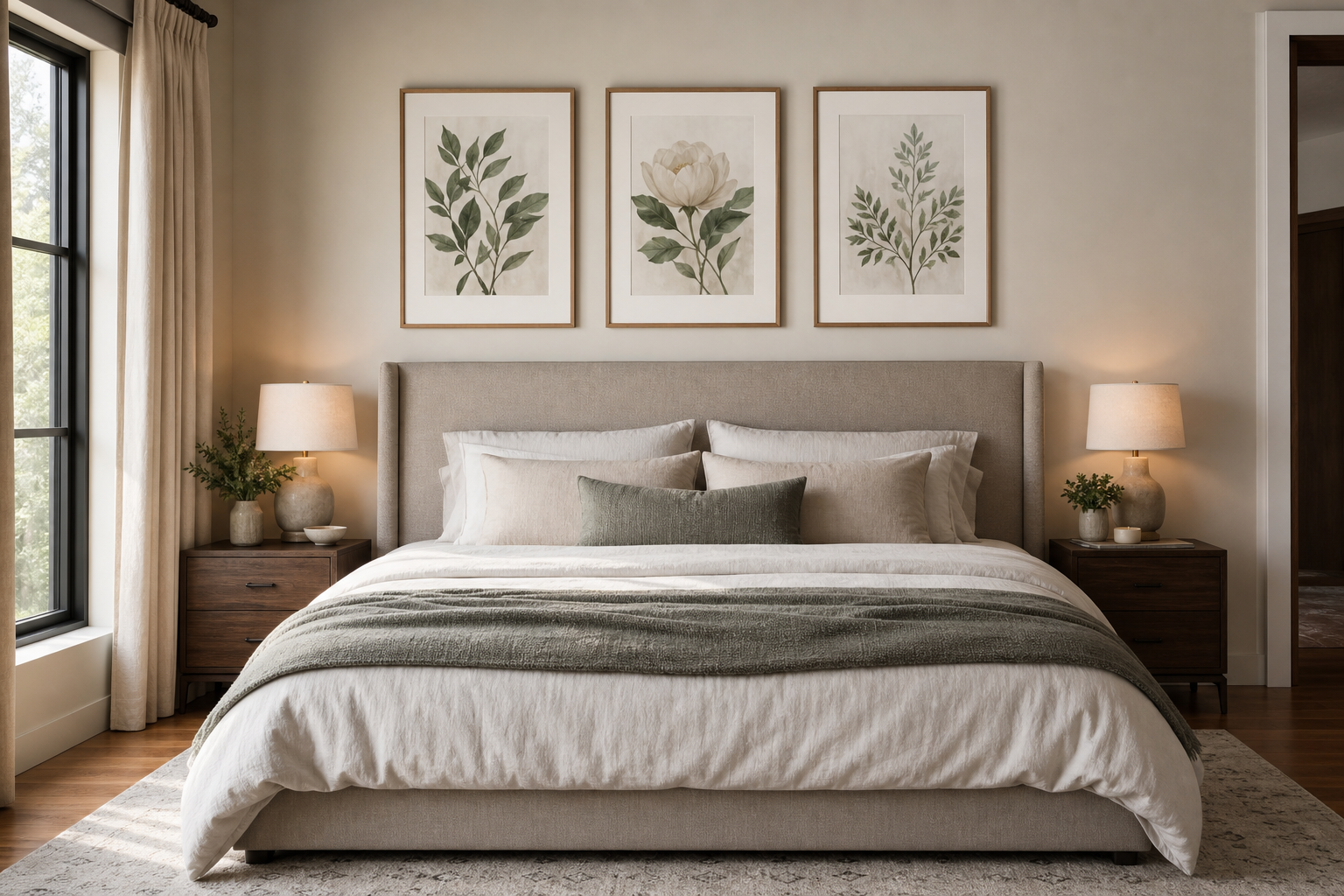
Scale is where many bedrooms go wrong. Over a bed, your artwork should usually span 50% to 75% of the bed width. For a queen bed around 60 inches wide, aim for a composition between 30 and 45 inches across. For a king at 76 inches, a grouping around 38 to 57 inches feels more grounded. Smaller than that often looks like it is floating; larger can feel heavy when viewed from bed.
Hang art lower than you would in a dining room. In bedrooms, the center point is often best around 57 to 60 inches from the floor, but above a headboard you should work from furniture clearance first. Leave roughly 6 to 10 inches between the top of the headboard and the bottom of the frame. That tighter relationship helps the bed and art read as one calm zone.
If you are building a feature wall, keep the arrangement simple — one large horizontal piece, two verticals, or a symmetrical row of three. Skip crowded salon hangs in most bedrooms unless the room is large and the palette is tightly controlled. Bedroom wall decor benefits from negative space because empty wall acts like visual silence.
Frame It for a Finished, Relaxed Look
The frame should support the room, not formalize it too much. Light oak, natural wood, matte white, and slim black are the easiest choices for restful bedrooms. Oak warms up minimalist work and soft landscapes. White frames blend gently into pale walls. Thin black adds definition, but in a bedroom it is best with low-contrast art rather than stark monochrome pieces.
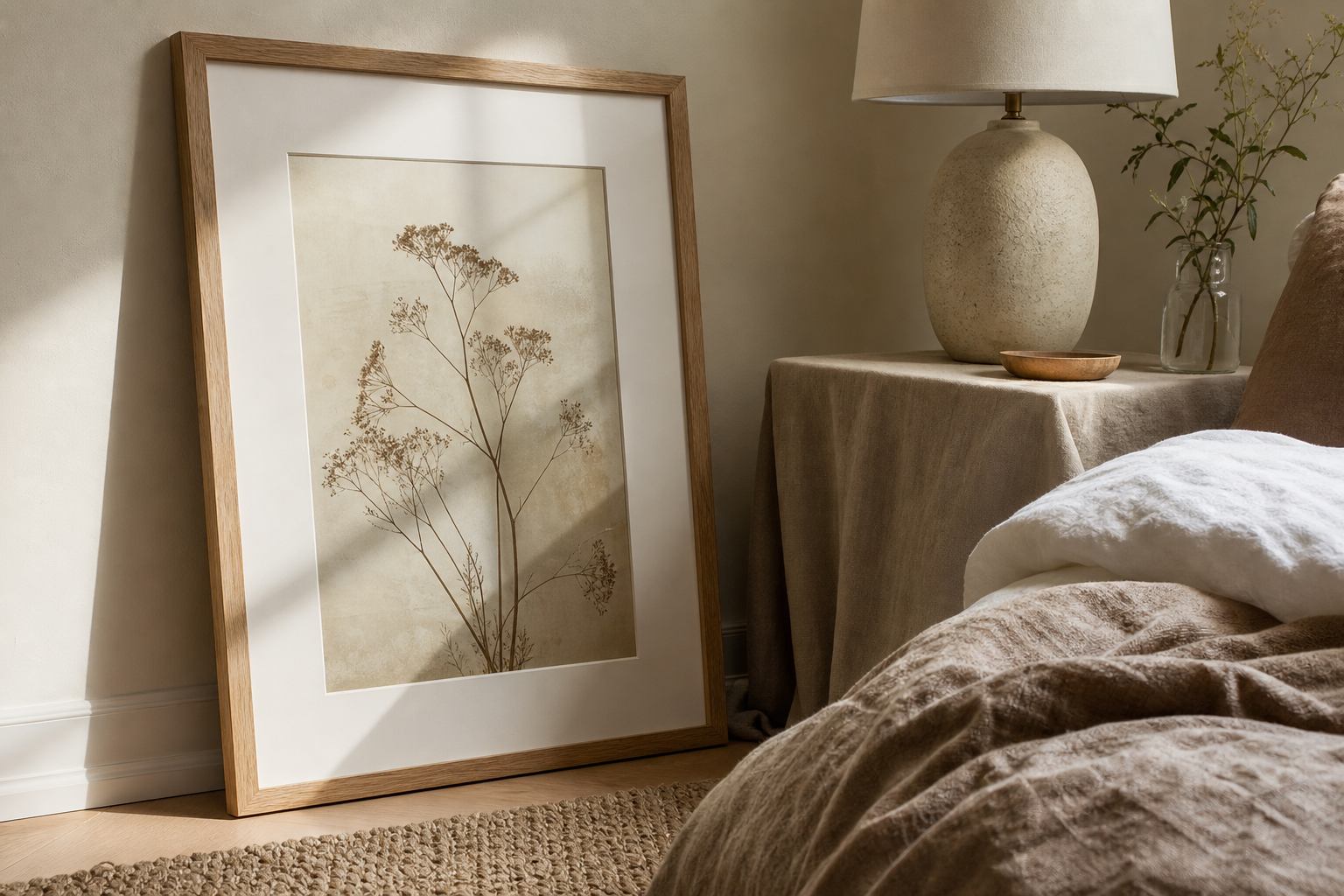
Matting is useful when the image itself is detailed. A 2 to 4 inch mat gives a print more breathing room and makes even small formats feel intentional. In compact bedrooms, 30 x 40 cm and 40 x 50 cm pieces are often enough by the bedside. Over the bed, 50 x 70 cm or 70 x 100 cm works well depending on bed size and ceiling height. If you want a more tactile, understated finish, choose works with textile, plaster, or paper-like surfaces such as Textured Fabric — Minimalist Print or White Cream Texture Poster.

For a softer decorative layer, vintage-style botanical work also frames beautifully in wood. Pieces such as William Morris's vintage pomegranate flowers add pattern and heritage without turning the room busy, especially when the surrounding palette is quiet.
Add Texture and Layers Without Losing Calm
Layering makes a bedroom feel finished, but each added element should earn its place. One mirror, one narrow shelf, or one textile wall accent is usually enough alongside framed art. Too many hard surfaces create visual chatter. A good rule is to mix no more than three wall-related materials in one zone — for example wood, glass, and linen.
Try pairing one framed print with a small ceramic sconce or a low-profile shelf holding a single vase. In softer bohemian or natural bedrooms, wall art with earthen tones works well near woven textures and dried branches. That is where bohemian wall art or pieces like Ceramic Vases with Dried Branches can bridge art and decor elegantly.
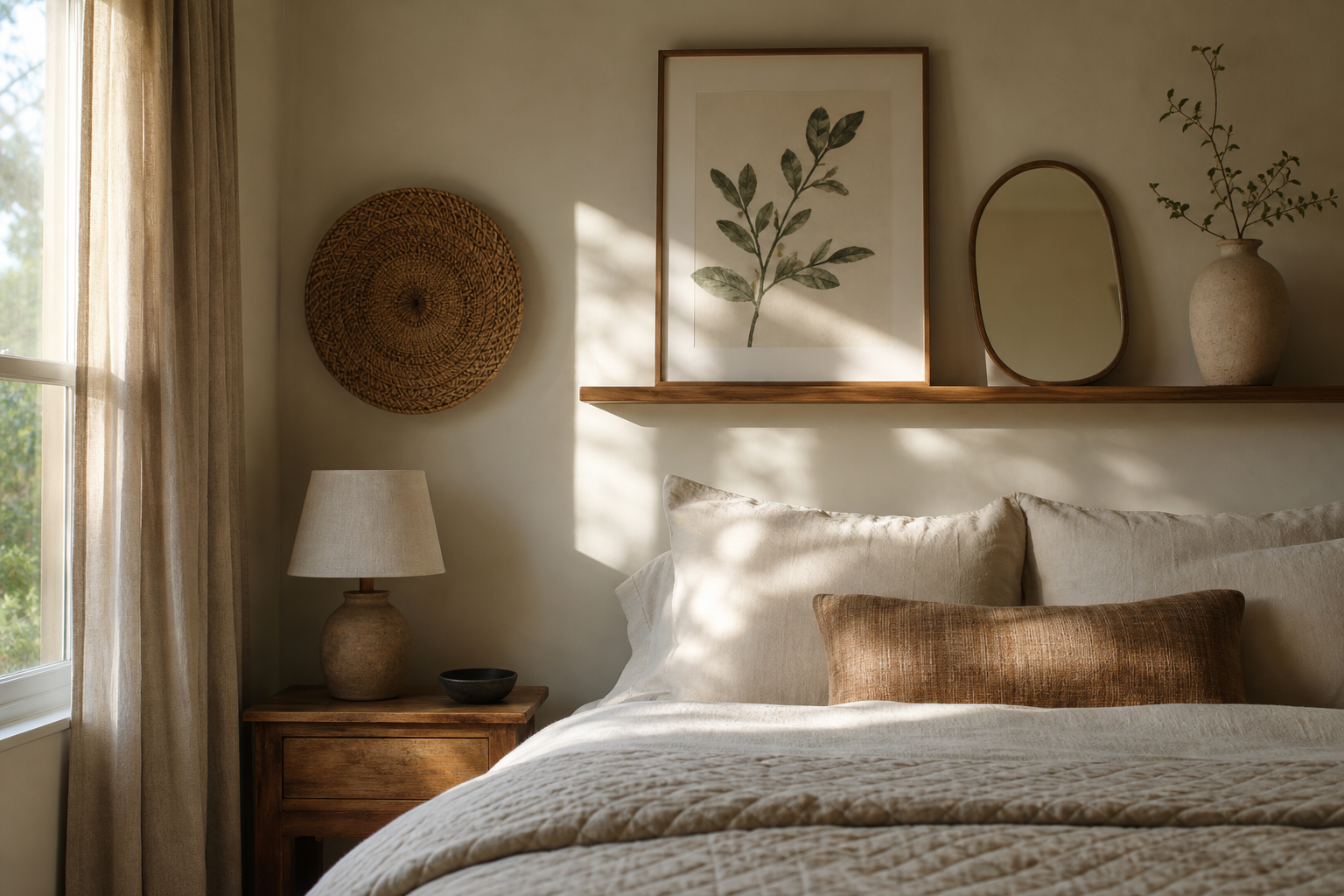
The key is restraint. Leave open wall around each object. Keep shelves shallow — around 4 to 6 inches deep — so they do not project into the room visually. If you are styling a compact bedroom, place layered elements on the wall opposite the bed or beside a dresser rather than stacking too much directly above the headboard.
Bedroom Wall Decor Tips to Shop Smarter
Edit before you buy. Measure the wall, note your bedding colors, and decide whether you need one focal piece or two supporting pieces. A set of three small prints can cost less, but one correctly scaled artwork often looks calmer and more expensive. Bedroom wall decor should solve the room, not just fill blank space.
Choose pieces you can live with for years. Sleep spaces are not ideal for novelty-driven imagery because you see them every day at close range. Safer long-term choices include subtle abstracts, landscapes, botanicals, and contemplative fine art. If you want to mix sizes, keep one common thread — matching frames, repeated color, or similar subject softness. A 70 x 100 cm anchor piece paired with two 30 x 40 cm works well in larger bedrooms; in smaller rooms, two 40 x 50 cm prints may be enough.
Final thoughts
The best bedroom wall decor makes the room feel quieter the moment you walk in. Focus on calm mood, soft subject matter, restrained color, and proper scale, then finish with frames and layers that add polish without heaviness.
When each piece supports rest rather than attention, the bedroom starts to work as a retreat. That is the standard worth aiming for — less decoration for its own sake, more atmosphere that lasts.