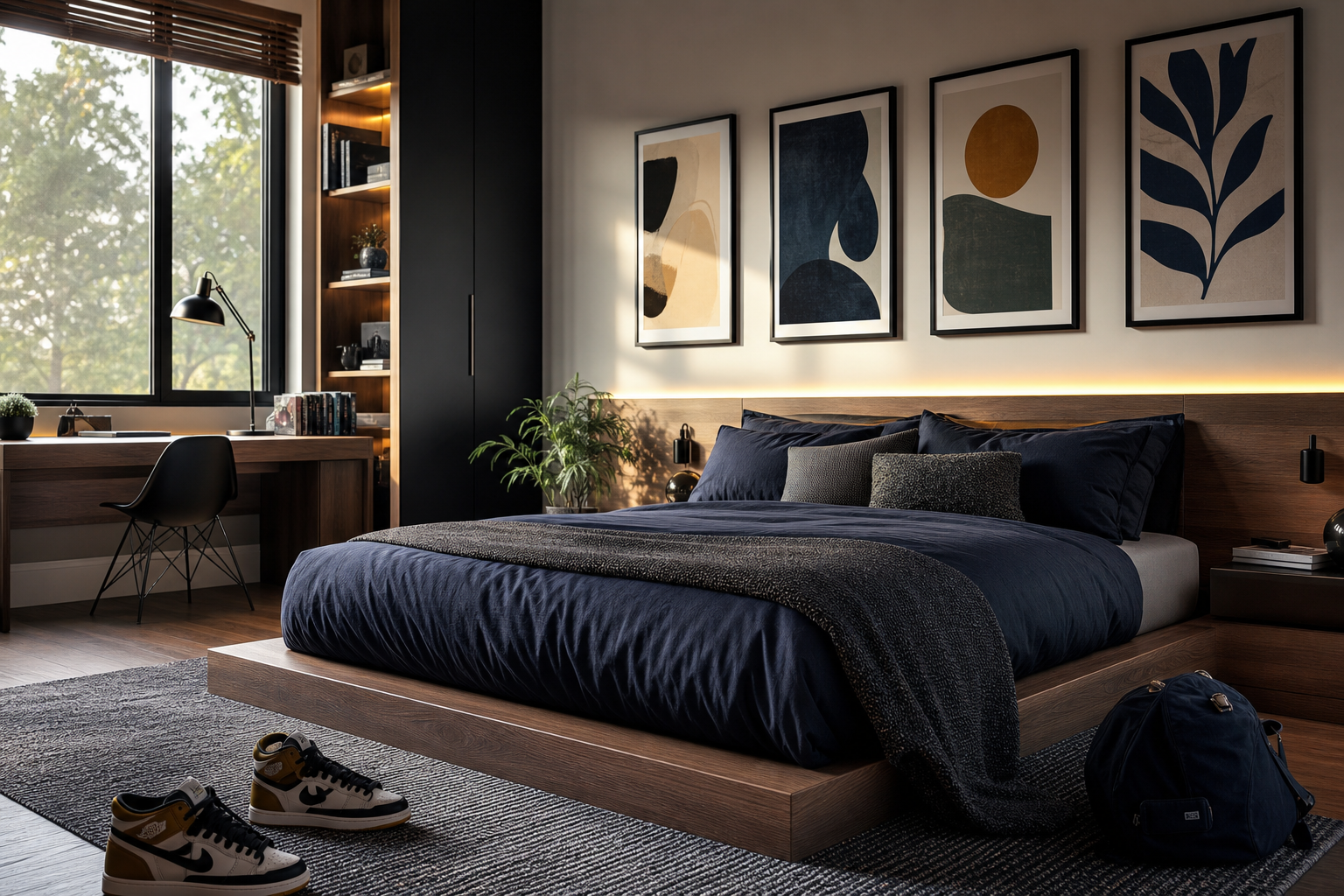
A strong collection starts with pieces you would still want on your wall even if the series ended tomorrow. This anime poster guide is built around that idea: collect for impact, display for balance, and care for each print like part of a long-term archive. Good anime wall art does two jobs at once — it shows personal taste and shapes the room around it.
Why Anime Posters Belong in a Collector's Space
Anime artwork is unusually flexible in interiors because it spans quiet character portraits, cinematic action scenes, graphic silhouettes, pastel romance, and dense cyberpunk color. That range lets collectors build a wall that feels personal instead of generic. A single dramatic print can define a desk corner, while a set of four can carry an entire bedroom wall without needing extra decor.
Collectors also return to anime prints because they are easy to expand over time. You can start with one 30 x 40 cm frame above a shelf, then add matching 50 x 70 cm pieces as your collection grows. If you want a strong starting point, browse our Anime collection and note which pieces you would still choose in a completely different room five years from now. That is usually the clearest sign of a keeper.
Choosing the Right Prints for Your Collection
The best collections mix emotion, not just fandom. One print might be all about a favorite character, another about composition, and another about color. If every piece shouts at the same volume, the wall becomes visual noise. A better ratio is 60% bold hero pieces, 30% quieter supporting prints, and 10% wildcard art that adds contrast.
Official releases, limited editions, and artist-led reinterpretations each have value, but they serve different collectors. Official art often feels iconic and recognizable. Limited runs can feel more exclusive, especially if you are building around one series or style. Artist-led pieces usually work best when you care about the image itself, not only the title behind it. When browsing Dark Elegance or Anime Character Portrait, look closely at line quality, background treatment, and whether the figure reads clearly from 2 to 3 meters away.
Budget matters, and it helps to set it before you start. A simple collector rule is to split spending into tiers: around 50% for one or two anchor pieces, 30% for supporting prints, and 20% for frames or upgrades. That stops you from buying four mid-range prints and then hanging them with clips because the framing budget disappeared.


Sizes, Formats, and Where They Work Best
Size decides whether a print feels intentional or undersized. Above a bed, aim for wall art that spans roughly 50% to 70% of the headboard width. Above a desk, one 40 x 50 cm or 50 x 70 cm piece usually feels strong enough without overwhelming the work zone. For narrow wall strips beside wardrobes or shelving, vertical formats are easier to place than horizontal ones.
Horizontal prints work well over sofas, wide desks, and low storage units. Vertical prints suit corners, reading nooks, and spaces between furniture edges. Gallery walls are most convincing when there is one repeated measurement across the group — for example, four 30 x 40 cm frames with 5 to 7 cm spacing. If the arrangement mixes sizes, use one dominant format and one secondary format rather than five unrelated dimensions.
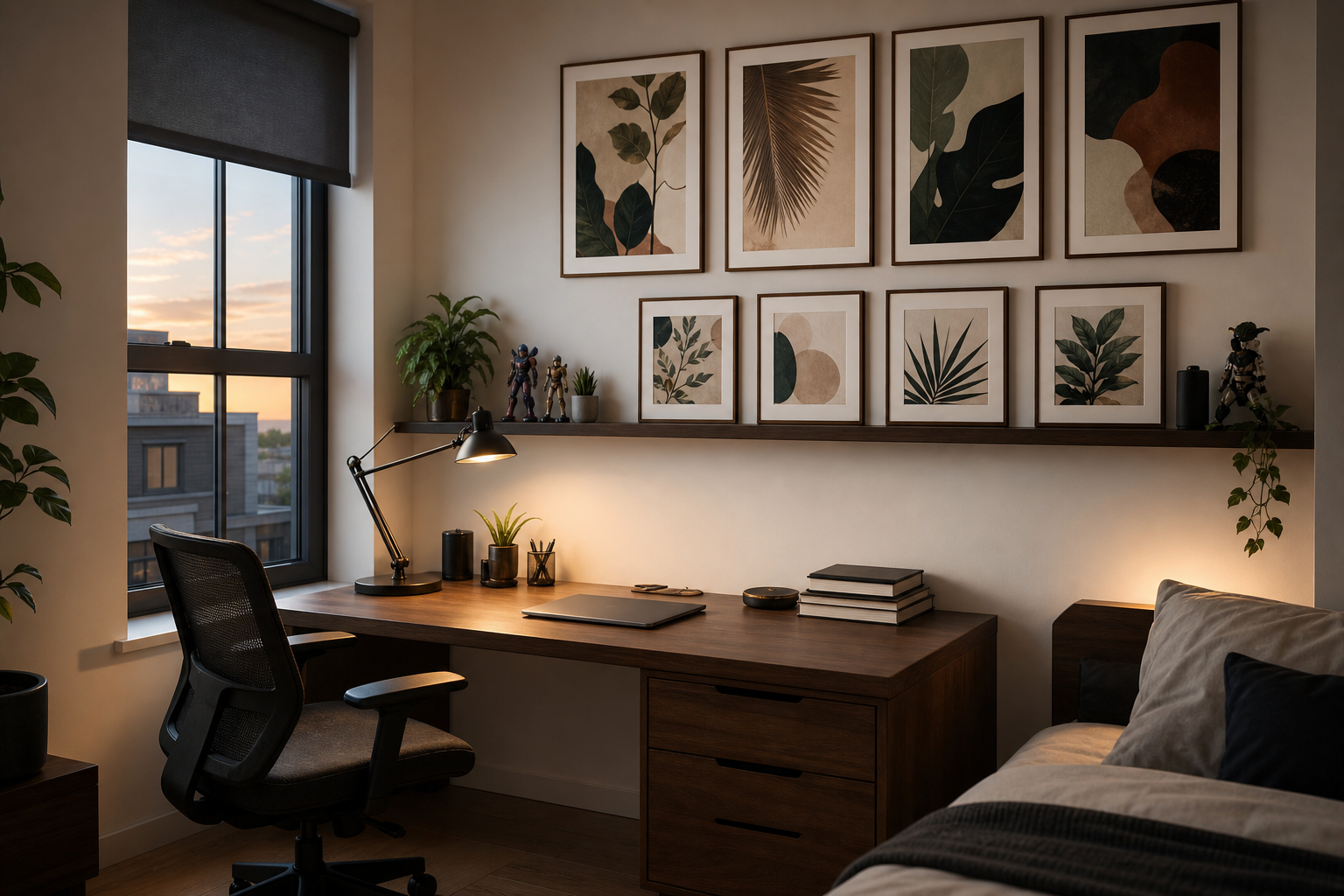
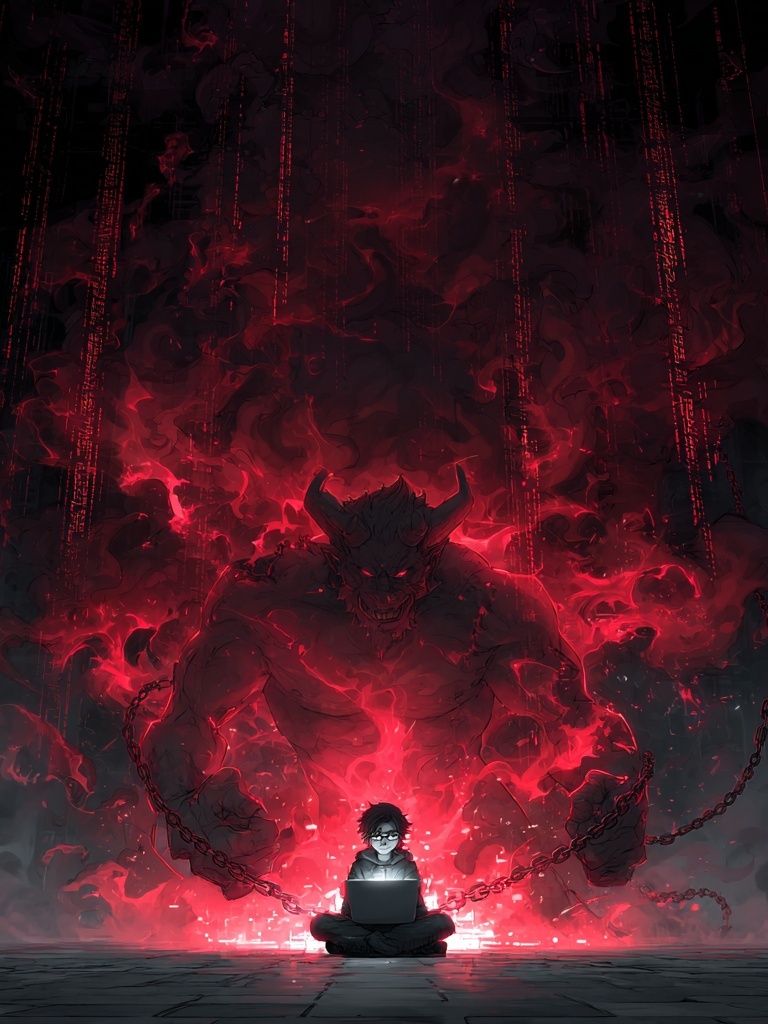
Smaller formats belong closer to eye level. A 21 x 30 cm print looks better near a desk, bookshelf, or nightstand than floating alone on a large blank wall. Larger statement pieces — 61 x 91 cm or similar — belong where you can step back and take in the composition. If you are deciding between several formats, compare them against Cyberpunk Duo or Boy and Dog Under the Moon and picture how much breathing room each image needs.
Framing and Mounting for a Clean Finish
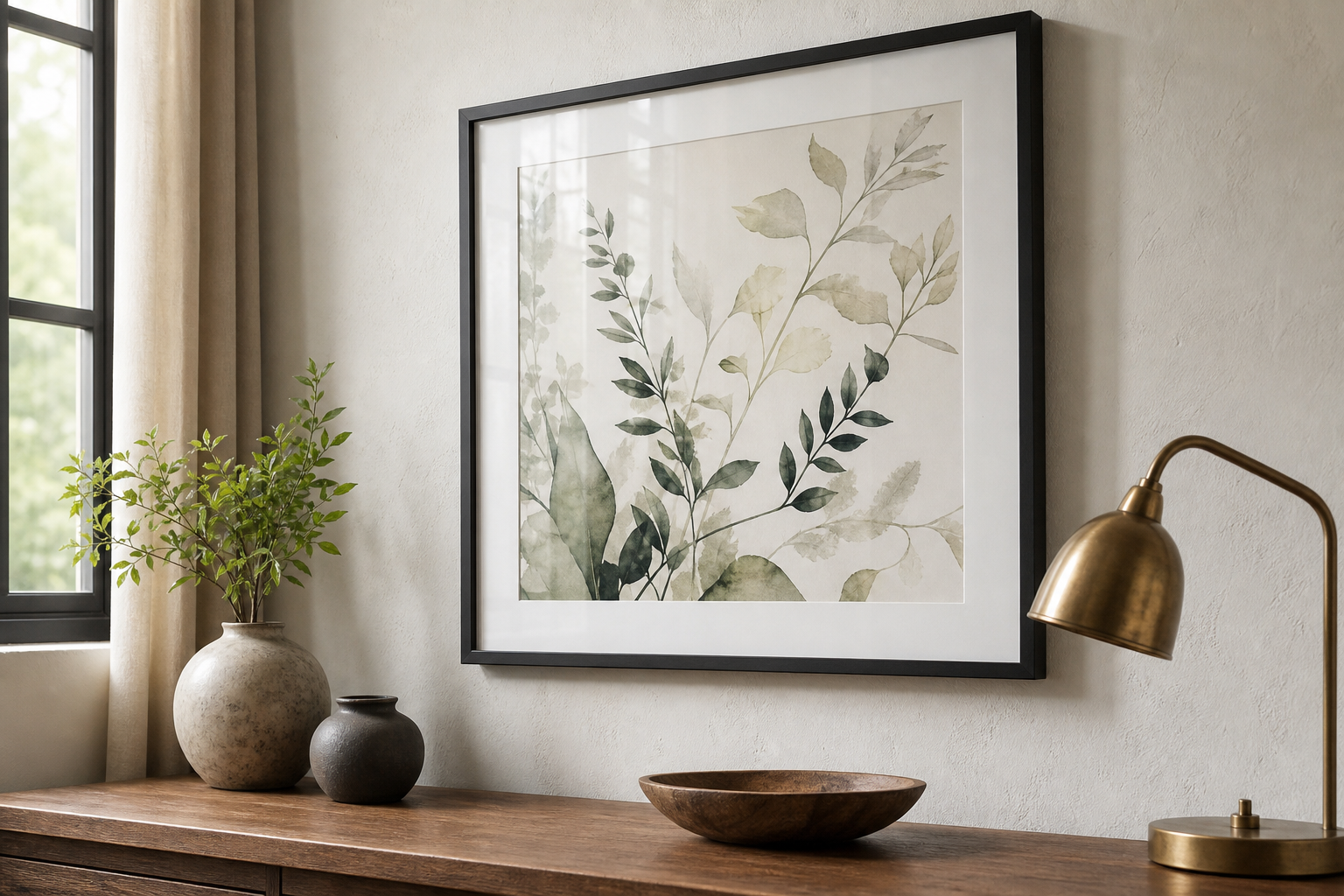
A good frame should organize the artwork, not compete with it. Black, white, and natural oak frames cover most anime interiors because they keep attention on the illustration. Black frames sharpen neon and darker work. White frames soften pastel character art. Oak adds warmth and works especially well if the room already has wood shelving or flooring.
Matting is useful when the image has intense edges or dense color. A 3 to 6 cm white mat creates visual pause and makes a 30 x 40 cm print feel more gallery-like. For high-saturation work, that extra border can keep the wall from feeling crowded. Acrylic glazing is lighter and safer for bedrooms or dorms, while glass gives a slightly crisper finish if weight is not a concern. UV-protective glazing is worth it for any print hung opposite a window or in a room with long daylight exposure.

If you cannot frame immediately, use clean mounting methods that do not bend corners. Magnetic rails, acid-free backing, or archival photo corners are all better than standard tape. For renters, lightweight frames with removable wall strips are practical up to moderate sizes, but anything larger than about 50 x 70 cm is usually more secure with proper hardware. You can compare framing moods by browsing Cyberpunk Girl and Elegant Bride — one benefits from crisp, modern edges, while the other can handle a softer presentation.
Building a Display With Mood and Color in Mind
The most cohesive anime wall setups are built around one clear thread. That thread can be palette, series, character type, or atmosphere. A cyberpunk grouping might lean into electric blue, magenta, and black. A romantic fantasy set may sit around ivory, blush, and muted gold. Once you choose the thread, repeat it in at least three places on the wall so the arrangement reads as deliberate.
A practical formula is one focal print, two supporting pieces, and one visual bridge. The bridge is the clever part: it links the palette or energy of the other works without copying them. That is why collectors often combine anime with adjacent visual styles from our Illustration collection or even selected pieces from our Gaming prints when the color language matches. Cross-category mixing works best when the treatment feels compatible, not when the subject matter is random.
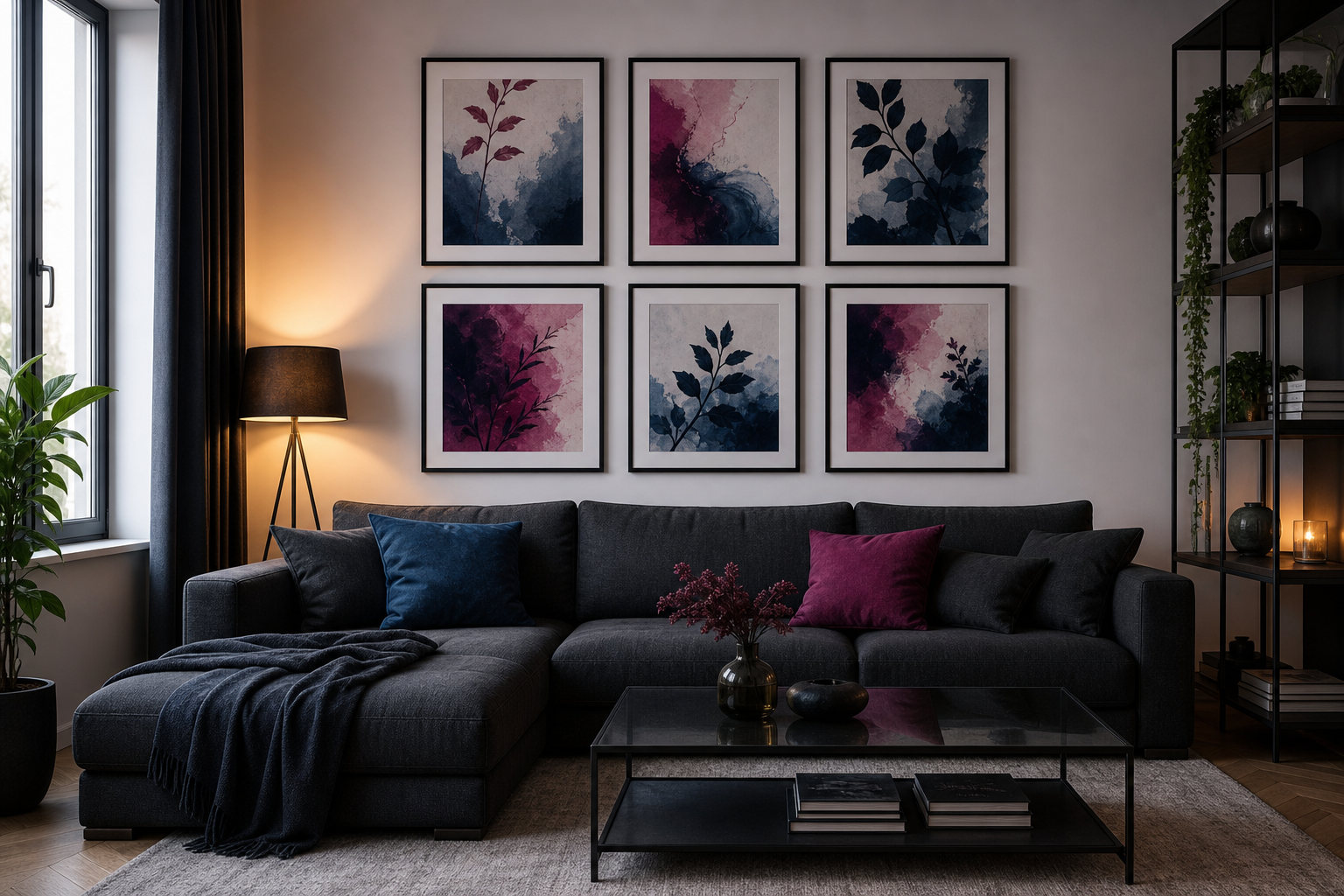
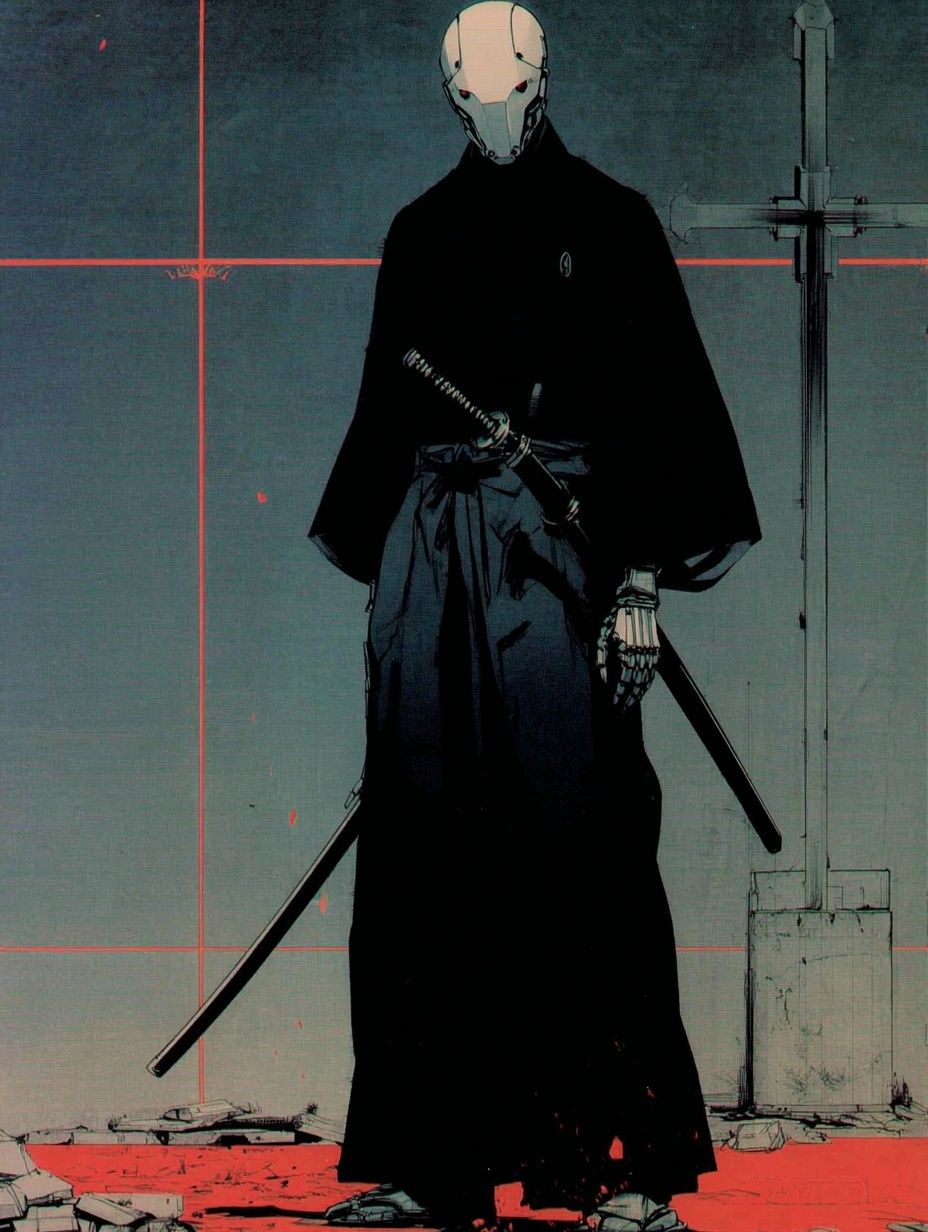
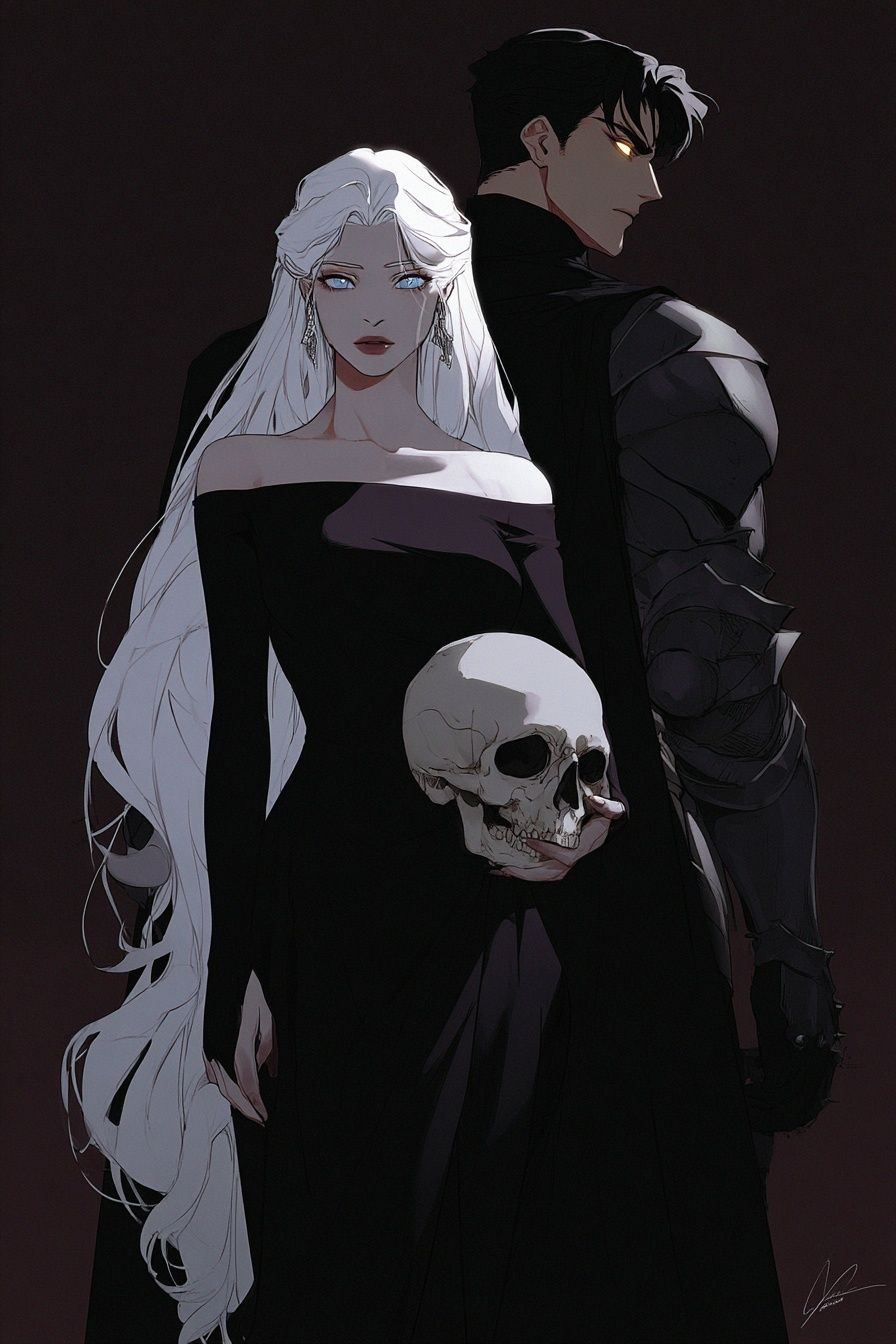
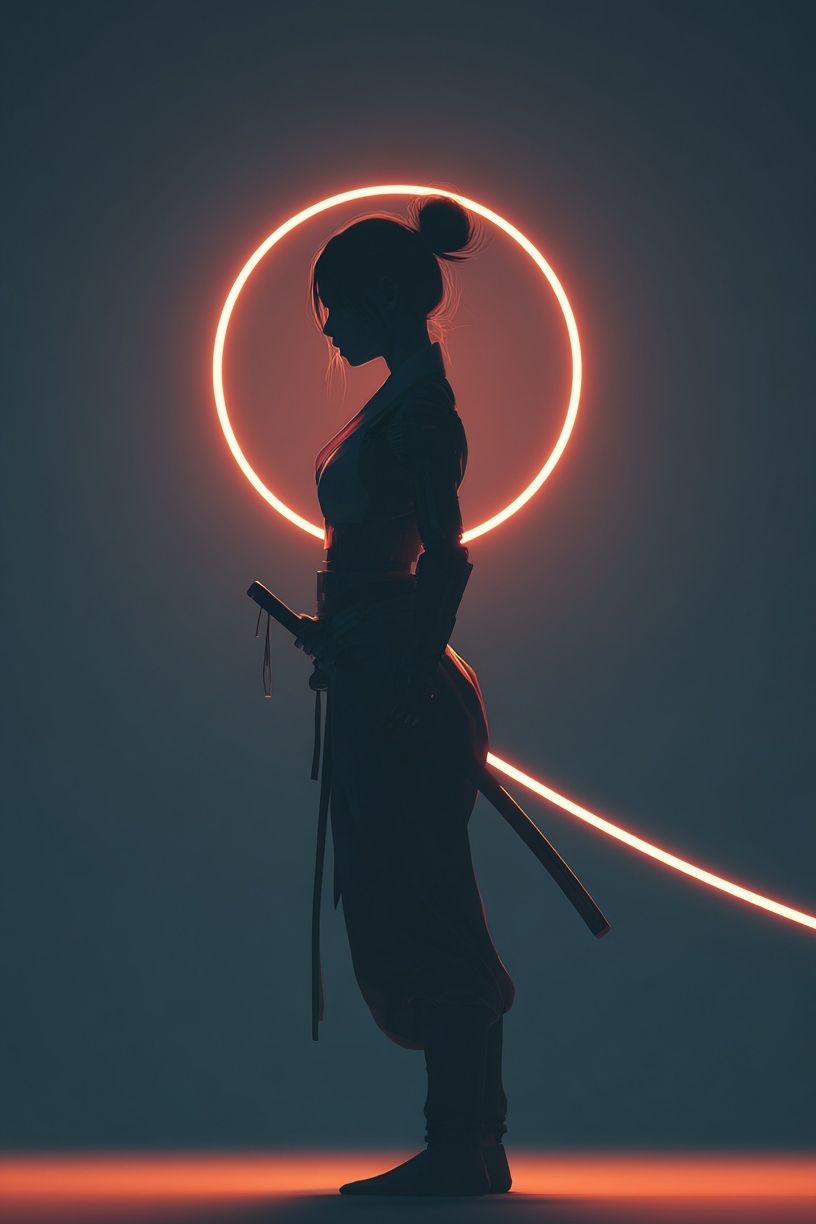
If your wall already feels crowded, reduce the number of prints before changing the art. Spacing of 5 to 8 cm between frames is usually enough for small and medium layouts. For larger pieces, 8 to 10 cm gives the eye room to separate one image from the next. Strong examples of color-led display include Neon Samurai Silhouette for a high-contrast focal point and Knight and Maiden when you want a softer fantasy balance.
Caring for Posters So They Last Longer
Light is the biggest long-term threat. Direct sun can fade saturated inks noticeably faster than ambient room light, especially reds, purples, and deep blues. If a print hangs in bright daylight, keep it out of direct exposure for the strongest UV hours — usually late morning through mid-afternoon. UV-filtering glazing helps, but placement matters more.
Humidity is the second risk. Paper prefers stable conditions, ideally around 40% to 55% relative humidity. In damp rooms, prints can ripple or develop waviness. In very dry rooms, paper can become brittle over time. Bedrooms and offices are safer than bathrooms or kitchens, and storage should always be flat, dry, and acid-free. If you rotate pieces seasonally, stack them with tissue or archival interleaving rather than pressing printed surfaces directly together.
Handle prints with clean, dry hands and support them from underneath rather than pinching the corners. Tubes are acceptable for short transport, but flat storage is better for the long term. This anime poster guide would be incomplete without that point: the best display means little if the paper is already creased, sun-faded, or warped before year two.
Final Collector Tips Before You Buy
Buy the image first, then the trend second. A collector wall lasts when each piece earns its space through composition, color, or meaning — not only hype. Before purchasing, check four things: exact size, orientation, whether the image needs a mat, and where it will hang within 24 hours of arrival. If you cannot picture the location, wait.
A simple buying checklist works well: one focal piece, one supporting print, one budget limit, and one frame plan. That keeps your next purchase aligned with the rest of the room. If you want to keep exploring, start with the full Anime range and compare it against the furniture, wall color, and light in your own space rather than shopping in isolation. The best collections do not look expensive by accident — they look considered on purpose.