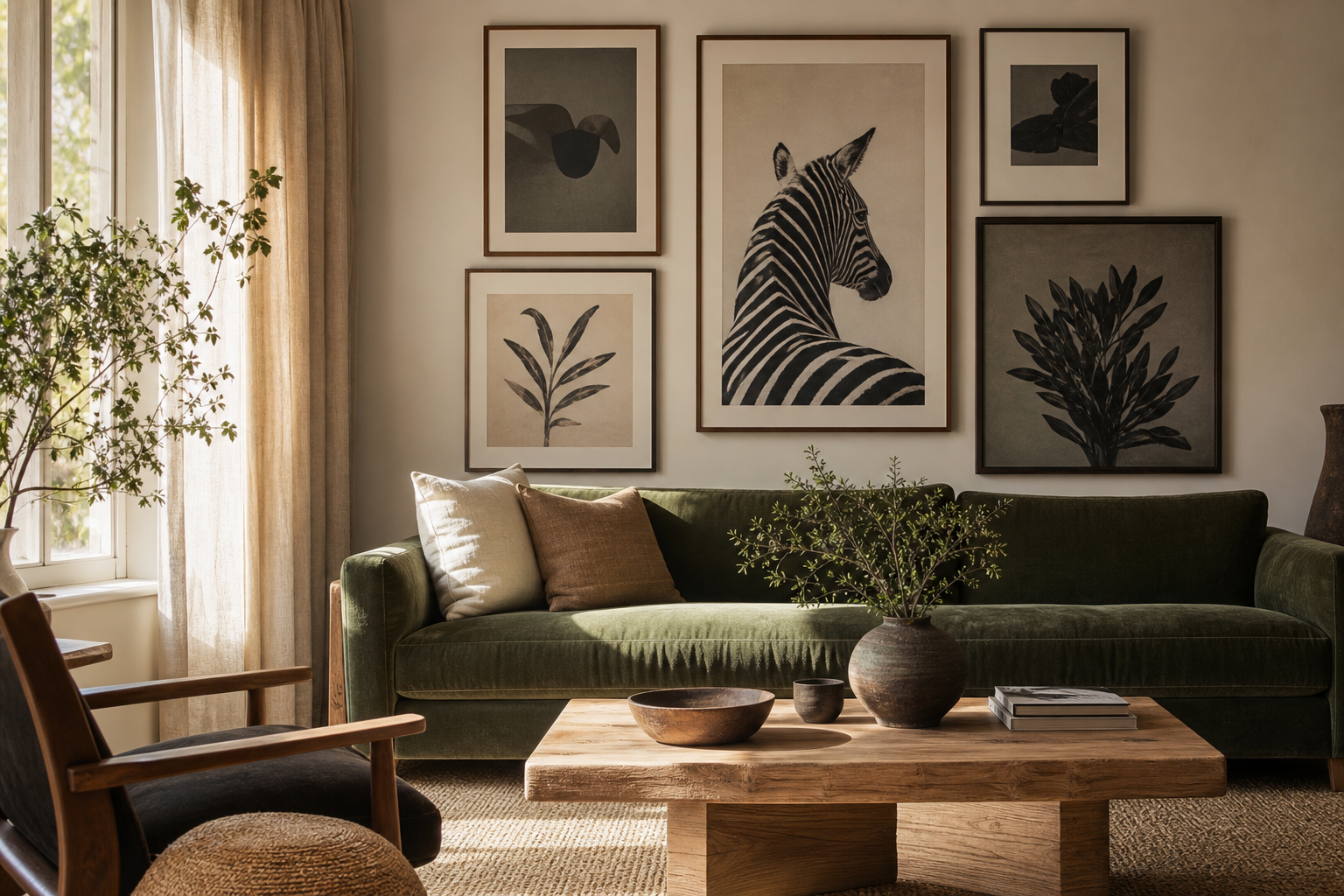
Animal imagery changes a room faster than most subjects because it brings in expression, movement, and a clear point of view. A landscape can calm a wall, and an abstract can sharpen it, but animal art tends to feel more intimate. Eyes, fur, feathers, stripes, and silhouettes give the room an immediate focal point. That is why strong animal poster ideas work in both styled homes and more relaxed, lived-in spaces.
The best animal poster ideas do not rely on novelty alone. They work because they connect the wall to the mood of the room. A leopard photograph adds tension and elegance. A bird illustration feels lighter and more decorative. A humorous zebra print can make a hallway or office feel less formal in seconds. If you want art that feels personal without becoming overly sentimental, our Animals collection is one of the easiest places to start.
Why Animal Art Feels So Instantly Personal
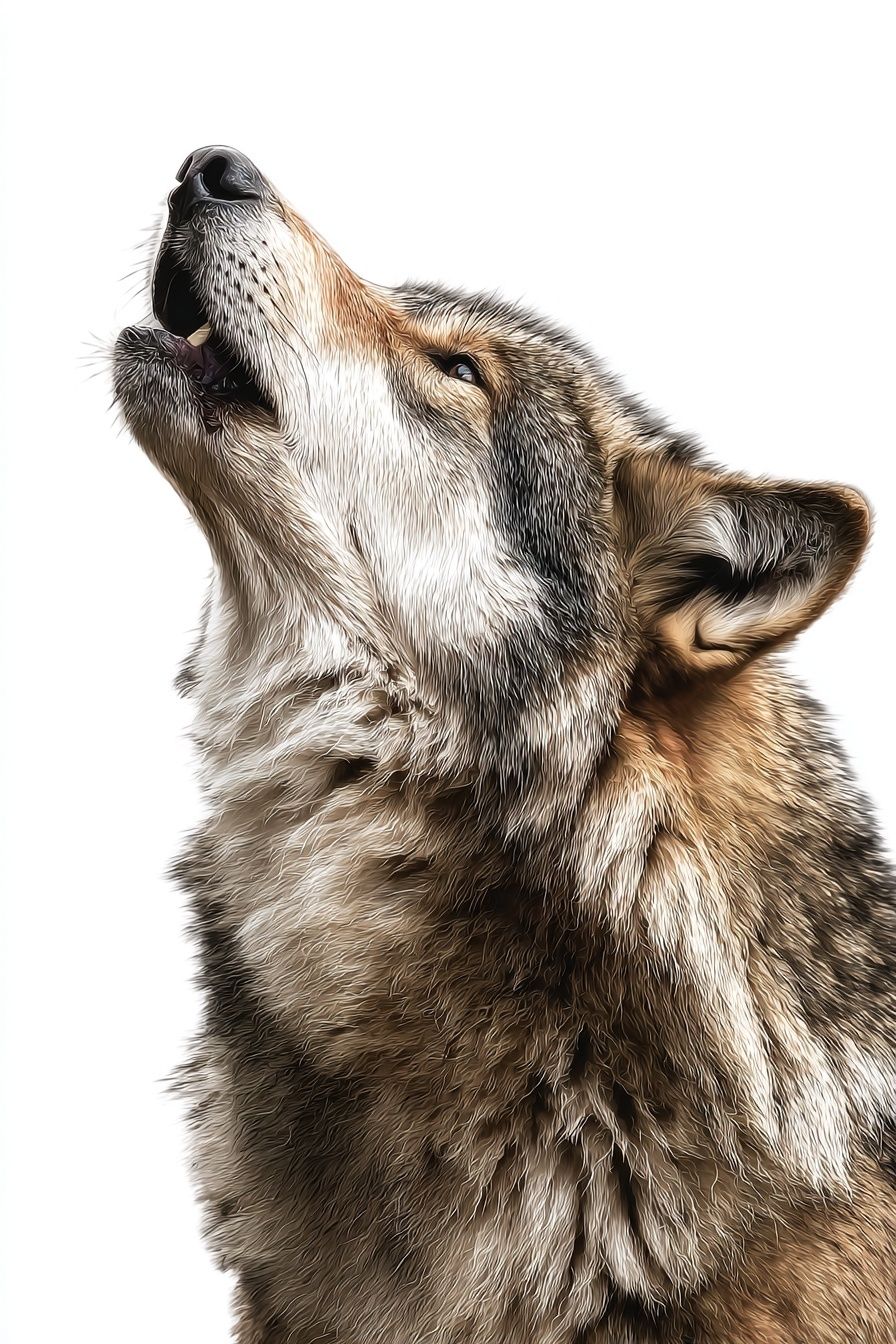
Animal art often reads as character rather than decoration. A wolf portrait can feel watchful and calm. A whale image adds scale and quiet. A small bird print near a shelf feels delicate and domestic. Because people naturally assign emotion to animals, the artwork quickly feels like part of the room's story rather than a filler piece.
Another reason it works so well is contrast. Animal forms are visually strong against common interiors materials such as plaster walls, oak furniture, boucle upholstery, and black metal lighting. Zebra stripes, antlers, wings, and tails create shapes that break up straight architectural lines. In rooms with many rectangles — sofa, rug, console, window — animal subjects add the curve and asymmetry that keep the space from looking flat.
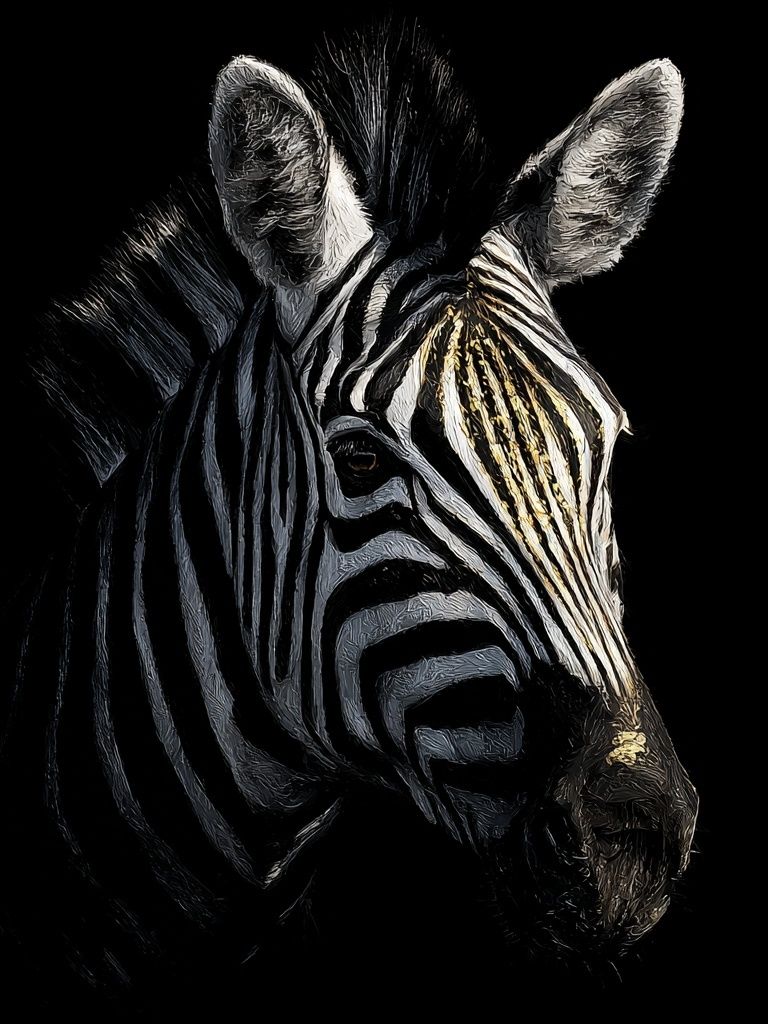
A single close-up portrait is often enough. In a room with neutral tones, one large framed animal print at 50 x 70 cm or 70 x 100 cm can carry the full wall. If you prefer a gentler look, choose pieces with more negative space and softer illustration detail from our Illustration collection or classic studies from our Vintage collection.
Choosing the Right Animal Poster Style
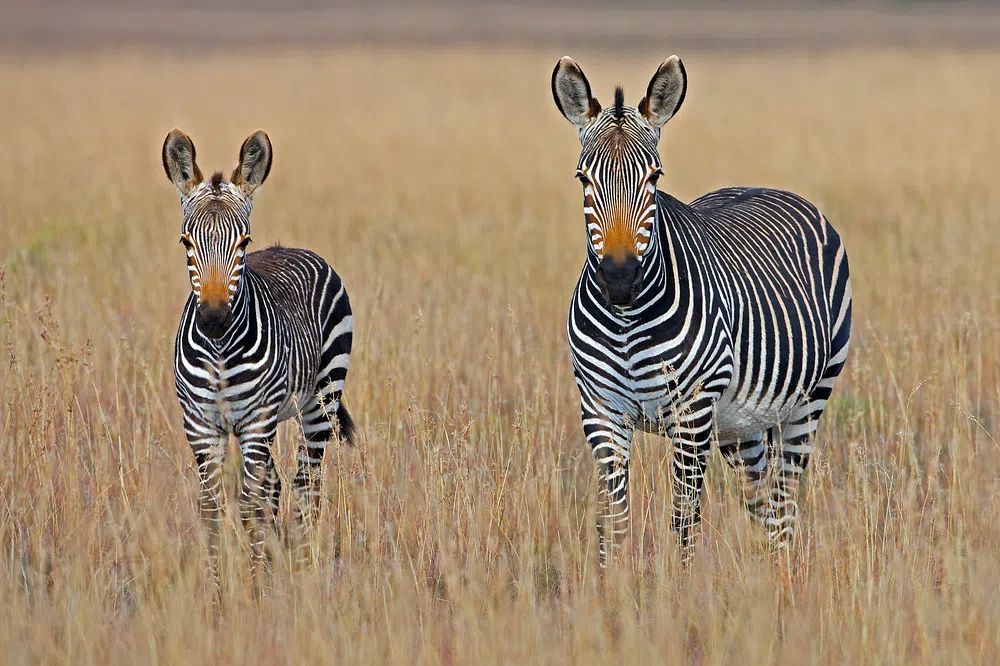
Realistic wildlife photography suits rooms that need depth and drama. Strong examples include wolves, leopards, and zebras photographed with dark backgrounds or natural landscape context. These prints pair well with walnut, black frames, wool textiles, and muted paint colors such as clay, olive, charcoal, and warm white. For a sophisticated look, keep the palette within 3 dominant tones.
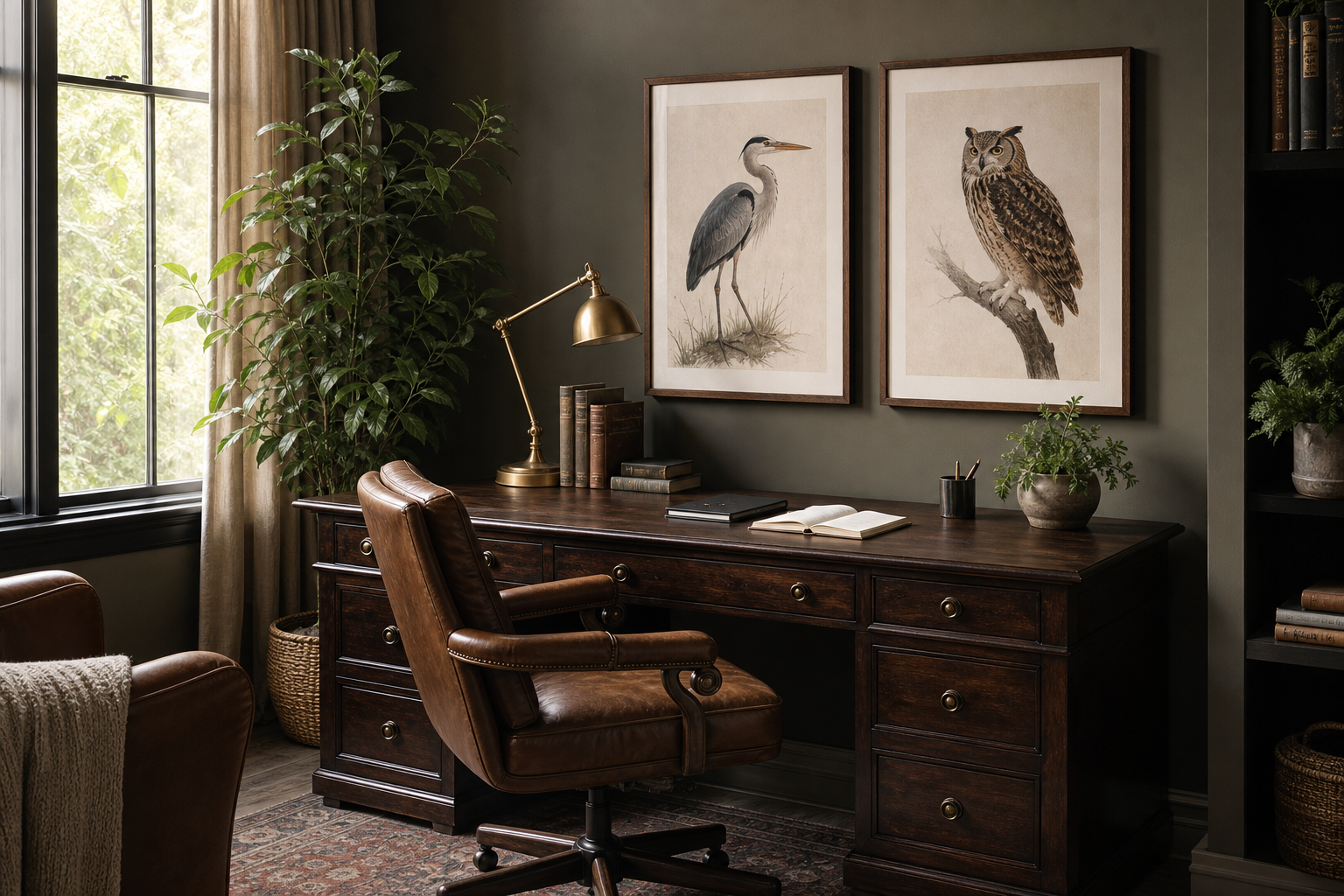
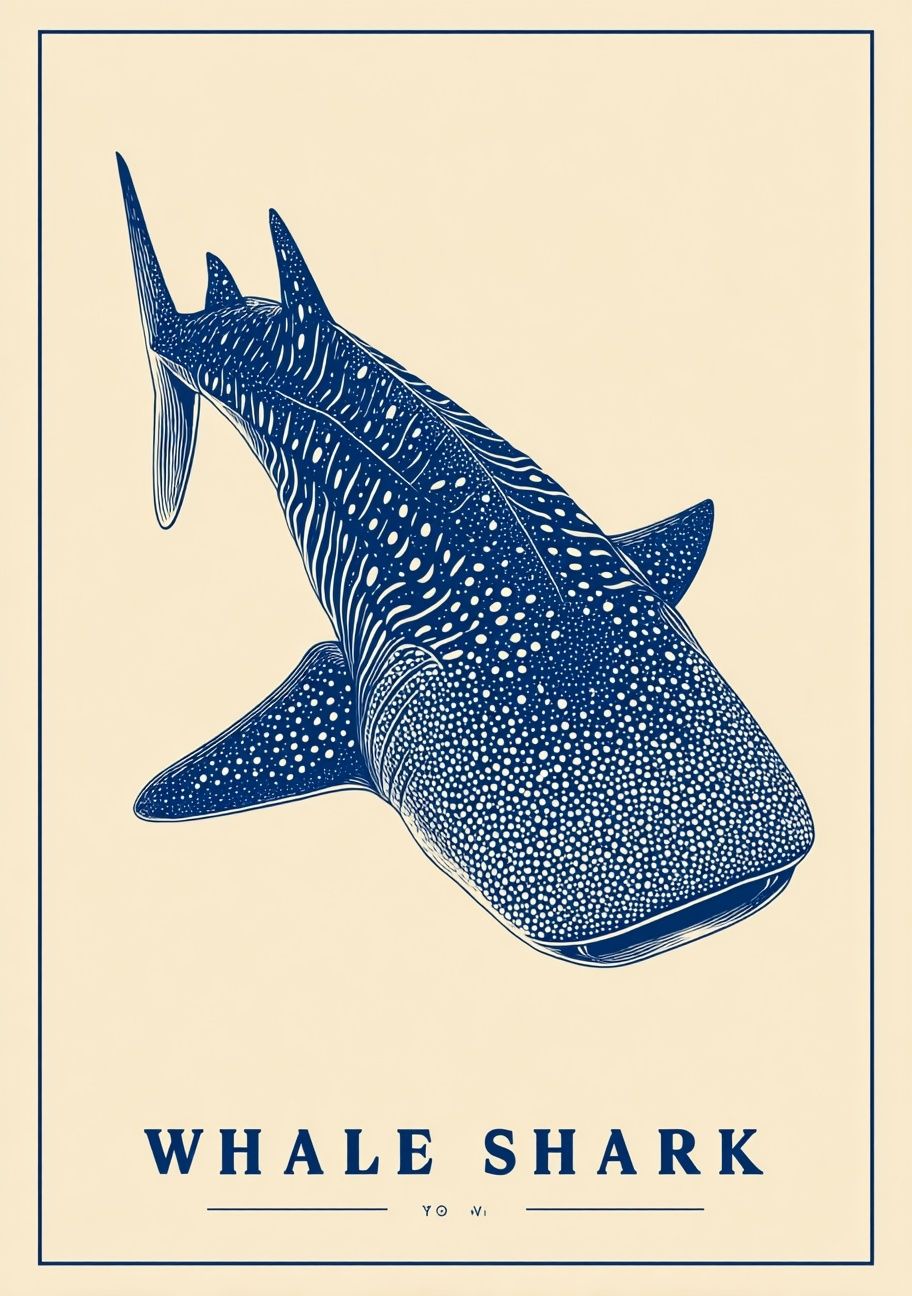
Vintage animal illustrations feel more scholarly and layered. They work especially well in homes with older furniture, brass details, bookshelves, and collected objects. Prints like vintage animal illustrations or marine subjects such as whale anatomy artwork add texture without the sharp contrast of photography. They also mix more easily with botanical and landscape art.
Minimal and graphic animal prints are the easiest option for modern interiors. Think simplified bird forms, zebra stripe compositions, or line-led silhouettes. These pieces fit naturally with our Minimalist art prints and cleaner furniture profiles. They also hold up well in smaller rooms because they create impact without visual clutter.
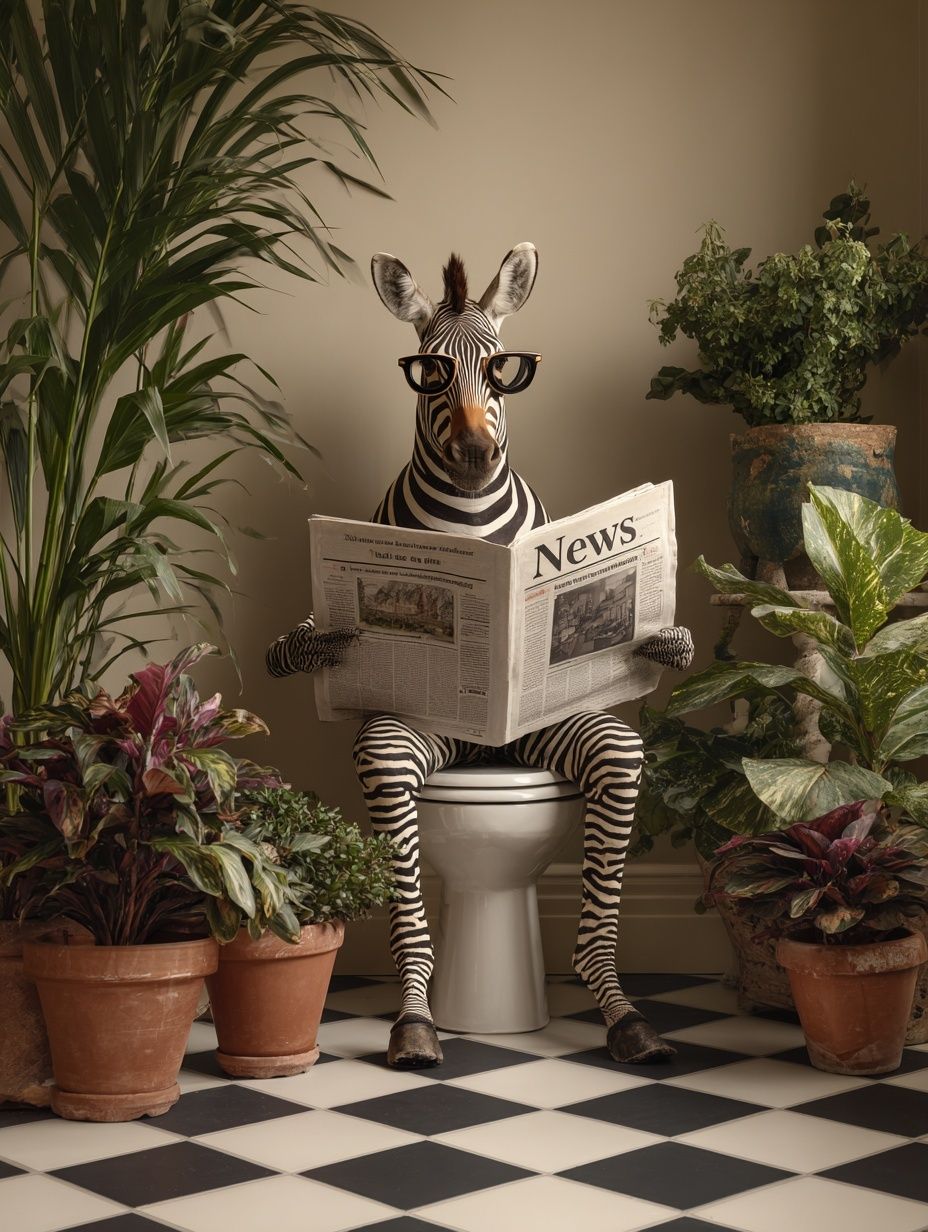
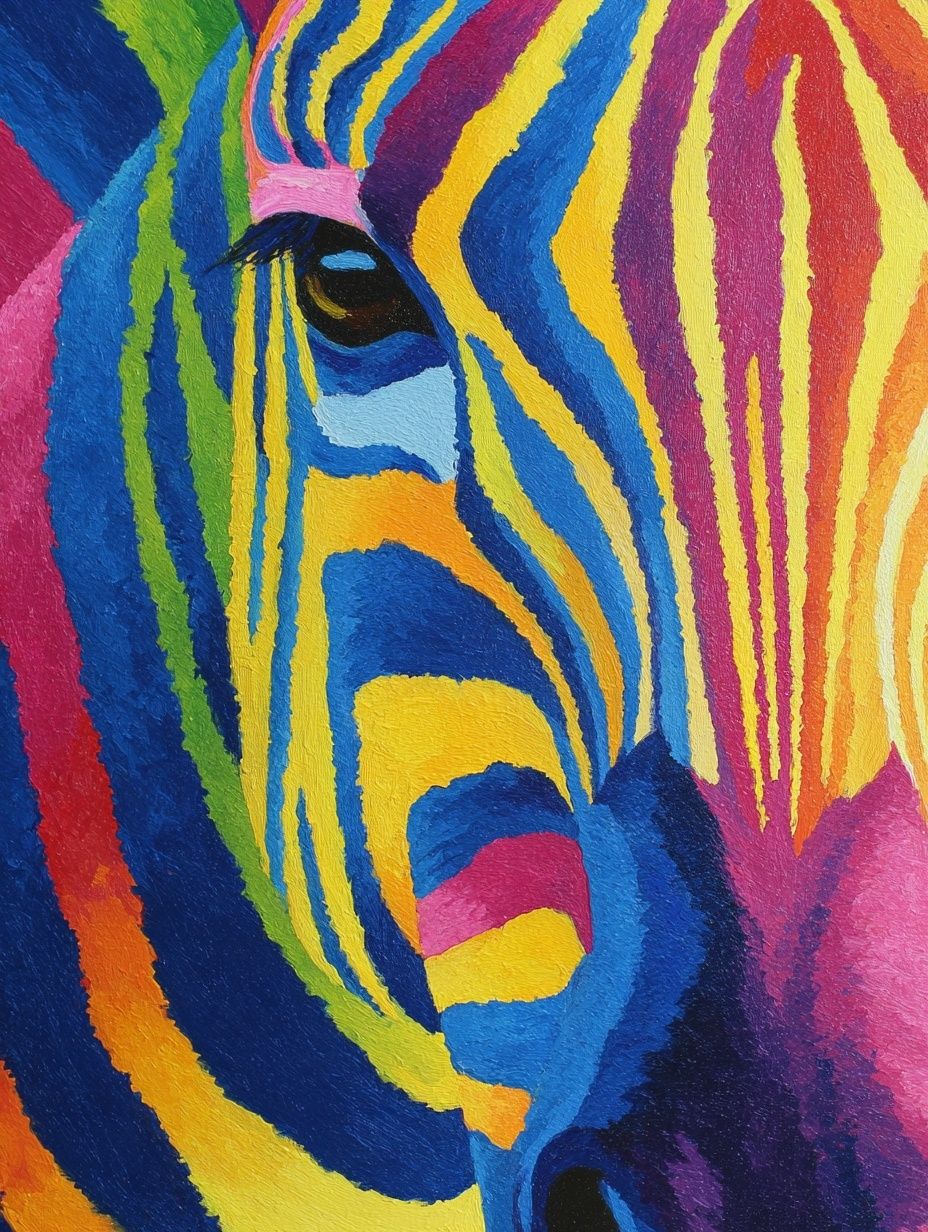
For a more playful mood, choose color-led or whimsical work. A bright zebra portrait, a floral sloth, or stylized birds can loosen up a serious room. This approach is especially useful in entryways, dorms, and creative workspaces where the wall should feel energetic rather than formal.
Matching Animal Posters to Each Room
Living rooms usually need art with presence. Above a sofa, use one large print around two-thirds the width of the sofa, or a pair of 50 x 70 cm frames. Wildlife portraits and black-and-white zebra images work well here because they read clearly from across the room. If the room already has strong pattern in the rug or cushions, choose calmer art from our Nature collection or restrained pieces from the animal wall art range.
Bedrooms benefit from quieter subjects and softer compositions. Whales, birds, and resting animals feel more suitable than high-action scenes. A whale image above the bed can widen the room visually, especially in a horizontal format. In compact bedrooms, keep frame finishes light oak, matte black, or white, and avoid overly glossy glass that catches bedside lamp glare.
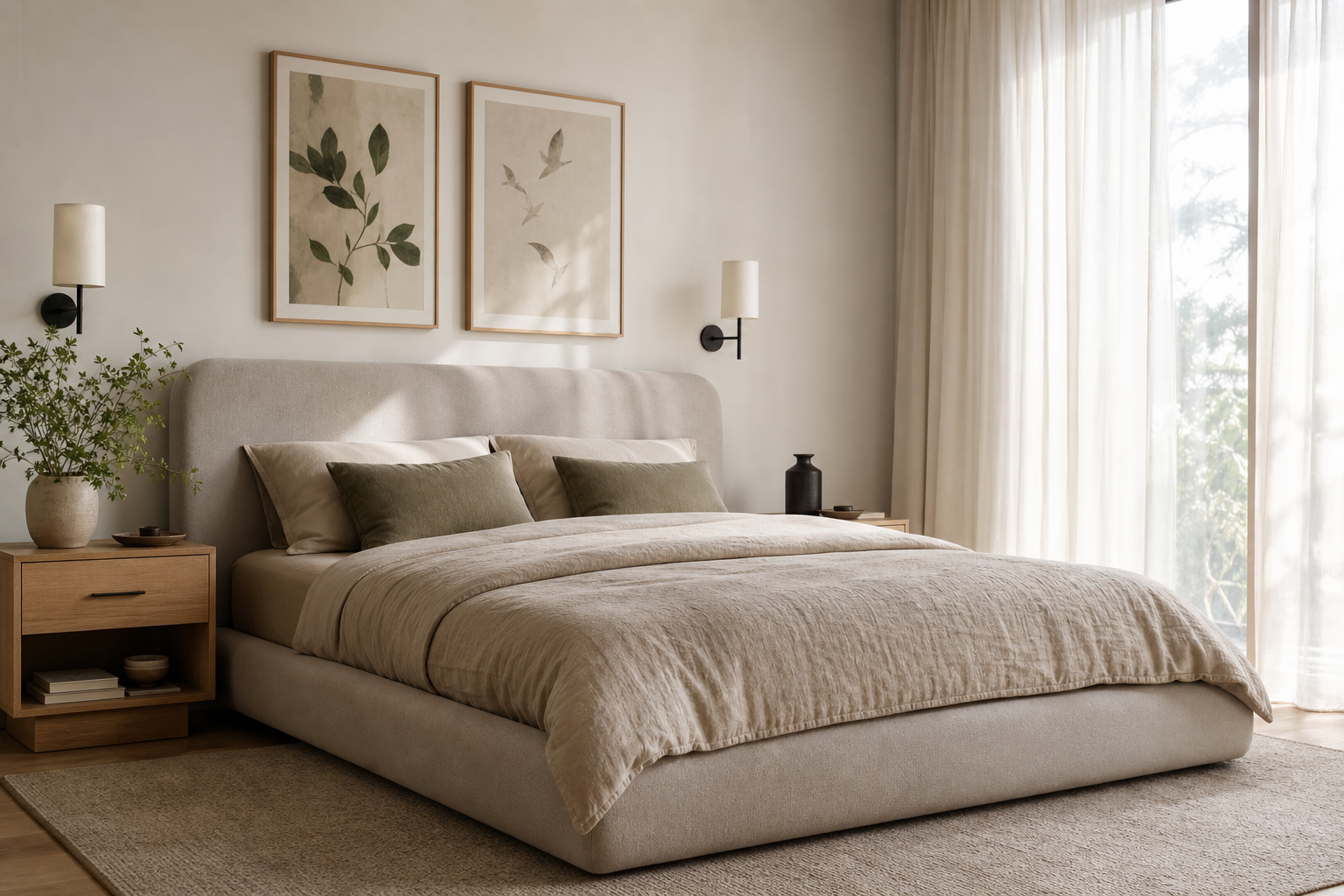
Nurseries and children's rooms can handle more charm and more color, but they still look best when the palette is controlled. Choose 2 or 3 repeating colors across the art and textiles so the room feels designed rather than busy. Pieces such as the floral sloth print or bird illustrations bring softness without becoming overly themed.
Home offices need focus, so choose art that is interesting but not chaotic. A single animal study behind the desk works better than a wall full of competing images. Hallways, by contrast, are ideal for smaller framed pieces in a sequence — 30 x 40 cm or 40 x 50 cm works well — because people experience them while moving.
Color, Scale, and Framing Tips That Make It Work
Good styling usually comes down to three decisions: color repetition, correct scale, and consistent framing. Repeat one tone from the artwork somewhere else in the room — a cushion, throw, vase, or rug detail. Even a 10 to 15 percent color echo is enough to make the wall feel integrated. A black-and-white zebra print near black table legs or a warm brown wolf print near walnut furniture will look intentional immediately.
Scale matters more than most people expect. If you hang a print above furniture, aim for the art grouping to cover roughly 60 to 75 percent of the furniture width. For a 180 cm sofa, that means a wall arrangement around 108 to 135 cm wide. In a hallway with no furniture anchor, slightly oversized art often works better than pieces that are too small and scattered.
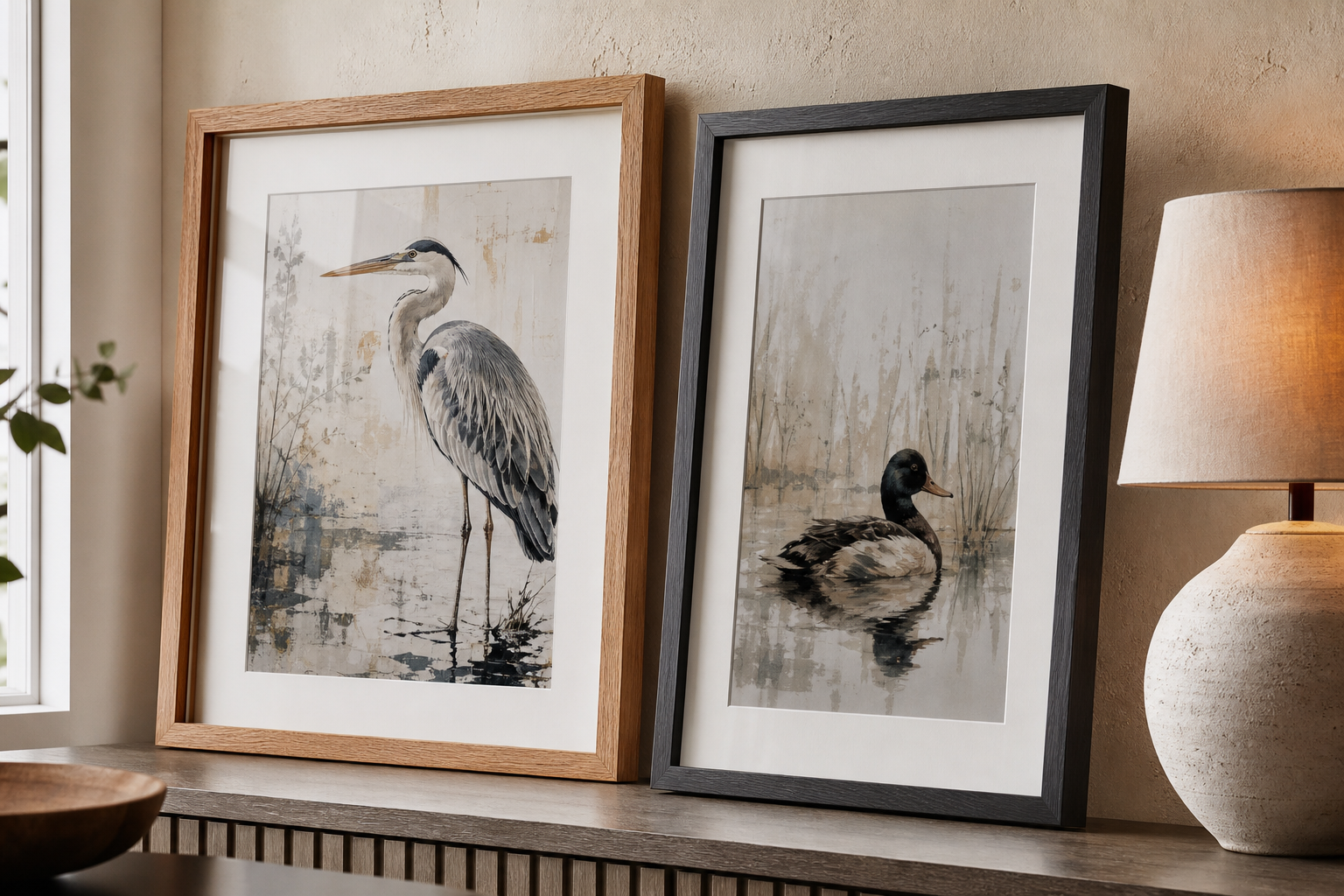
Frames should support the style, not compete with it. Black frames sharpen photography and graphic prints. Oak softens illustrations and nature-led pieces. White frames suit lighter walls and airy rooms but can wash out pale art unless there is enough contrast in the image. Mats are useful for vintage and illustration styles because they create breathing room — especially for smaller prints like 30 x 40 cm.
Creating a Gallery Wall With Animal Prints
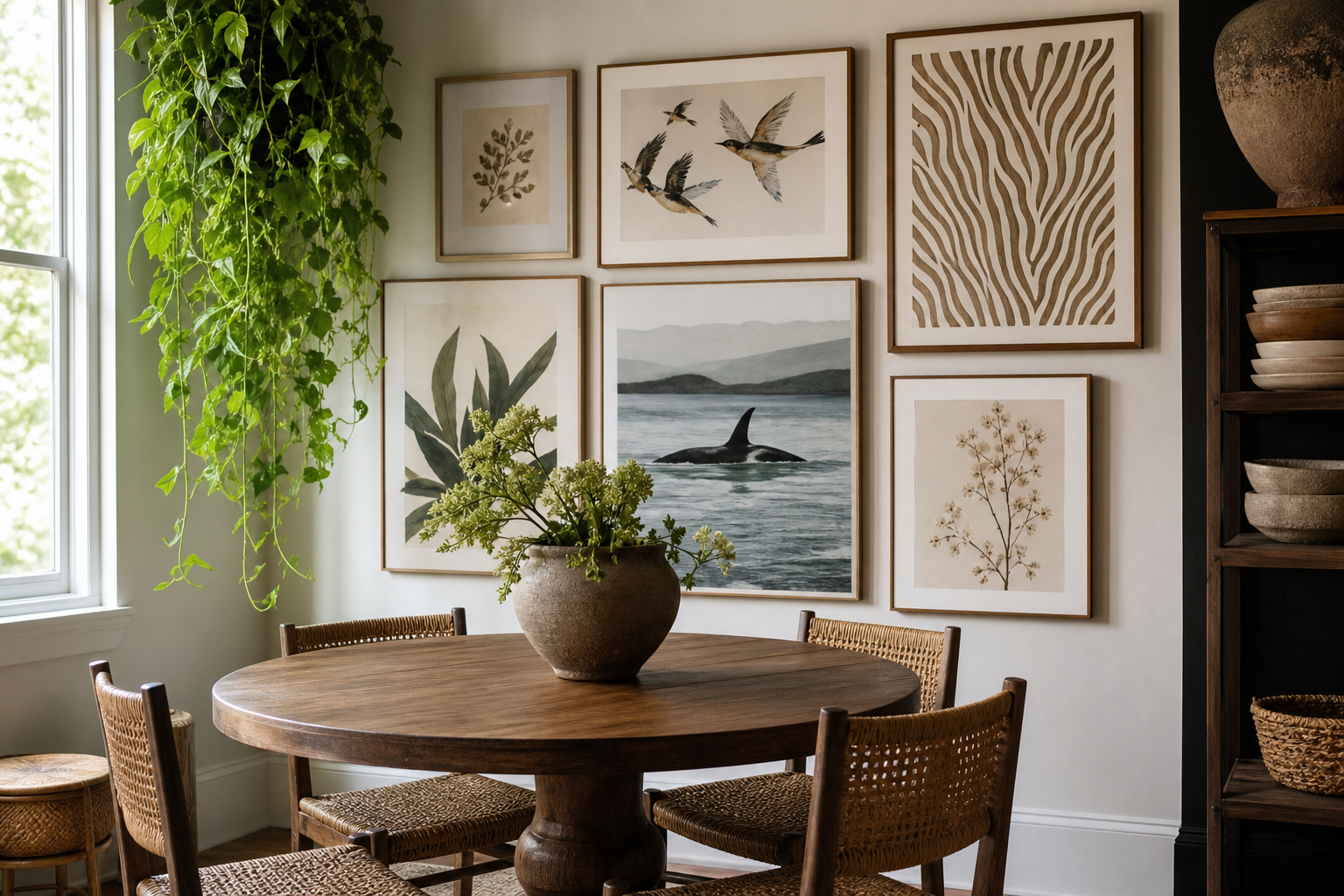
The most convincing gallery walls mix subject matter. If every piece is a direct animal portrait, the arrangement can feel too literal. A better formula is 40 percent animal imagery, 30 percent botanicals or landscapes, 20 percent abstract or patterned work, and 10 percent typography or vintage ephemera. This gives the wall rhythm and keeps it from reading like a themed set.
Animal prints pair particularly well with landscape and nature art, older paper-style works from vintage wall art, and softer decorative pieces from our Bohemian collection. A whale study next to a coastal landscape, or a bird illustration beside floral art, feels layered and believable.
Start with one anchor piece — usually the largest at 50 x 70 cm or 70 x 100 cm — then build out with smaller supporting works. Keep spacing between frames around 5 to 8 cm for a tidy arrangement. Lay everything on the floor first, then photograph the layout before hanging. That single step prevents most placement mistakes.
Shop the Look: Easy Ways to Add Character Fast
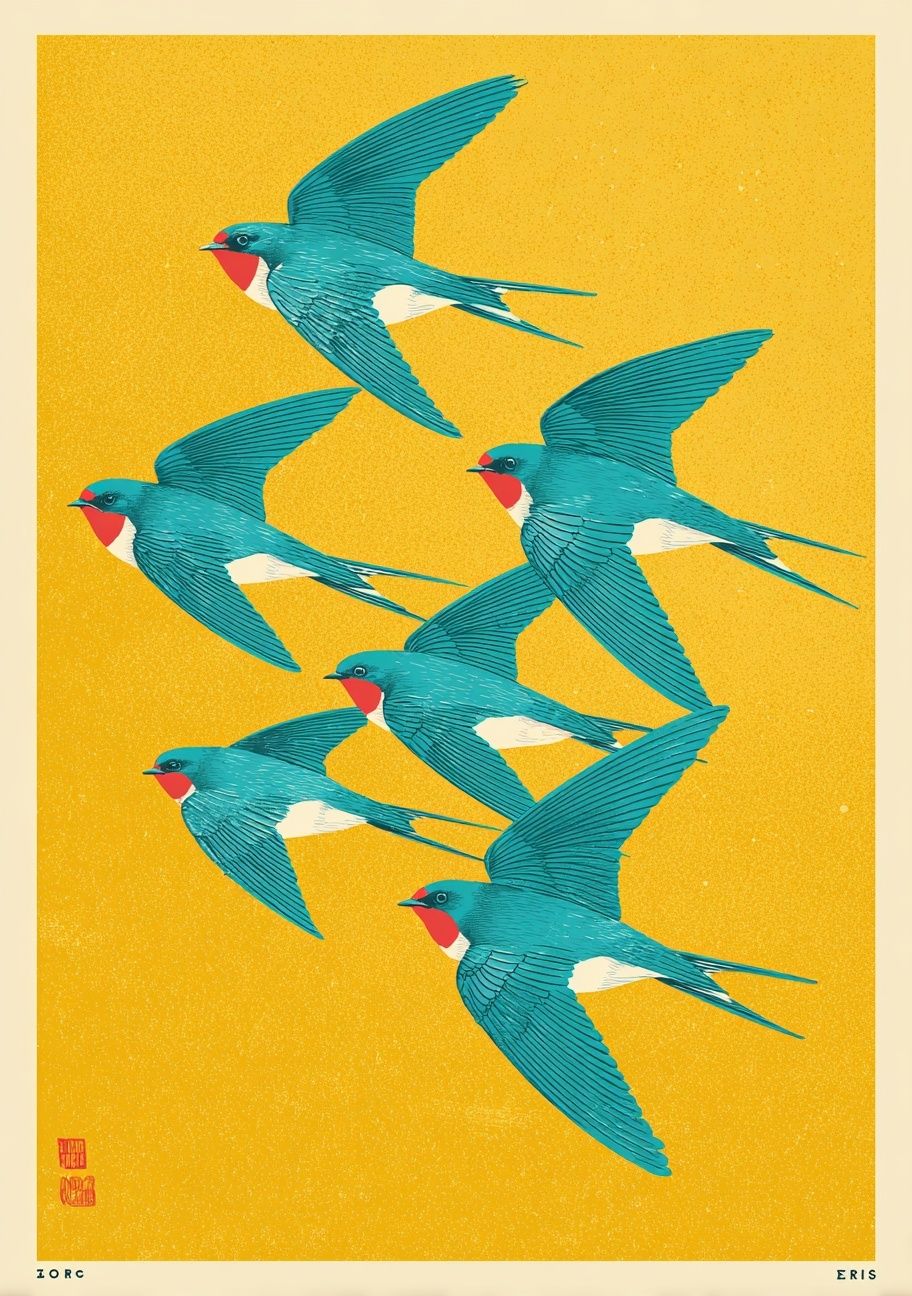
If you want quick results, start with one statement piece in the room that gets the most daylight. Strong contrast and clear animal forms read best there. For a calm living room, try Majestic Zebra Portrait. For a lighter, more decorative corner, use Swallows in Flight. For a room that needs warmth and softness, Red Panda on Tree Branch brings in both.
If the wall still feels flat, add one supporting piece rather than four. A pair is often enough: one hero print and one secondary work that repeats a tone or shape. That is usually the fastest route to successful animal poster ideas because it keeps the result edited. You get personality without crowding the room.

Final thoughts
The best animal poster ideas are the ones that match the room's energy first and the subject second. Choose drama for social spaces, softness for rest areas, and graphic clarity for work zones. Then get the scale right, repeat a color, and keep the framing consistent.
Animal art earns its place because it adds more than decoration. It gives a room expression. Whether you prefer wildlife photography, vintage studies, or playful illustration, the right piece can make a wall feel finished in one move.